Some mornings you wake up already behind. Heart rate a little higher than it should be, chest slightly tight, thoughts moving faster than the day has actually started. Nothing has happened yet and you’re already braced for something.
If that’s familiar, you’re not alone. Morning anxiety — that low-level cortisol spike that hits before you’ve even looked at your phone — is one of the most common experiences people don’t talk about directly. It has a name: cortisol awakening response. Your cortisol naturally peaks in the first 30 to 45 minutes after waking. For most people it’s mild. For anxious nervous systems, it can feel like starting the day already slightly overwhelmed.
What you eat in that window either helps or makes it significantly worse.
Sugar spikes cortisol further. Caffeine on an empty stomach does the same. Skipping breakfast entirely — something a lot of anxious people do because anxiety suppresses appetite — keeps cortisol elevated longer. None of these are the answer.
These five breakfasts are built around the actual mechanisms of anxiety and inflammation. Not wellness marketing. Not «superfoods» as a vague concept. Specific compounds, specific effects, explained so you can decide what makes sense for your body.

The Link Between Inflammation and Morning Anxiety (Why This Matters)
Anxiety and inflammation are more connected than most people realize — and the connection runs in both directions.
Chronic low-grade inflammation increases activity in the amygdala, the brain region that processes threat and fear. When your body is inflamed, your brain is more reactive. Things feel more urgent, more threatening, harder to let pass. This is why people with inflammatory conditions — autoimmune diseases, gut issues, chronic pain — so often also experience anxiety. It’s not a coincidence and it’s not psychological weakness. It’s biology.
The reverse is also true: chronic stress and anxiety increase inflammatory markers. Cortisol, when chronically elevated, disrupts the gut microbiome, which produces roughly 90% of your body’s serotonin. Less serotonin from the gut means less availability for the brain. More anxiety, more inflammation, more anxiety — a cycle that breakfast alone won’t break, but that breakfast can genuinely interrupt.
Anti-inflammatory foods work by reducing the inflammatory signals that keep the amygdala on high alert. Omega-3 fatty acids, polyphenols in berries, curcumin in turmeric, magnesium in leafy greens and seeds — these aren’t magic. They’re inputs your nervous system actually uses to regulate itself.

5 Anti-Inflammatory Breakfasts for Anxious Mornings
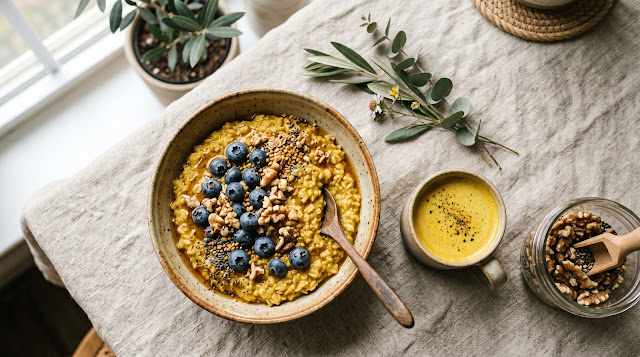
1. Blueberry Walnut Oat Bowl with Flaxseed
This is the most research-backed breakfast on this list for anxiety specifically, and it’s also one of the simplest. Every ingredient earns its place.
Oats contain beta-glucan, a soluble fiber that feeds beneficial gut bacteria and helps stabilize blood sugar — preventing the glucose crash that, for anxious people, can feel indistinguishable from a panic attack. For more oats and breakfast inspiration that works gently with morning cortisol, explore our guide on Calming Morning Breakfast Ideas for Anxiety.
Blueberries are one of the most studied foods for brain health. Their anthocyanins — the compounds that give them their color — cross the blood-brain barrier and reduce oxidative stress in brain tissue. A study from the University of Leeds found that regular blueberry consumption measurably reduced symptoms of depression and anxiety in young adults within weeks.
Walnuts are the highest plant-based source of omega-3 ALA. They also contain melatonin and polyphenols that support gut health. Flaxseeds add more omega-3 and lignans that support hormonal balance — relevant for anxiety that worsens cyclically.
Recipe:
- ½ cup rolled oats cooked in oat milk
- ½ cup fresh or frozen blueberries (frozen are just as nutritious and easier to keep stocked)
- 1 tbsp ground flaxseed (ground absorbs better than whole)
- Small handful of walnuts, roughly broken
- 1 tsp raw honey
- Pinch of cinnamon — cinnamon helps regulate blood sugar and has mild anti-anxiety properties via its effect on serotonin receptors
Make the oats, let them cool for two minutes before adding the blueberries. The slight cooling prevents the berries from overcooking and losing their anthocyanins. Add everything else. Eat slowly.
2. Smoked Salmon Avocado Toast on Sourdough
This one is for mornings when you need sustained, grounded energy — not just calm. Salmon is one of the richest dietary sources of omega-3 EPA and DHA, the two forms most directly linked to reduced anxiety and depression in clinical research. Unlike plant-based ALA (from walnuts and flax), EPA and DHA don’t require conversion by the body — they’re immediately available for use in brain tissue and in the production of anti-inflammatory compounds.
Avocado adds magnesium and potassium — both depleted by chronic stress — and monounsaturated fat that supports the absorption of fat-soluble vitamins. Sourdough and healthy fats are a beautiful foundation. For our signature step-by-step sourdough recipe, try The Ultimate Mindful Breakfast Avocado Toast.
The sourdough is deliberate: fermentation breaks down phytic acid, which otherwise blocks mineral absorption. It also partially pre-digests the gluten, making it gentler on sensitive digestive systems. Anxious people very frequently have sensitive digestion.

3. Turmeric Scrambled Eggs with Spinach
Eggs are one of the most complete anxiety-supporting foods available — they contain choline (critical for acetylcholine production, the neurotransmitter involved in calm focus), tryptophan, vitamin D (deficiency is strongly associated with anxiety and depression), and B12. If you eat eggs and you’re anxious, eggs should be a regular breakfast.
The turmeric here is functional, not decorative. Curcumin — turmeric’s active compound — inhibits NF-kB, a molecular switch that triggers inflammatory gene expression. It also increases BDNF (brain-derived neurotrophic factor), essentially a growth factor for neurons that is chronically low in anxiety and depression. The black pepper is non-negotiable: piperine increases curcumin bioavailability by up to 2,000%.
Spinach adds magnesium and folate. Folate deficiency is consistently linked to elevated anxiety — it’s one of the first things worth checking if anxiety is persistent and unexplained.
Recipe:
- 3 eggs, whisked
- Large handful of baby spinach
- ¼ tsp turmeric
- Pinch of black pepper (mandatory)
- 1 tsp olive oil or ghee
- Flaky salt
- Optional: serve on sourdough, add sliced avocado on the side
Cook eggs low and slow — medium-low heat, constant gentle stirring. High heat makes them rubbery and destroys some of the more heat-sensitive nutrients. Add spinach in the last minute, just long enough to wilt. Season after cooking, not before — salt draws out moisture and makes them watery.
4. Deep Purple Berry Smoothie Bowl
The color is not accidental. Deep purple and blue foods — blueberries, blackberries, acai, purple cabbage — contain the highest concentrations of anthocyanins, which are among the most potent anti-inflammatory plant compounds studied for brain health. If anxiety is your concern and you’re building a breakfast around it, color is genuinely a useful guide. The more blue-purple-red the better.
Hemp seeds deserve specific mention. Three tablespoons of hemp seeds contain 10 grams of complete protein — all essential amino acids, including a high amount of arginine (which produces nitric oxide, reducing blood pressure) and GLA, an omega-6 fatty acid with unusual anti-inflammatory properties. They also have an ideal omega-3 to omega-6 ratio, which is relevant because most Western diets are heavily skewed toward inflammatory omega-6.

Recipe:
- 1 cup frozen blueberries
- ½ frozen banana (for thickness, not sweetness — use less if you want it less sweet)
- ½ cup frozen acai (one packet of unsweetened acai works well)
- ¼ cup oat milk — just enough to blend, add slowly
Blend until very thick — thicker than a drinkable smoothie. Pour into a bowl. Top with:
- 3 tbsp hemp seeds
- Fresh blueberries and sliced banana
- 1 tsp bee pollen (anti-inflammatory, adaptogenic — skip if you have pollen allergies)
- Fresh mint
Eat immediately. The texture degrades fast once it starts warming up.
5. Chia Pudding with Kiwi and Pumpkin Seeds
The prep-the-night-before option — relevant for anxious mornings when decision-making and energy feel limited before the day has properly started. Zero morning effort. Open fridge. Eat.
Kiwi fruit is worth highlighting specifically for anxiety. A 2022 study found that eating two kiwis per day for four weeks significantly reduced anxiety and improved mood and sleep quality in adults with low vitamin C levels — and most people are mildly deficient without knowing it. Kiwi has one of the highest vitamin C concentrations of any common fruit, and vitamin C is rapidly depleted by cortisol during stress.
Pumpkin seeds are one of the best dietary sources of zinc and magnesium — two minerals that are consistently low in people with anxiety disorders and that are essential for GABA function. GABA is your brain’s primary inhibitory neurotransmitter: the chemical that says «we’re okay, you can stand down.» Low magnesium means impaired GABA signaling, which means the «stand down» signal doesn’t get through properly.
Recipe (make the night before):
- 3 tbsp chia seeds
- 1 cup coconut milk (full fat)
- 1 tsp vanilla extract
- 1 tsp maple syrup
- Pinch of cardamom
Stir well, rest 5 minutes, stir again to prevent clumping, refrigerate overnight. In the morning, top with:
- 1–2 kiwis, peeled and sliced
- 2 tbsp pumpkin seeds
- Drizzle of raw honey
- Optional: a few fresh mint leaves

What to Avoid on Anxious Mornings
As important as what to eat is what to skip — at least until the cortisol peak has passed.
Coffee on an empty stomach. Caffeine inhibits adenosine receptors (adenosine is what makes you feel sleepy and relaxed) and triggers adrenaline release. On an empty stomach, with no food to slow absorption, this hits fast and hard. If you need coffee, have it with or after one of these breakfasts. Better yet, try switching to a premium green tea using our Beginner’s Guide to Choosing Matcha, which offers a steady alertness without the cortisol spike.
High-sugar breakfasts. Pastries, sweetened yogurt, commercial granola, juice — anything that spikes blood glucose quickly. The glucose crash that follows — usually 60 to 90 minutes later — triggers another cortisol release. For anxious people, that crash can feel like a wave of dread or sudden doom with no external cause. It has a cause. It’s blood sugar.
Skipping breakfast entirely. Appetite suppression is a real symptom of anxiety, and it can feel counterintuitive to eat when your stomach is tight. But fasting extends the cortisol peak. Even something small — a handful of walnuts, a piece of sourdough with almond butter — is better than nothing. The body needs to know it’s safe and fed.
4 Variations for Different Mornings
- No appetite version: Blueberry walnut oat bowl made very small — ¼ cup oats, more berries, less bulk. Or just the smoothie bowl in a smaller portion. Something is better than nothing.
- High-protein anxious morning: The salmon toast or turmeric eggs. Protein stabilizes blood sugar more effectively than any other macronutrient and keeps cortisol from spiking between meals.
- Vegan version: Swap salmon for extra avocado and hemp seeds; swap eggs for silken tofu scrambled with turmeric and nutritional yeast (adds B12). All the same anti-inflammatory logic, no animal products.
- Five-minute version: Chia pudding prepped the night before. Add the toppings in sixty seconds. Done. This is the one to default to when the morning is already hard.
FAQ: Anti-Inflammatory Breakfast for Anxiety
Can food actually reduce anxiety, or is this overstated?
Food alone doesn’t treat anxiety disorders — that’s important to be honest about. But the gut-brain connection is real, inflammation’s role in anxiety is well-documented, and specific nutrients measurably affect neurotransmitter production and stress hormone regulation. Food is one lever among several. It’s not everything, but it’s not nothing either. For many people, consistent dietary changes produce noticeable shifts in baseline anxiety within two to four weeks.
What’s the single most important nutrient for anxiety?
If forced to choose one: magnesium. It’s involved in over 300 enzymatic processes, it’s essential for GABA function, it’s depleted rapidly by stress, and the majority of adults in Western countries don’t get enough from diet alone. Foods highest in magnesium: pumpkin seeds, dark chocolate (70%+), spinach, black beans, almonds, and avocado.
Is caffeine always bad for anxiety?
Not always, and not for everyone. People metabolize caffeine differently based on genetics. If you’re a slow metabolizer, caffeine stays in your system longer and anxiety effects are more pronounced. The practical test: switch to matcha (which contains L-theanine alongside caffeine) for two weeks and see if morning anxiety changes. If it does, the caffeine delivery method matters for you.
How long does it take for an anti-inflammatory diet to affect anxiety?
The research suggests two to four weeks for measurable changes in inflammatory markers. For subjective anxiety experience, many people notice something within one to two weeks — particularly in the quality of morning mood and the intensity of the cortisol peak on waking. It’s not instant, but it’s not indefinitely slow either.
Should I see a doctor about morning anxiety?
If morning anxiety is consistent, severe, or significantly affecting your quality of life — yes, absolutely. These breakfasts support nervous system regulation but they’re not a substitute for professional support when that’s what’s needed. A GP can also check for nutritional deficiencies (B12, vitamin D, folate, iron) that frequently present as or worsen anxiety, which is worth ruling out.
Anxious mornings don’t require a perfect solution. They require a slightly better starting point than the one you’d otherwise default to. One bowl of oats with blueberries and walnuts won’t change everything. Eating it every morning, slowly, before the phone, with the understanding of what it’s doing — that accumulates into something.
Start small. Start tomorrow morning.
📌 More calming breakfast ideas and slow morning ritual inspiration — I post daily on Pinterest for people building mornings that actually feel good. Follow NourishRituals here and save what you want to come back to.