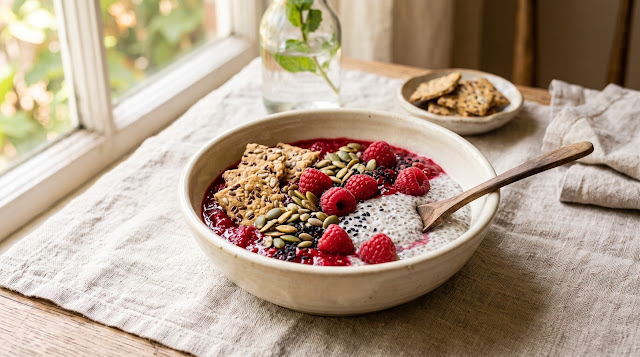
There’s a new word in wellness search this summer and it’s «fibermaxxing» — the deliberate practice of stacking as much fiber as possible into your day, starting with breakfast. It’s not a diet. It’s not a 30-day challenge. It’s closer to a quiet correction to something most people have been getting wrong for years without realizing it.
The average adult eats roughly half the fiber they need. Not because fiber is hard to find, but because nobody built their breakfast around it on purpose. This bowl does. It’s the kind of breakfast that looks like a treat — layered, textured, dotted with black sesame and ruby-red berries — and quietly delivers nearly 20 grams of fiber before your day has properly started.
It’s also, not coincidentally, one of the most visually satisfying things you can put in a bowl. The contrast of black sesame against cream-colored chia pudding, the deep red of fresh raspberries, the texture layers visible through glass — this is the kind of breakfast built for both your gut and your feed.

What «Fibermaxxing» Actually Means (And Why It’s Trending Now)
The term borrows its structure from «proteinmaxxing» — the high-protein obsession that’s dominated wellness content for the past two years. Fibermaxxing applies the same logic to a different macronutrient: instead of asking «how do I hit my protein number today,» the question becomes «how do I hit my fiber number today.»
The reason this is surging now isn’t arbitrary. Most adults in the US consume 10 to 15 grams of fiber daily. The recommended intake is 25 to 38 grams, depending on age and sex. That’s a gap of roughly 15 to 20 grams — almost exactly what a well-built breakfast bowl can close in one sitting.
Fiber does more than most people give it credit for. It feeds the gut microbiome, which in turn produces short-chain fatty acids that reduce inflammation throughout the body. It slows glucose absorption, preventing the blood sugar spikes that drive mid-morning energy crashes and cravings. It supports regularity in a way that’s genuinely underrated as a daily quality-of-life factor. And a fiber-rich breakfast extends satiety for hours — soluble fiber forms a gel in the digestive tract that physically slows how quickly your stomach empties. If you’re focusing on restoring digestion, our guide on Gut Healing Breakfast Recipes for a Slow Living Morning explains why this prebiotic process is so critical for healing.
This isn’t a new discovery. It’s old nutritional science finally getting the marketing attention protein got two years ago. And breakfast, structurally, is the easiest meal of the day to build around it.

Why Black Sesame Is Showing Up Everywhere This Summer
Black sesame searches are spiking specifically this season, and it’s not just an aesthetic choice — though the visual contrast against light-colored bases is part of why it photographs so well. Black sesame seeds carry slightly more calcium, iron, and antioxidants than the more common white variety, owing to their less-processed hull. They have a deeper, more bitter-nutty flavor that pairs beautifully with sweetness — honey, berries, vanilla — in a way that white sesame’s milder flavor doesn’t quite achieve.
For a fiber-forward bowl specifically, black sesame contributes both soluble and insoluble fiber, plus lignans — the same class of compound found in flaxseed that supports hormone metabolism. Learn how these seeds can be used in your daily routine in our step-by-step Beginner’s Guide to Seed Cycling. Two tablespoons contain roughly 2.5 grams of fiber, a small but meaningful contribution layered on top of the other ingredients.
The Fibermaxxing Breakfast Bowl Recipe
This is a layered bowl — chia pudding base, fresh fruit, a crunchy fiber-dense topping — built specifically to maximize fiber without sacrificing the experience of eating something that feels indulgent rather than dutiful.

Ingredients (serves 1, made the night before)
For the chia base:
- 3 tbsp chia seeds (5g fiber per tablespoon — the single highest-fiber ingredient in this bowl)
- 1 cup unsweetened oat milk
- 1 tbsp ground flaxseed
- 1 tsp vanilla extract
- 1 tsp maple syrup or raw honey
For the topping layer:
- ½ cup fresh raspberries (8g fiber per cup — one of the highest-fiber fruits available)
- ¼ cup blackberries
- 2 tbsp rolled oats, lightly toasted in a dry pan for 3 minutes until golden
- 1 tbsp pumpkin seeds
- 1 tbsp black sesame seeds
- Optional: a few raspberries reserved whole for the top, and a drizzle of tahini for added calcium and fiber
Method
The night before: Combine chia seeds, oat milk, ground flaxseed, vanilla, and sweetener in a glass jar. Stir vigorously — chia seeds clump if not mixed thoroughly. Let it sit for 5 minutes, then stir again to break up any remaining clumps. Refrigerate overnight, or for at least 4 hours.
In the morning: Toast the oats in a dry pan over medium heat for 2 to 3 minutes, stirring frequently, until lightly golden and fragrant. Let cool for a minute — this step takes almost no time and adds significant textural contrast to the finished bowl.
To assemble: Spoon the set chia pudding into a wide ceramic bowl. Arrange the raspberries and blackberries over half the surface. Sprinkle the toasted oats, pumpkin seeds, and black sesame seeds over the remaining surface and lightly over the berries. Drizzle with tahini if using. The black sesame against the cream-colored chia and the deep red berries is the visual anchor of the whole bowl — don’t skip it even if you’re tempted to substitute white sesame.
Total fiber count: approximately 18 to 20 grams — roughly half to two-thirds of the daily recommended intake, in one bowl, before 9am.
4 Variations for Different Fiber Goals
- Maximum fiber push (22g+): Add 1 tbsp psyllium husk to the chia base — it’s nearly flavorless and adds 5g of fiber on its own. Increase berries to a full cup. This version is closer to the «max» end of fibermaxxing and works well if you’re specifically rebuilding gut health.
- Lower-sugar version: Skip the maple syrup, use a handful of unsweetened coconut flakes instead of additional fruit for texture, and rely on the natural sweetness of the berries. Fiber count stays nearly identical.
- Protein-boosted version: Stir in 2 tablespoons of hemp seeds for an additional 6g of complete protein alongside 2g more fiber — combining the fibermaxxing trend with the high-protein approach for a bowl that does both. If you prefer a truly protein-packed breakfast, try our highly-rated High-Protein Cottage Cheese Bowl with Berries.
- Quick version (5 minutes, no overnight prep): Use store-bought unsweetened applesauce stirred with chia seeds and let sit 15 minutes while you toast the oats — thickens fast enough for same-morning assembly if you forgot to prep the night before.
Building a Full Day of Fibermaxxing (Not Just Breakfast)
Breakfast closes a significant portion of the daily fiber gap, but the trend works best as a whole-day approach. A few simple additions elsewhere:
- Lunch: Add a serving of lentils or chickpeas to a grain bowl — 15g of fiber per cup of lentils alone.
- Snack: An apple with the skin on (4g fiber) plus a small handful of almonds (3.5g fiber).
- Dinner: Swap white rice for farro or quinoa, add a side of roasted Brussels sprouts or broccoli — both deliver 4 to 5g of fiber per cup.
One important practical note: increase fiber gradually, not all at once. A sudden jump from 12g to 30g daily can cause bloating and digestive discomfort. Add this bowl to your routine for a week before stacking additional high-fiber meals elsewhere in the day, and increase water intake alongside — fiber needs adequate hydration to do its job properly in the gut.

FAQ: Fibermaxxing and High-Fiber Breakfast
Is fibermaxxing actually backed by science, or is it just a trend name?
The name is new; the science behind it is not. Decades of research consistently link adequate fiber intake to improved gut microbiome diversity, reduced inflammation, better blood sugar regulation, and lower long-term risk of several chronic conditions. What’s new is the framing — treating fiber with the same intentional, trackable approach that protein has gotten, which makes a genuinely well-supported nutritional principle easier to actually act on.
Can I eat too much fiber?
Yes, particularly if you increase intake too quickly. Symptoms of too much fiber too fast include bloating, gas, and digestive discomfort. The fix is gradual increase over one to two weeks combined with adequate water intake — roughly half your body weight in ounces of water daily is a reasonable baseline when increasing fiber significantly.
Does cooking or soaking chia seeds affect their fiber content?
No — the fiber content remains essentially unchanged whether chia is eaten dry, soaked, or baked. Soaking primarily affects texture and digestibility, not nutrient content. Soaked chia (as in this recipe) is generally easier to digest than dry chia eaten directly.
What’s the difference between soluble and insoluble fiber, and do I need both?
Soluble fiber (found in chia, oats, flaxseed) dissolves in water and forms a gel that slows digestion and helps regulate blood sugar and cholesterol. Insoluble fiber (found in seed hulls, vegetable skins, whole grains) adds bulk and supports regularity. This bowl contains a strong mix of both — chia and flax provide soluble fiber, while the seed coats and oat bran-adjacent toasted oats contribute insoluble fiber. A well-rounded approach includes both types rather than maximizing one alone.
Is this bowl appropriate for people with IBS or sensitive digestion?
High-fiber foods can be a double-edged sword for IBS — beneficial for some types, triggering for others, particularly those sensitive to FODMAPs. Chia and flax are generally well tolerated. Blackberries and certain stone fruits can be triggering for some people with IBS specifically due to their fructose content. If you have a diagnosed digestive condition, introduce this bowl gradually and consider working with a dietitian to identify which high-fiber ingredients work for your specific system.
The fibermaxxing trend will likely fade as a search term within a year or two, the way every wellness buzzword eventually does. The underlying principle won’t. Fiber has been quietly undersupplied in the average diet for decades, and a breakfast bowl that closes most of that gap in one sitting — while looking like something worth photographing — is a genuinely good outcome on its own even if the cycle-specific benefit ends up being subtle for you.
Make it tonight. Eat it tomorrow morning. See how the rest of the day feels different.

📌 High-fiber recipes, summer breakfast bowls, and slow morning ritual inspiration — posted daily on Pinterest. Follow NourishRituals here and save what you want to come back to.