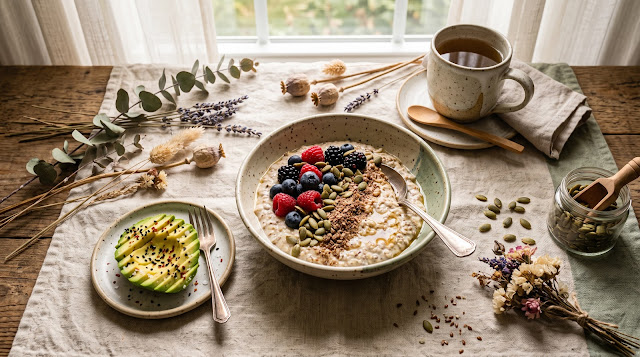
Somewhere around your late twenties or early thirties, breakfast stops being a neutral act. You start noticing that what you eat in the morning has real consequences — not just for energy at 11am, but for mood stability through the afternoon, for how your body feels in the second half of your cycle, for whether PMS is manageable or genuinely difficult.
This isn’t in your head. Hormones don’t operate in isolation from food. Estrogen metabolism happens largely in the liver and the gut — both of which are directly shaped by what you eat every morning. Progesterone production requires specific nutrients. Cortisol regulation — the stress hormone that disrupts everything else when it’s chronically elevated — is influenced profoundly by what you eat first thing and how you eat it.
The concept of cycle syncing — eating and living in alignment with the four phases of the menstrual cycle — has gained a lot of attention, and some of it is better supported by evidence than others. This guide separates the well-researched from the speculative, and gives you five practical breakfast options that work regardless of where you are in your cycle, with specific notes on what to emphasize when.
No supplements required to start. No elimination diet. Just breakfast, built differently.

What Hormones Are Actually Affected by Breakfast — and How
Before the recipes, the mechanisms — because «hormone balancing» is used so loosely in wellness content that it’s worth being specific about what’s actually happening.
Cortisol and blood sugar
Cortisol peaks in the first 30 to 45 minutes after waking — this is normal and necessary, it’s what gets you out of bed. The problem is when breakfast amplifies this peak rather than helping it taper. High-sugar breakfasts — sweetened yogurt, commercial granola, juice, pastries — spike blood glucose rapidly, which triggers a corresponding insulin surge, which then causes a crash. That crash triggers another cortisol release. For women, who tend to have more reactive cortisol responses than men on average, this cycle is particularly disruptive to downstream hormones.
Stable blood sugar from breakfast — achieved through protein, fat, and fiber together — means cortisol tapers naturally through the morning rather than spiking and crashing. Everything else hormonal runs better when cortisol is regulated.
Estrogen and the gut
Excess estrogen is metabolized and excreted via the gut. If the gut is sluggish — low fiber, disrupted microbiome, chronic constipation — estrogen gets reabsorbed into circulation rather than eliminated. This is one mechanism behind estrogen dominance, which shows up as heavy periods, PMS, bloating, breast tenderness, and mood fluctuations in the second half of the cycle.
Fiber in breakfast — particularly from flaxseeds, oats, chia, and cruciferous vegetables — directly supports estrogen elimination. Fermented foods (kefir, yogurt with live cultures) support the specific gut bacteria involved in this process. This is not a stretch. This is established physiology.
Progesterone and nutrient status
Progesterone production in the luteal phase (the two weeks before your period) requires zinc, vitamin B6, and magnesium. These aren’t exotic nutrients — they’re found in eggs, pumpkin seeds, leafy greens, and whole grains. But they’re also depleted by stress, by poor sleep, and by a diet that doesn’t consistently include them. A breakfast built around these nutrients, eaten regularly, supports the progesterone production that makes the second half of the cycle feel manageable rather than difficult.
Thyroid hormones and breakfast timing
The thyroid — which regulates metabolism, energy, body temperature, and mood — is sensitive to both nutritional status and meal timing. Skipping breakfast consistently can suppress thyroid function over time, particularly in women, contributing to fatigue, cold sensitivity, and sluggish metabolism that’s hard to explain otherwise. Eating within an hour of waking supports thyroid rhythm without requiring supplements or intervention.

Seed Cycling: What It Is and What the Evidence Actually Says
Seed cycling is the practice of eating specific seeds in the first half of your cycle (follicular phase, days 1–14) and different seeds in the second half (luteal phase, days 15–28) to support the different hormonal profiles of each phase.
Follicular phase seeds: flaxseeds and pumpkin seeds. Flaxseeds contain lignans that support healthy estrogen metabolism. Pumpkin seeds are high in zinc, which supports the follicle-stimulating hormone that triggers ovulation.
Luteal phase seeds: sunflower seeds and sesame seeds. Sunflower seeds are high in vitamin E and selenium, which support progesterone production and reduce oxidative stress in the luteal phase. Sesame seeds contain zinc and selenium alongside additional lignans.
The honest assessment of the evidence: there are no large randomized controlled trials on seed cycling specifically. What does exist is good evidence for the individual nutrients in these seeds and their roles in hormone metabolism, plus some small studies and substantial anecdotal reporting from women who track their cycles carefully. It’s plausible, nutritionally coherent, and the seeds themselves are unambiguously healthy — the downside risk of trying it for two to three cycles is essentially zero.
The practical approach: add 1 tablespoon of the relevant ground seeds to your breakfast each morning. Ground is more bioavailable than whole — especially for flaxseeds, whose hull is nearly impermeable to digestion whole. For a complete breakdown of this monthly wellness practice, explore our detailed Beginner’s Guide to Seed Cycling for Hormone Balance.
5 Hormone-Balancing Breakfasts for Women
1. Flaxseed Overnight Oats with Berries (Follicular Phase Focus)
This is the most directly hormone-supportive breakfast on this list for the first half of the cycle. Oats are a good source of beta-glucan fiber that feeds the gut bacteria involved in estrogen metabolism. Flaxseeds add lignans that modulate estrogen receptor activity — they help prevent both excess estrogen signaling and deficiency, acting as a gentle adaptogen for estrogen rather than a one-directional intervention. Berries add polyphenols and vitamin C, which supports iron absorption — relevant in the first week of the cycle when menstrual blood loss can deplete iron stores.
Recipe (make the night before):
- ½ cup organic rolled oats
- 1 cup oat milk or almond milk
- 1 tbsp ground flaxseed
- 1 tbsp chia seeds
- 1 tsp maple syrup
- ½ tsp vanilla extract
Combine in a glass jar, stir well, refrigerate overnight. In the morning, top with:
- ½ cup mixed berries (frozen is fine — same nutritional profile as fresh)
- 1 tbsp pumpkin seeds
- Drizzle of raw honey
- Optional: pinch of cinnamon for blood sugar stability
The seeds go on in the morning, not overnight — they stay crunchy that way, which matters more than it sounds.
2. Maca Raspberry Smoothie with Hemp and Coconut
Maca root is one of the better-studied adaptogenic foods for women’s hormonal health. It doesn’t contain hormones itself — it works by supporting the hypothalamic-pituitary axis, the control system that regulates hormone production upstream. Studies have shown maca reduces menopausal symptoms, improves mood and energy in the luteal phase, and reduces cortisol reactivity. It tastes mildly caramel-malty, which works well in smoothies.
Raspberries are specifically worth highlighting: they’re one of the highest-fiber fruits available, and their ellagic acid content has been studied for its role in estrogen metabolism. Combined with the complete protein from hemp seeds and the medium-chain triglycerides in coconut milk — which the body uses for energy without the insulin spike of glucose — this is a smoothie that actually does something.

3. Avocado and Soft-Boiled Egg on Sourdough with Pumpkin Seeds
The most complete hormone-balancing breakfast on this list in terms of nutrient density. Eggs contain choline — essential for liver function, which is where estrogen metabolism primarily happens. They contain B6, which is the single most important nutrient for progesterone production and for reducing PMS severity. Research consistently shows that women with higher B6 intake have measurably less severe PMS. Egg yolks specifically contain vitamin D, which functions more like a hormone than a vitamin and is deficient in the majority of women in northern climates.
Avocado adds magnesium (the most commonly deficient mineral in women with PMS), potassium, and monounsaturated fat that supports the absorption of fat-soluble vitamins. The sourdough fermentation pre-digests some of the gluten and increases mineral bioavailability through reducing phytic acid. Pumpkin seeds on top add zinc for the follicular phase, or swap for sunflower seeds in the luteal phase. For our signature step-by-step sourdough recipe, try The Ultimate Mindful Breakfast Avocado Toast.
Recipe:
- 2 eggs — soft boiled exactly 7 minutes, then into an ice bath
- 1 ripe avocado, halved and sliced
- 1–2 slices sourdough, toasted
- 1 tbsp pumpkin seeds (follicular) or sunflower seeds (luteal)
- Microgreens or arugula
- Lemon juice, flaky salt, black pepper
- Optional: thin radish slices, fresh dill
The ice bath for the eggs is not optional if you want the jammy yolk — seven minutes without cooling continues cooking the yolk from residual heat. The ice bath stops it exactly where you want it.

4. Turmeric Scrambled Eggs with Leafy Greens and Sesame
This one is built for the luteal phase specifically — the two weeks before your period when progesterone is supposed to be rising but often isn’t adequately, leading to irritability, bloating, poor sleep, and cravings. Turmeric’s curcumin reduces the prostaglandin production that causes cramping and inflammation. Leafy greens add folate and magnesium. Sesame seeds — the luteal phase seed in the cycling protocol — add zinc, selenium, and additional lignans.
The fat from ghee or olive oil is not optional here. Fat-soluble vitamins (A, D, E, K) require dietary fat for absorption, and the luteal phase is when vitamin E’s role in reducing PMS symptoms and supporting progesterone is most relevant.
Recipe:
- 3 eggs, whisked
- Large handful of baby spinach or kale
- ¼ tsp turmeric + pinch of black pepper
- 1 tsp ghee in a ceramic pan on medium-low heat
- 1 tbsp sesame seeds, toasted briefly in a dry pan
- Flaky salt
- Serve over sourdough or with sliced avocado on the side
Cook eggs low and slow — the turmeric colors them a soft golden yellow that looks deliberately beautiful rather than accidental.
5. Chia Pudding with Stewed Cherries and Cacao Nibs
This is the dessert-for-breakfast option that is actually doing serious hormonal work. Cherries contain melatonin — relevant for the luteal phase when sleep often deteriorates — and anthocyanins that reduce inflammation and have been specifically studied for reducing menstrual pain. Cacao nibs (not sweetened chocolate — the raw nibs) contain magnesium in significant amounts, theobromine for mood, and iron. The craving for chocolate before your period is not weakness — it’s your body asking for magnesium and iron in a form it recognizes. This is the cleaner version of that.
Recipe (make night before):
- 3 tbsp chia seeds
- 1 cup coconut milk
- 1 tsp vanilla
- 1 tsp maple syrup
- 1 tbsp ground flaxseed stirred in
Refrigerate overnight. In the morning, stew a handful of frozen cherries in a small pan with a splash of water and a pinch of cinnamon for 3 minutes. Spoon over chia pudding. Top with:
- 1 tbsp raw cacao nibs
- 1 tbsp sunflower seeds (luteal phase) or pumpkin seeds (follicular)
- Optional: drizzle of tahini for additional calcium and zinc
The Hormone-Balancing Morning Routine: Beyond What You Eat
Food is one variable. The morning routine around it shapes how that food lands.
Eat within 60 minutes of waking. This is one of the clearest ways to support cortisol tapering and thyroid rhythm. Skipping breakfast or waiting two to three hours keeps cortisol elevated — fine for short-term weight loss, not supportive of hormonal health in the medium term.
Protein first, coffee second. Caffeine on an empty stomach spikes cortisol and can increase estrogen metabolism through the liver in ways that aren’t always beneficial. Having protein before coffee — even something small — changes the entire cortisol response to caffeine. If you can’t face food before coffee, try switching to a premium green tea using our Beginner’s Guide to Choosing Matcha, which moderates the cortisol response to caffeine.
Eat slowly and without screens. Digestion is a parasympathetic nervous system function — it works best when you’re not in stress mode. Eating while scrolling or working keeps you in a mild sympathetic state, which directly impairs digestion and nutrient absorption. Five minutes of eating without a screen is not a luxury. It’s how digestion is designed to work.
Notice the patterns across your cycle. Which mornings do you wake up ravenous? Which mornings is appetite suppressed? Which mornings does everything feel harder? These patterns map onto hormonal phases, and once you see them, breakfast choices become intuitive rather than prescriptive.

4 Variations for Different Hormonal Needs
- High-stress phase (any time cortisol feels elevated): Prioritize protein and fat at breakfast, delay caffeine by at least 30 minutes. The maca smoothie or avocado egg toast are best here — both stabilize blood sugar and support adrenal function.
- Perimenopause adaptation: Increase phytoestrogen-containing foods — flaxseeds, organic tofu, tempeh, edamame. Reduce refined carbohydrates entirely from breakfast. Add maca consistently. Prioritize calcium-rich additions: sesame seeds, kale, almonds.
- First days of period (high inflammation, low iron): The flaxseed oats with berries and the cherry chia pudding are best — anti-inflammatory, iron-supportive, easy on digestion which is often more sensitive in the first two days.
- Ovulation week (estrogen peak, high energy): This is when you can handle more variety and slightly heavier foods. The avocado egg toast, larger smoothie bowls, adding extra seeds across the board. Energy is available — use it.
FAQ: Hormone Balancing Breakfast for Women
How long does it take to notice a difference from eating for hormone balance?
Most women who track carefully notice changes within one to two full cycles — roughly four to eight weeks of consistent change. The first things to shift are usually energy stability through the day and the severity of the week before the period. More significant changes — reduced PMS, improved cycle regularity — tend to take two to three cycles. Food works cumulatively, not immediately.
Does seed cycling actually work?
The evidence base is small but the nutritional logic is sound, and the seeds themselves are unambiguously supportive of hormonal health regardless of the cycling protocol. The most honest answer: it’s worth trying for two to three cycles while tracking how you feel. The cost is one tablespoon of seeds per day. The potential benefit — more regulated cycles, reduced PMS — is worth the experiment.
Is intermittent fasting compatible with hormone balance for women?
This is genuinely controversial and the answer differs from men. Short-term intermittent fasting research in men shows metabolic benefits. Research specific to women — particularly extended fasting windows — shows mixed results and some evidence of disrupted cortisol and thyroid function, particularly in women who are already stressed or have irregular cycles. If you use intermittent fasting and your cycle is regular and PMS is mild, it may be working fine for you. If you have irregular cycles, significant PMS, or fatigue, shortening the fasting window and eating within 60 minutes of waking is worth trying for a full cycle before drawing conclusions.
What if I have PCOS or endometriosis — does this still apply?
The principles here — blood sugar stability, anti-inflammatory foods, gut health, adequate micronutrients — are particularly relevant for both PCOS and endometriosis. PCOS involves insulin resistance, making blood sugar stability at breakfast especially important: high protein, high fat, low refined carbohydrates. Endometriosis involves heightened inflammatory response, making the anti-inflammatory emphasis (omega-3s, turmeric, berries) directly relevant. Both conditions benefit from professional nutritional support alongside dietary changes — these breakfasts are a strong foundation, not a complete protocol.
Can these breakfasts help with perimenopause symptoms?
Yes — particularly the flaxseed-forward options (lignans support estrogen balance during the transition when estrogen is fluctuating), the magnesium-rich options (hot flashes and poor sleep in perimenopause respond to adequate magnesium), and the maca smoothie (maca has the strongest evidence base of any food for reducing menopausal symptoms). These aren’t replacements for medical care when that’s appropriate, but they’re meaningful dietary support during a period when what you eat genuinely shifts the experience.
Your hormones are not a mystery your body is keeping from you. They follow patterns. They respond to inputs. And breakfast — the first input of every day — is one of the most consistent levers you have.
Not because food fixes everything. It doesn’t. But because eating well in the morning, consistently, in a way that’s genuinely supportive rather than just neutral — that accumulates into a different baseline. A different kind of month. A different relationship with a body that is trying, constantly, to regulate itself.
Give it something to work with.
📌 Hormone-supportive recipes, cycle-syncing breakfast ideas, and slow morning rituals — saved and posted daily on Pinterest. Follow NourishRituals here and build a collection of mornings that actually work for you.