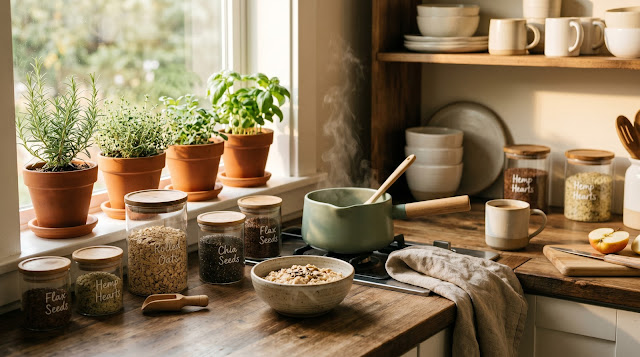
The slow morning aesthetic looks a certain way online. Linen, ceramic, wooden spoons, a pot of herbs on the windowsill. Everything intentional, nothing plastic, the whole kitchen feeling like it breathes.
What it looks like in practice — for most people — is a Teflon pan with scratches in the coating, three different types of plastic containers, paper towels as the default for everything, and a breakfast that gets made in seven minutes while half-asleep and then eaten standing at the counter.
The gap between those two versions isn’t aesthetic. It’s not about buying the right things. It’s about building a routine that’s genuinely slower, genuinely cleaner, and — critically — genuinely easier than what you’re doing now. Because a ritual that requires effort to maintain every morning isn’t a ritual. It’s a performance that exhausts itself by Wednesday.
This is the practical guide. What to actually swap in your kitchen, why the non-toxic part matters more than most people realize, and how to build an eco breakfast routine that becomes automatic rather than aspirational.

Why «Non-Toxic Kitchen» Isn’t Just an Aesthetic Choice
The wellness world uses «non-toxic» loosely, which has made a lot of people skeptical — reasonably so. So let’s be specific about what the actual concerns are, because some are well-supported and some are overstated.
The cookware issue
Traditional non-stick cookware uses PTFE coatings (Teflon is the brand name). At normal cooking temperatures these are considered stable. The problem is two things: scratched or damaged coatings, where the integrity is broken and particles can transfer to food, and overheating — above 500°F (260°C), PTFE begins to off-gas compounds that are toxic to birds and can cause flu-like symptoms in humans. If you cook on high heat or your pan is scratched, this is a real concern, not a marketing invention.
PFAS — the broader class of «forever chemicals» used in many non-stick surfaces — are now the subject of serious regulatory attention in the US and EU. They accumulate in body tissue and have been associated with hormonal disruption, immune function issues, and thyroid problems. The science on low-level dietary exposure is still developing, but the direction of the evidence is clear enough that swapping cookware is a reasonable precaution rather than paranoia.
The alternatives — cast iron, carbon steel, ceramic-coated, stainless steel — all cook excellently once you understand how to use them, and none of them have the same concerns.
The plastic container and wrap issue
BPA-free plastic is better than BPA plastic, but it’s not inert. Many BPA substitutes — BPS, BPF — show similar hormonal disruption effects in research. Heating food in plastic containers, or storing acidic foods (lemon juice, tomatoes, vinegars) in plastic, increases leaching regardless of BPA status.
For a breakfast routine specifically: if you’re making overnight oats, chia pudding, or anything that sits in a container for hours, glass is meaningfully safer than plastic. This isn’t a minor detail for people who do this every morning.
The produce washing and pesticide issue
Conventionally grown produce carries pesticide residue. The Environmental Working Group publishes an annual «Dirty Dozen» list of the highest-residue produce — strawberries, spinach, peaches, apples, and blueberries consistently appear at the top. For a breakfast routine that relies heavily on berries and leafy greens (which an anti-inflammatory, eco breakfast does), buying organic for these specific items and conventional for lower-residue items is the most cost-effective approach.

The Non-Toxic Kitchen Swap List (Morning Routine Edition)
You don’t need to replace everything at once. Replace as things wear out, or start with the items that touch food most directly.
Cookware
- Swap scratched non-stick → ceramic-coated pan. Easier transition than cast iron for most people. Genuinely non-stick when new, free of PTFE and PFAS. Requires lower heat than you’re used to — this is actually part of the slow morning ethos. Medium heat, more patience, better results.
- Or: carbon steel pan. Lighter than cast iron, develops a natural non-stick seasoning over time, lasts indefinitely. Takes a few weeks to season properly but after that it’s largely indestructible.
- Keep: stainless steel pots for anything liquid — oats, soups, teas. Stainless steel is inert, durable, easy to clean, and has no coatings to worry about.
Storage
- Swap plastic containers → glass jars and glass containers with bamboo or stainless lids. Wide-mouth mason jars for overnight oats and chia pudding. Glass Tupperware-style containers for anything else. Upgrading to glass is also one of the highest-impact steps from our Simple Eco-Friendly Kitchen Swaps to eliminate harmful plastics and synthetic materials. The visual difference in the fridge alone is significant — you can see what you have.
- Swap plastic wrap → beeswax wraps. Reusable, compostable at end of life, work well for covering bowls and wrapping cut produce. Don’t use for raw meat or anything that needs to stay very hot. For the breakfast routine specifically, they’re ideal.
- Swap paper towels → linen or cotton cloths. This feels like a big change and then becomes completely automatic within a week. A stack of small linen cloths does everything paper towels do. Wash with laundry. The visual difference in a slow morning kitchen is enormous — no paper towel holder, no cardboard tube, just folded cloth.
Utensils and tools
- Swap plastic utensils → wooden or stainless steel. Wooden spoons don’t scratch ceramic or cast iron coatings, don’t melt if left in a hot pan, and look like the kitchen you’re building toward.
- Swap plastic cutting boards → wood or glass. Plastic boards accumulate cuts that harbor bacteria and shed microplastics into food during cutting. End-grain wood boards are gentler on knives and self-healing to a degree — the wood fibers close back around cuts.
- Keep: a good glass blender. Vitamix and Blendtec both have glass jar options. If you make smoothies regularly, glass over plastic is meaningful — acidic fruits and long blending times at speed are the conditions where plastic off-gasses most.

The Eco Breakfast Routine: What It Actually Looks Like
A slow morning eco breakfast routine isn’t about making breakfast more complicated. It’s about making it more intentional — and building enough structure that it requires fewer decisions, not more.
The Sunday Reset (10 minutes)
Once a week, not every morning. This is what makes the daily routine easy:
- Wash and dry all glass jars and containers
- Fill the breakfast jars: oats, chia seeds, nuts, seeds, dried fruit — everything portioned and visible
- Make a batch of overnight oats or chia pudding in two or three jars — ready for Monday, Tuesday, Wednesday mornings with zero morning effort
- Wash and portion fruit — berries rinsed and in a glass container, ready to add to anything
- Check spices and pantry staples — refill any glass jars that are running low
Ten minutes on Sunday means that Monday through Wednesday breakfast is: open fridge, add toppings, sit down. That’s the whole routine.
The Daily Morning Ritual (15–20 minutes total)
This isn’t about efficiency. It’s about pace. The point of a slow morning is that you’re not rushing, not multitasking, not eating standing up. The kitchen becomes the first calm space of the day rather than the first source of friction.
6:30 — Before anything else: Fill the kettle. Not a coffee maker — a kettle, boiling water for tea or matcha. The sound and ritual of a kettle is different from the automated hiss of a machine. It’s a small thing that sets a different tone.
6:32 — While water heats: Take out whatever is prepped from the fridge. If it’s overnight oats, they’re already done. If you’re making eggs, get the ceramic pan on medium-low heat with a small amount of ghee. No phone yet. The kitchen first.
6:38 — Make the drink: Matcha whisked in the ceramic bowl, or lemon ginger water, or the golden milk. Whatever the morning calls for. If you’re new to the matcha ritual, our Beginner’s Guide to Choosing Matcha will help you select a high-quality blend. This is the moment that actually slows the pace — you can’t rush a proper matcha without it going lumpy, which is a feature not a bug.
6:45 — Sit down: At an actual table. With the food in front of you. Not in front of a screen. Five to ten minutes of just eating, looking out the window, being in the morning before the day starts asking things of you.
That’s it. That’s the whole ritual. It’s not complicated. The magic is in doing it consistently rather than occasionally.
5 Eco Breakfast Recipes for the Slow Morning Kitchen
1. Overnight Oats in a Mason Jar (Zero Morning Effort)
- ½ cup organic rolled oats
- 1 cup oat milk
- 1 tbsp chia seeds
- 1 tsp maple syrup
- ½ tsp cinnamon
Combine in a wide-mouth mason jar the night before. Top in the morning with whatever fruit you have, a handful of walnuts, and a drizzle of raw honey. The jar goes from fridge to table. One container, no cooking, no cleaning beyond rinsing the jar.
2. Slow-Cooked Turmeric Oats (10 minutes, ceramic pot)
- ½ cup rolled oats cooked in oat milk on medium-low heat — slower than you think is necessary
- ¼ tsp turmeric, pinch of black pepper, pinch of cinnamon stirred in while cooking
- Top with stewed seasonal fruit (whatever is in season), pumpkin seeds, drizzle of tahini
The slow cooking in the ceramic pot matters — lower heat, more stirring, creamier result. This is the recipe that makes you understand why «slow» is a technique and not just an aesthetic.

3. Ceramic Pan Eggs with Garden Herbs
- 3 eggs from pasture-raised hens (the omega-3 content is measurably higher)
- 1 tsp ghee in the ceramic pan, medium-low heat
- Fresh herbs from the windowsill: chives, dill, or flat-leaf parsley
- Flaky salt, cracked pepper
- Serve on sourdough with half an avocado
The ceramic pan at medium-low means the eggs cook gently without browning. Two minutes. The wooden spatula folds them softly. This is the version of scrambled eggs that made me stop ordering them at restaurants because nothing there tastes like this.
4. Seasonal Fruit and Nut Chia Pudding
- 3 tbsp chia seeds + 1 cup coconut milk + 1 tsp vanilla + 1 tsp maple syrup — made the night before in a glass jar
- Top with whatever is in season: spring strawberries, summer peaches, autumn pears, winter citrus
- Crushed pistachios and a few dried rose petals if you have them
The seasonal topping is the eco principle made practical — what’s in season costs less, tastes better, and has lower transport impact. The base recipe stays the same year-round. The toppings change with the calendar.
5. Avocado Toast with Everything from the Garden
- Sourdough bread (organic if possible — wheat is on the higher-pesticide list)
- One ripe avocado, lemon juice, flaky salt
- Whatever herbs are growing: basil in summer, thyme in autumn, chives almost always
- Hemp seeds, microgreens if you’re growing them, thin radish slices
- Optional: a soft-boiled egg, always from pasture-raised. For our signature sourdough recipe, try The Ultimate Mindful Breakfast Avocado Toast.
Growing even one herb on a windowsill — just chives, which are almost indestructible — changes this recipe. The flavor difference between dried herbs from a jar and fresh herbs from three feet away is not subtle.
Building the Zero-Waste Breakfast Habit
Zero-waste is a direction, not a destination. The goal isn’t a perfectly waste-free morning — it’s reducing the default waste that happens without thinking.
The biggest wins for a breakfast routine specifically:
- Buy oats, nuts, seeds, and grains in bulk into your own glass jars. Most natural food stores and co-ops have bulk sections. One trip fills jars that last weeks. No packaging at all. For a complete guide on reorganizing your storage, try our Cozy Fall Pantry Reset Guide.
- Compost food scraps. Avocado pits and skins, fruit peels, egg shells, coffee grounds — all compostable. A small countertop compost bin with a tight lid is odorless and empties once or twice a week.
- Linen cloths instead of paper towels — already mentioned, worth repeating because it’s the highest-volume swap for most kitchens.
- Beeswax wraps for produce storage instead of plastic bags. A beeswax wrap around half an avocado, pressed to the cut surface, keeps it green far longer than you’d expect.
- Reusable produce bags for farmers market and grocery runs. Mesh cotton bags weigh almost nothing, take up no space, and remove the one piece of plastic that appears even in otherwise low-waste shopping.

4 Variations on the Slow Morning Eco Routine
- The 5-minute version: Chia pudding from the fridge, seasonal fruit, done. For mornings when slow isn’t possible but you still want clean. This is why the Sunday prep exists.
- The winter version: Longer, warmer, more cooking. Slow-cooked oats, golden milk on the stove, bread toasted in a cast iron pan. The season is an invitation to slow down more, not less.
- The no-cookware-budget version: Start with one swap — a glass jar for overnight oats. That’s it. The routine doesn’t require new equipment. It requires a different pace.
- The with-kids version: Make breakfast prep part of the ritual, not a background task. Letting small children pour oats from a glass jar, stir chia pudding, pick herbs from the windowsill — these are the habits that form without effort at that age.
FAQ: Slow Morning Ritual, Non-Toxic Kitchen, Eco Breakfast
Is ceramic cookware actually non-toxic?
Ceramic-coated cookware — the kind with a white or colored non-stick ceramic surface — is free of PTFE and PFAS. True ceramic (like a ceramic casserole dish or tagine) is fully inert. The ceramic coating on a pan is not quite the same thing, but it’s still significantly safer than traditional non-stick. The main caveat: ceramic coatings degrade over time, especially with metal utensils or high heat. Use wooden or silicone utensils and medium heat and the coating lasts much longer.
What’s the easiest first swap for a non-toxic kitchen?
Glass jars for food storage. It costs almost nothing if you reuse pasta sauce jars and pickle jars — clean them, remove labels with oil and a cloth, use them for everything. This single swap removes the majority of plastic food contact from most kitchens and is completely free.
Is organic food actually worth it for a breakfast routine?
For the specific items that appear consistently on high-pesticide lists — berries, oats, apples, spinach, peaches — yes, the organic version is meaningfully lower in residue. For items with thick skins you don’t eat (avocados, bananas, citrus), the difference is negligible. Prioritizing organic for the high-contact items and conventional for everything else is the most cost-effective approach.
How do I make a slow morning ritual sustainable when I have a busy schedule?
The Sunday prep is the answer. Fifteen minutes of setup on Sunday — jars filled, overnight oats made, fruit washed — means that Monday through Wednesday morning asks almost nothing of you. The slow part of the routine is the eating, not the making. You can make breakfast fast and still eat it slowly.
Can I build a slow morning ritual without buying anything new?
Completely. The slow morning is primarily about pace, not equipment. Eating at a table instead of standing. No phone for the first twenty minutes. Making tea or warm water with lemon instead of automating the coffee. Looking out the window while you eat. These cost nothing and are the actual substance of the ritual. The ceramic pan and the linen cloths come later, if at all.
The slow morning kitchen isn’t a destination you arrive at once everything is perfectly organized and non-toxic and photographically coherent. It’s a practice that happens gradually — one swap at a time, one morning at a time, until the pace becomes the default rather than the exception.
The eco part and the ritual part reinforce each other. When you care about what your kitchen is made of, you care more about what happens in it. When you slow down enough to notice the morning, you start making different choices without having to think about them.
That’s the whole thing, really. Slower on purpose. Cleaner because it matters. Enough times that it stops being a decision.
📌 Slow kitchen aesthetics, eco breakfast ideas, and morning ritual inspiration — posted daily on Pinterest. Follow NourishRituals here and build your own collection of mornings worth saving.