
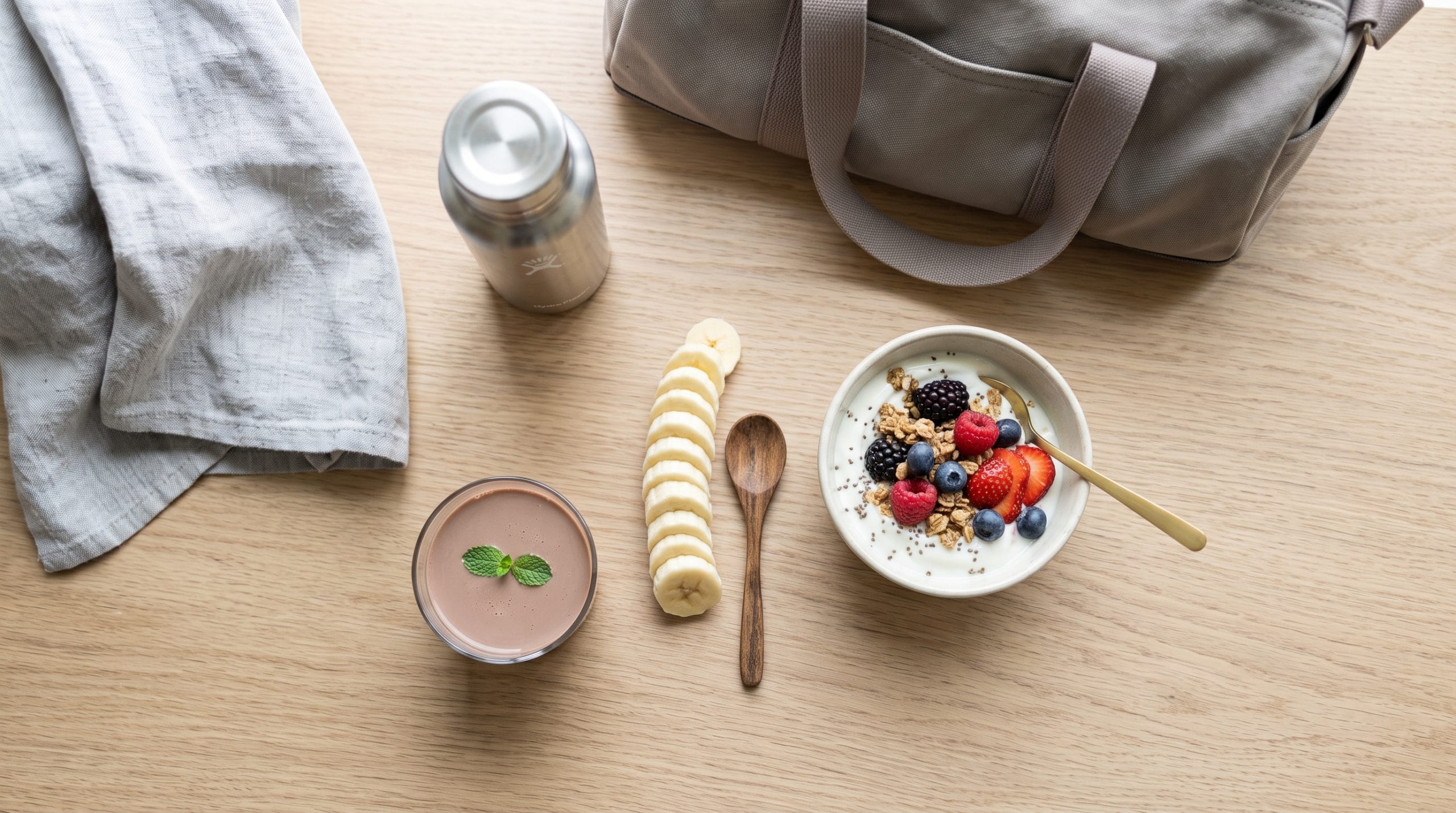
The 5-minute recovery ritual is the third post in the 5-Minute Ritual series, and this one’s for the window right after you finish working out — that stretch where you’re sweaty, a little wiped out, and the easiest thing in the world is to just shower and forget about eating for another hour or two. I used to do exactly that, until I actually looked into why so many trainers push the “eat something soon” advice so hard, and it turns out the timing matters more than I’d assumed.
Same structure as always: five minutes of real hands-on effort, nothing that needs a stove, built around a specific window in your day where a small deliberate action does more than it looks like it should.
Jump to: Why timing matters · Building your 5-minute recovery ritual · 4 workout variations · Fitting into your day · FAQ
Why the Timing Actually Matters
When you work out, especially anything involving resistance or sustained effort, your muscles burn through their stored glycogen — the form your body keeps carbohydrate in for quick energy — and the muscle fibers themselves accumulate small amounts of stress and breakdown that need protein to repair. According to clinical research on muscle glycogen synthesis and nutrient timing, your body’s ability to restock that glycogen and start rebuilding muscle tissue is elevated for a window after exercise, often described as roughly 30 to 60 minutes, though research has moved away from treating it as a strict all-or-nothing cutoff and more as a gradually closing window where sooner is simply better than later.
The combination that matters most in that window is carbohydrate paired with protein, not one or the other alone. Carbohydrate replenishes glycogen efficiently, especially when insulin is naturally more responsive right after exercise, which helps shuttle glucose into muscle cells faster than it would at rest. Protein supplies the amino acids your muscle tissue needs to actually start the repair process, rather than just refueling energy stores. Neither one alone covers both jobs.
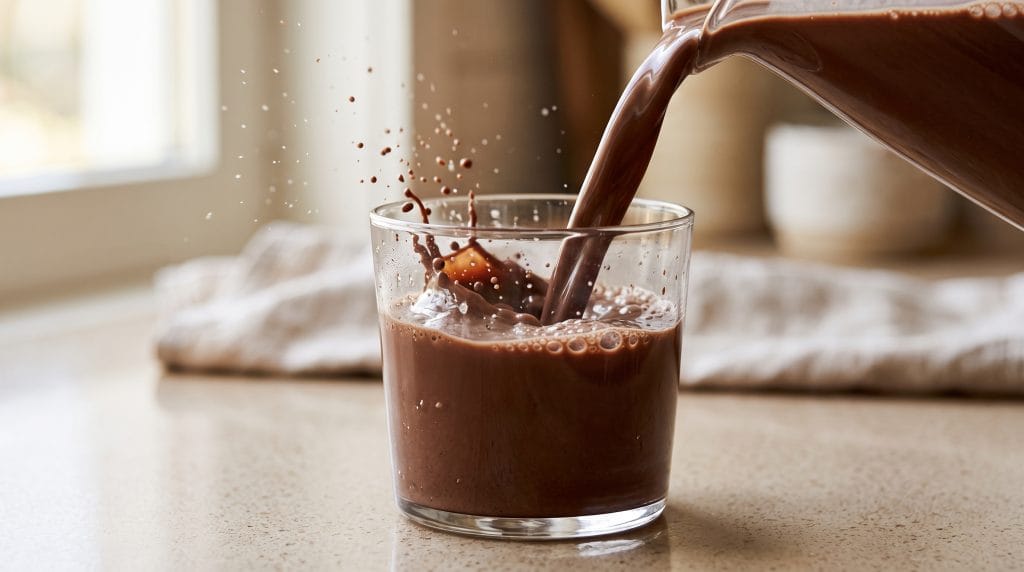
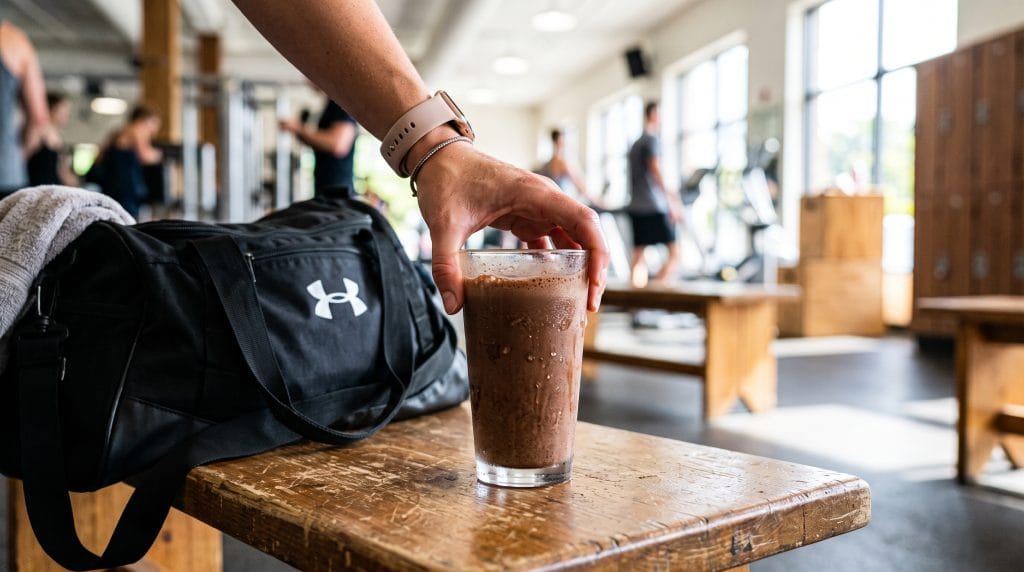
This is part of why chocolate milk has such a long, slightly funny reputation as a legitimate post-workout recovery drink among athletes and trainers — it happens to land almost exactly on the carbohydrate-to-protein ratio that recovery research tends to favor, purely by coincidence of what’s already in a glass of flavored milk. Sports scientists have actually studied it directly compared to commercial recovery drinks and found it holds up surprisingly well, which is part of why it keeps showing up in gym bags well past the point where it should feel like a novelty.
None of this means a single missed recovery window ruins anything — your body is more forgiving than that, and one skipped snack after one workout isn’t going to undo your progress. The value here is more about consistency over weeks and months than about any one session being make-or-break.
Building Your 5-Minute Recovery Ritual
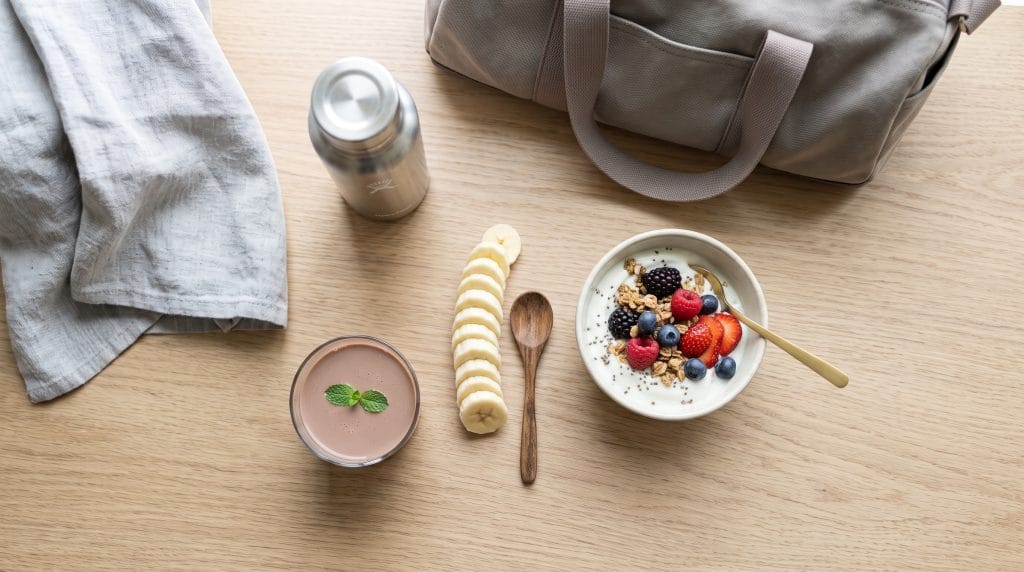
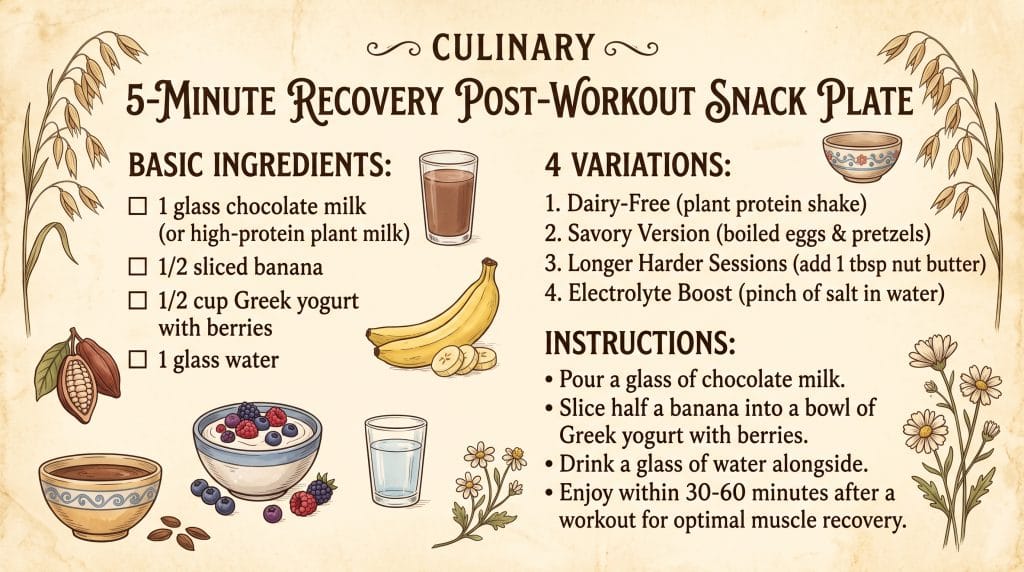
Pour a glass of chocolate milk, regular or a plant-based version with added protein. Slice half a banana on the side, or straight into a small bowl of Greek yogurt with a handful of berries if you’d rather eat than drink your recovery snack. Either combination covers the same carbohydrate-and-protein pairing, similar to our high-protein aesthetic breakfast bowl, so pick whichever sounds better in the moment.
Drink a full glass of water alongside whichever version you choose. Rehydrating is its own separate priority after a sweaty workout, and it’s easy to let it get lost behind thinking about food specifically.
4 Variations to Fit Your Workout
Dairy-free — swap chocolate milk for a protein-enriched plant milk, or blend a banana with plant-based protein powder and water for a quick shake instead.
Savory version — a hard-boiled egg or two with a small handful of pretzels covers the same protein-and-carb pairing for anyone who doesn’t want anything sweet post-workout.
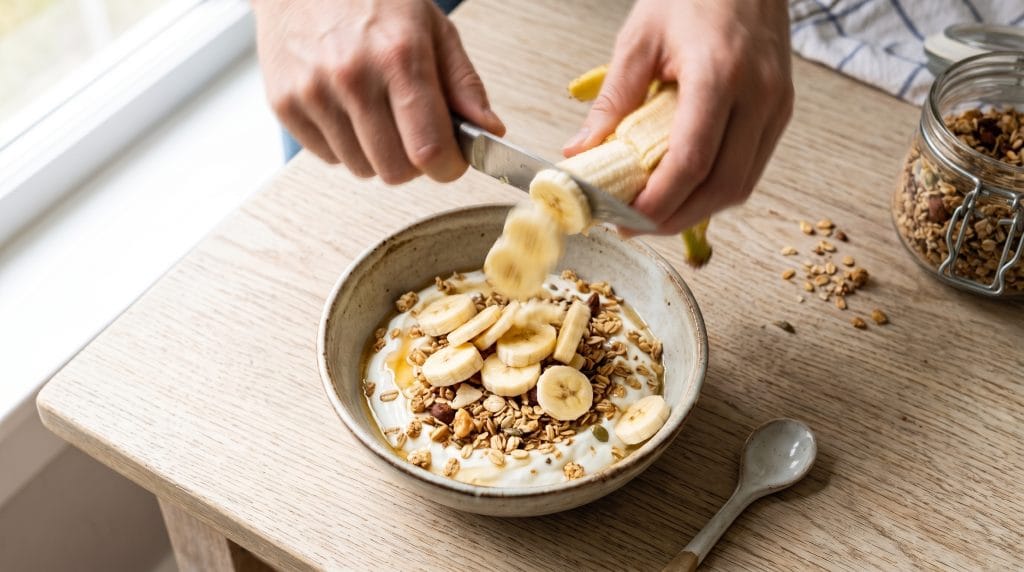
Longer, harder sessions — add a tablespoon of nut butter to the yogurt-and-berries version for extra calories if you’ve just finished something especially long or intense, since your recovery needs scale with how much you actually burned.
Electrolyte boost — a small pinch of salt stirred into the water, or a splash of coconut water alongside it, helps replace sodium lost through sweat, especially after a longer or particularly sweaty session, or if you trained somewhere hot.
How This Fits Into the Rest of Your Day
This plate isn’t meant to replace your next full meal — it’s a bridge, meant to cover the recovery window until you can actually sit down to something more substantial an hour or two later. Skipping it entirely and just waiting for your next regular meal isn’t catastrophic for most casual exercisers, but if you work out consistently, several times a week, that gap adds up over time and can slow how efficiently your body recovers and adapts between sessions. Athletes and people training with real intensity or frequency tend to feel the difference most, while someone doing a light walk or an easy yoga session has a lot more flexibility here.
It’s also worth noticing how this sits next to the other two rituals in this series so far. The 5-minute wind-down ritual was built to calm your system down, and the 5-minute focus ritual was built to keep you steady and alert. This 5-minute recovery ritual is doing a third, completely different job — active repair — which is really the whole idea behind treating “5-Minute Ritual” as a format rather than a single recipe. Same five-minute structure, same idea of a small deliberate pause, but the actual nutritional logic underneath changes completely depending on what your body needs from that specific moment.
Frequently Asked Questions
Do I really need to eat within a strict 30-minute window?
Not as strictly as older advice suggested. Current thinking treats it more as a gradually closing opportunity than a hard cutoff — eating within an hour or two still captures most of the benefit, so don’t panic if you’re stuck in traffic instead of standing in your kitchen the second you finish.
Is chocolate milk actually better than a protein shake?
Neither is definitively better — they’re just different vehicles for a similar carbohydrate-to-protein ratio. Chocolate milk happens to be convenient, familiar, and already balanced without needing to measure anything, which is most of its appeal.
What if I’m not hungry right after working out?
That’s common, especially after intense effort. A liquid option like chocolate milk or a smoothie is often easier to get down than solid food when your appetite hasn’t caught up yet.
Does this matter for light workouts too, like a short walk?
Less so. This ritual matters most after workouts that meaningfully deplete glycogen or stress muscle tissue — think resistance training, running, or longer cardio sessions — rather than a casual walk around the block.
Can I just eat a regular meal instead of this plate?
If you can get a full meal with protein and carbohydrate on the table within that same window, that works just as well. This ritual exists mainly for the gap between finishing a workout and actually having time to cook or sit down to something bigger — think of it as a placeholder that does real physiological work, not just a stopgap.
More moments, more rituals — the rest of the series lives over on @Nourish_Rituals.
