
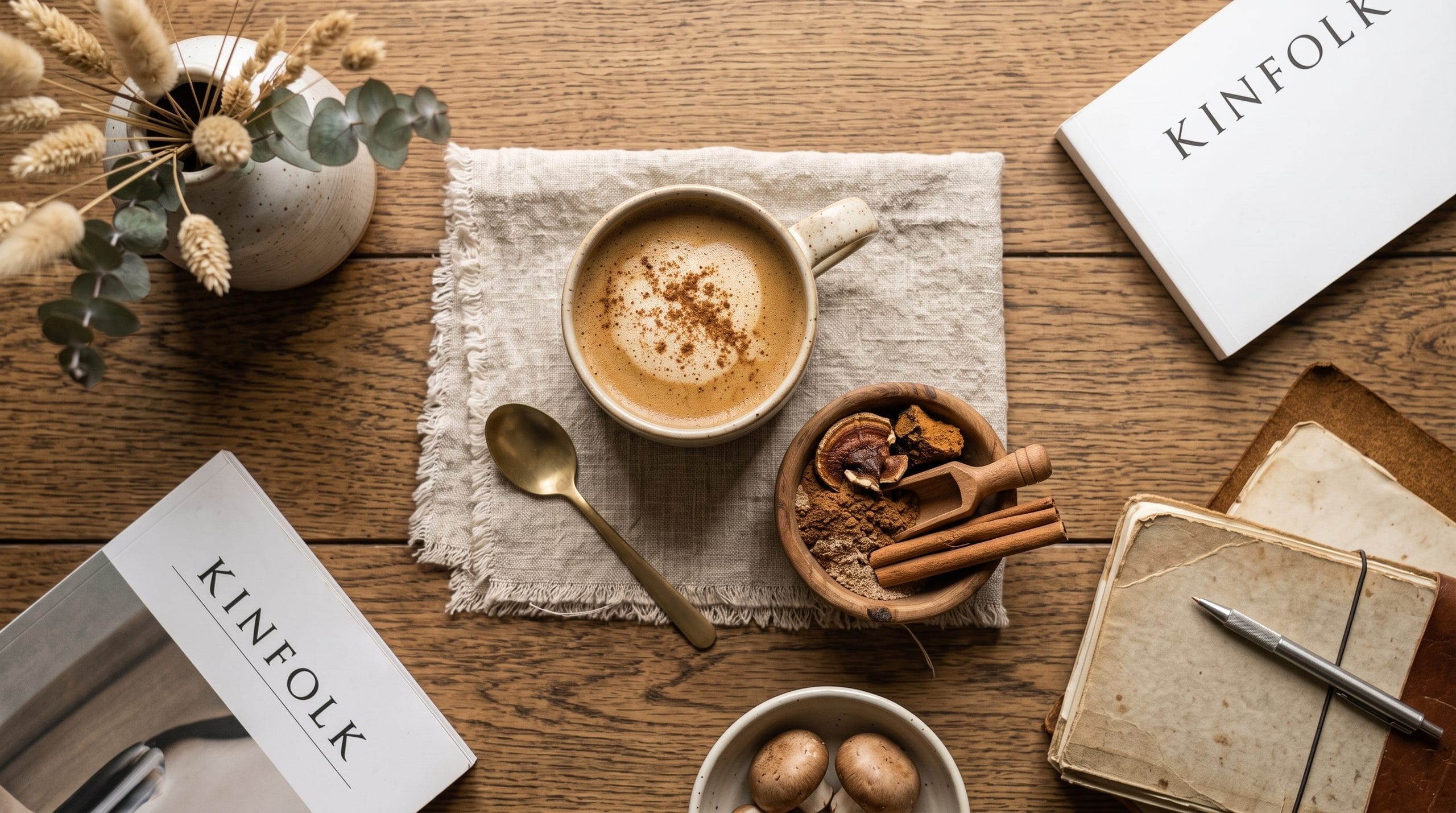
Mushroom coffee sounds like it should taste like a forest floor. It doesn’t. Done right, it tastes like coffee — slightly earthier, a little rounder, without the 10am crash that sends you hunting for a second cup. If you’ve seen it all over your feed and assumed it was another wellness trend that would fade by spring, I get it. But the ingredients behind it have decades of research attached to them, and once you understand what they’re actually doing in your body, the appeal makes a lot more sense, much like switching to our calm hojicha latte morning ritual.
This is the full rundown: what mushroom coffee actually is, why it behaves differently than regular coffee, how to make it at home without buying an overpriced starter kit, and five ways to drink it depending on your mood.
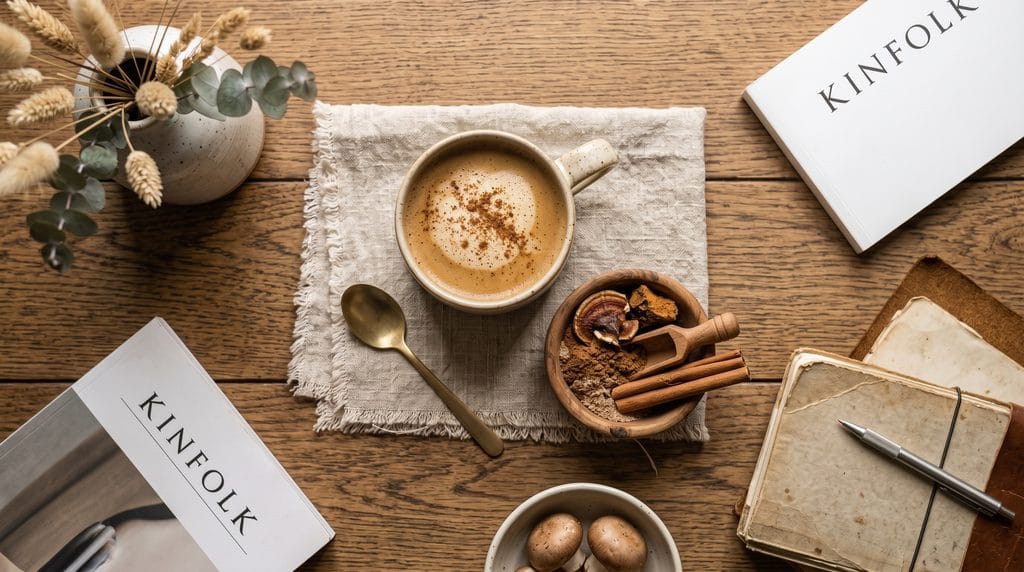
Jump to: What mushroom coffee actually is · The 4 mushroom species · The science of no jitters · How to make mushroom coffee at home · 5 ways to drink it · Common mistakes · Storage · FAQ
What Mushroom Coffee Actually Is
Mushroom coffee is regular coffee — usually ground beans or instant coffee — blended with an extract powder made from medicinal mushrooms. It is not made from culinary mushrooms like button or portobello, and it does not taste like sautéed mushrooms. The mushrooms used are dried, extracted, and powdered specifically for their compounds, not their flavor.
The Species That Actually Show Up in Your Cup
Four species dominate almost every commercial blend and DIY recipe:
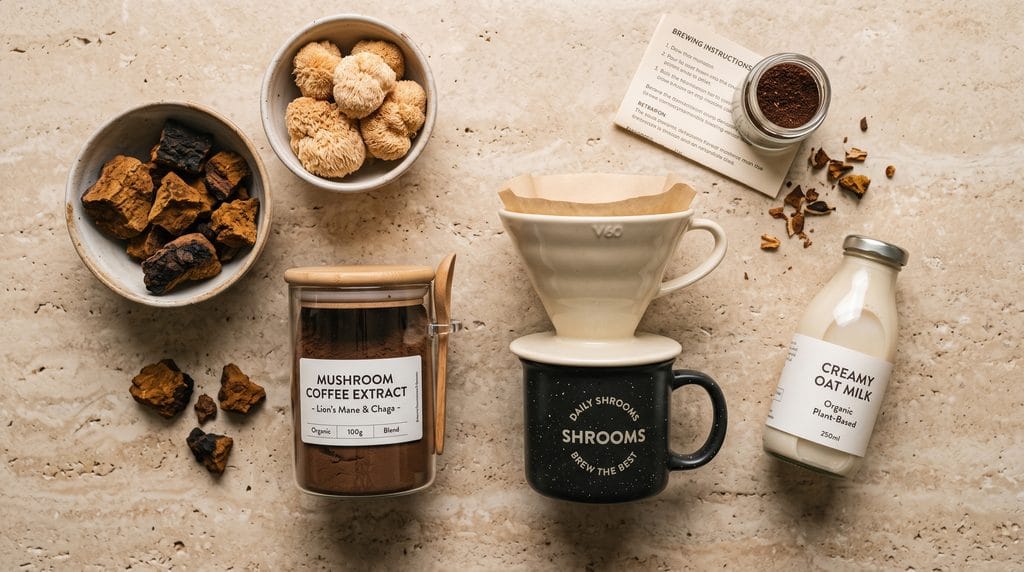
Lion’s mane is the one most people start with. It has a mild, faintly nutty taste and is prized for compounds called hericenones and erinacines. According to neurobiological research on Hericium erinaceus (Lion’s Mane), these compounds stimulate nerve growth factor (NGF) synthesis in preclinical models, supporting focus and clarity.
Chaga is a dense, woody fungus that grows on birch trees and is loaded with antioxidant compounds. It has a slightly bitter, cocoa-adjacent flavor that blends almost invisibly into dark roast coffee.
Cordyceps is the energy-focused mushroom. It’s associated with ATP production, which is the molecule your cells use to actually generate usable energy, and it’s popular in coffee blends aimed at workout mornings.
Reishi is the calming outlier. It’s more often used in evening blends or half-caff mixes because it’s associated with a mellowing effect rather than a lift.
Most mushroom coffees you’ll find combine two or three of these rather than relying on just one.
The Science: Why It Doesn’t Feel Like Regular Coffee
This is the part that actually matters for understanding whether mushroom coffee is worth your counter space, so let’s slow down on it.
Beta-Glucans and How They Behave in Your Gut
Medicinal mushrooms are rich in a type of soluble fiber called beta-glucans. These aren’t digested the way starch or sugar is — instead, they pass into the large intestine mostly intact, where gut bacteria ferment them slowly. That slow fermentation is part of why mushroom compounds tend to release their effects gradually rather than all at once, unlike caffeine, which hits your bloodstream fast and clears fast too.
Adaptogens and the Cortisol Curve
Chaga, cordyceps, and reishi are all classified as adaptogens — a category of plant and fungal compounds thought to help the body regulate its stress response rather than stimulate or sedate it directly. The proposed mechanism involves the HPA axis, the communication loop between your brain and adrenal glands that controls cortisol release. Caffeine alone tends to spike cortisol on top of its adenosine-blocking effect (adenosine is the molecule that makes you feel sleepy, and caffeine works by blocking its receptors). Some researchers believe adaptogenic compounds blunt that extra cortisol spike, which is the leading theory for why people report a steadier, less jittery lift from mushroom coffee compared to a plain double shot.
It’s worth being precise here: most of this research is still early, done in small human trials or in vitro studies, not decades of large-scale clinical data. The honest version of the claim is “promising and plausible,” not “proven.” What is well established is that mushroom coffee blends typically contain less caffeine per cup than a standard brew, since the mushroom powder is replacing part of the coffee volume — and that alone accounts for a good chunk of the smoother feeling.
How to Make Mushroom Coffee at Home
You don’t need a subscription box. You need one ingredient most grocery stores or online retailers carry, and coffee you already have.
What You’ll Need
- Brewed coffee, French press, or instant coffee — your usual method works fine
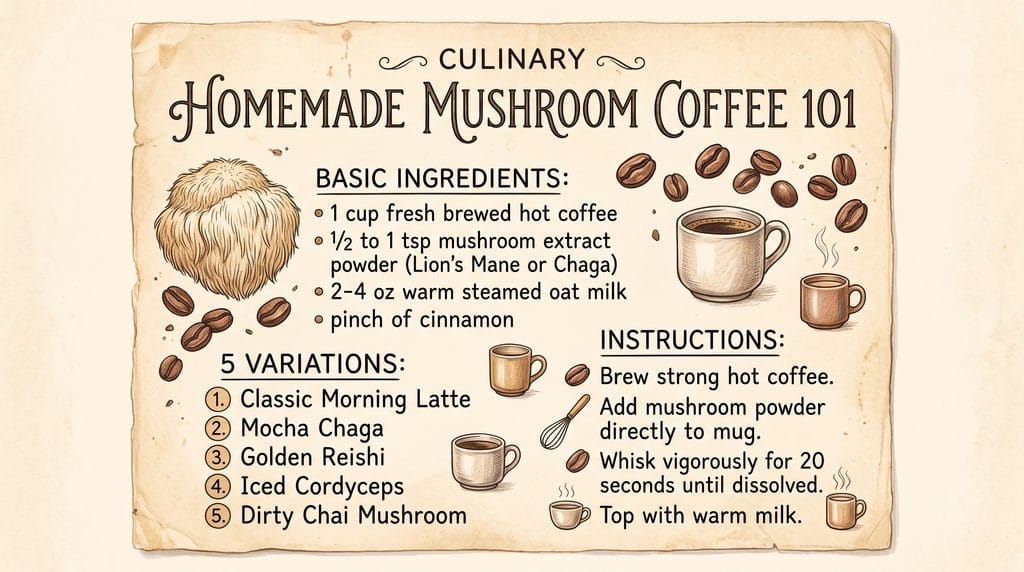
- 1/2 to 1 teaspoon of mushroom extract powder per cup (lion’s mane or chaga is the easiest starting point for flavor)
- A milk of choice, if you want it creamy
- A small whisk, milk frother, or just a spoon and patience
Step-by-Step
- Brew your coffee as you normally would, slightly stronger than usual since you’ll be diluting it with powder and milk.
- While it’s still hot, add the mushroom powder directly into the mug rather than the brewing water — this keeps the extract from clumping in a filter.
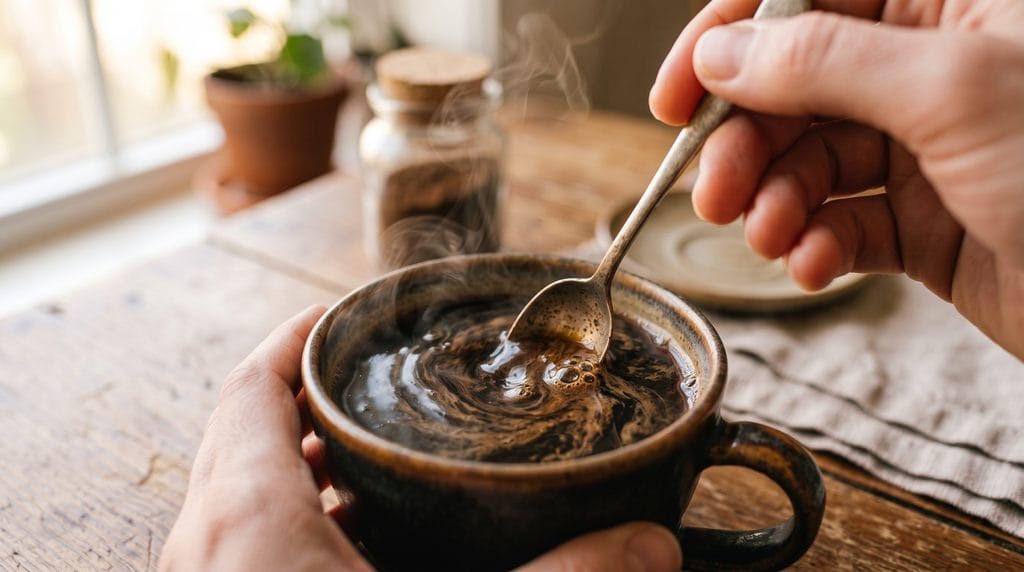
- Whisk vigorously for about 20 seconds, or use a milk frother, until the powder is fully dissolved. Extract powders are water-soluble, so you shouldn’t see grit at the bottom if you whisk long enough.
- Add warmed milk or a milk alternative if you want a latte texture, following the frothing technique from our calming matcha latte guide.
- Taste before adding sweetener — good extract powders are nearly flavorless or lightly earthy, not bitter, so you may need less sugar than you’d expect.
Five Ways to Drink It
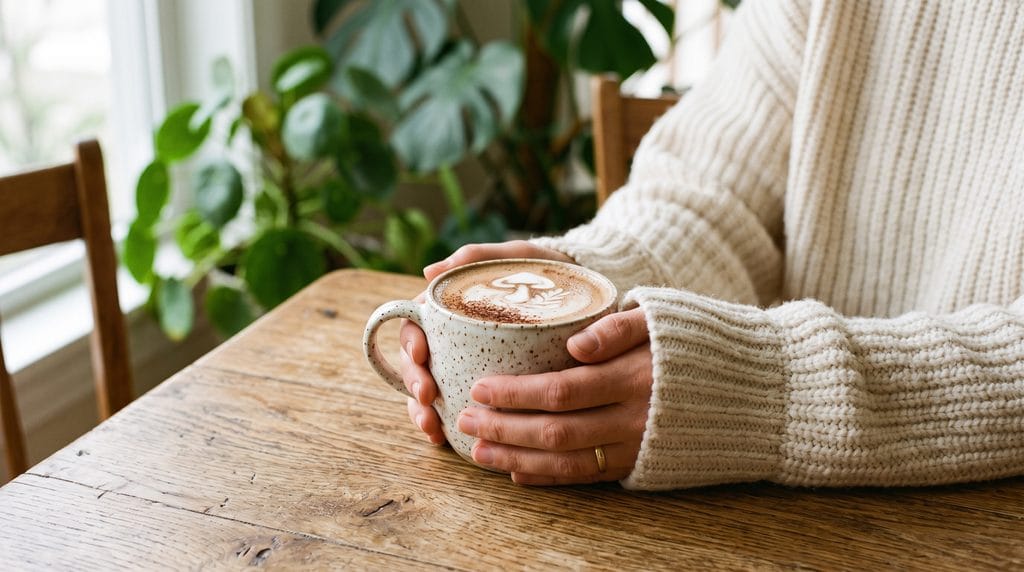
Classic morning latte — brewed coffee, lion’s mane powder, steamed oat milk, a pinch of cinnamon. This is the gateway version if you’ve never tried mushroom coffee before.
Mocha version — add a teaspoon of unsweetened cacao powder along with chaga extract. The cacao’s natural bitterness masks any earthiness completely, which makes this the easiest sell for skeptics.
Golden mushroom coffee — half coffee, half turmeric-spiced milk, with reishi powder stirred in, taking inspiration from our restorative golden turmeric milk recipe.
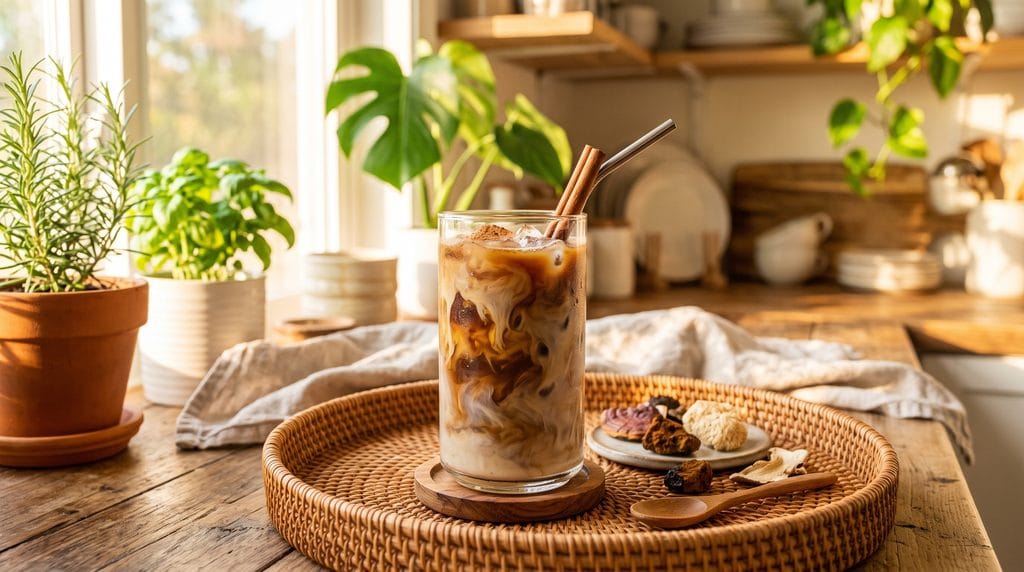
Iced cordyceps coffee — cold brew, a scoop of cordyceps powder blended (not just stirred, since cold liquid dissolves powder less easily), poured over ice. Best made in a blender bottle so the powder doesn’t settle at the bottom of the glass.
Dirty chai mushroom blend — chai concentrate as your base instead of straight coffee, with a shot of espresso and lion’s mane powder. Lower caffeine than a regular dirty chai, with the spice doing most of the flavor work.
Common Mistakes Worth Avoiding
The biggest one is adding powder to boiling water or milk straight off the stove — very high heat can degrade some of the more delicate compounds in certain extracts over time, though a single cup won’t ruin anything. Aim for hot-but-not-boiling, similar to tea-brewing temperature.
The second mistake is buying a blend that lists “mushroom coffee” as the only ingredient with no species named. Reputable extract powders will specify the mushroom (lion’s mane, chaga, etc.) and often the extraction ratio. If a label is vague, the actual concentration of active compounds is probably vague too.
The third is expecting an immediate, dramatic effect the first time you drink it. Adaptogens are generally described as working cumulatively, with more noticeable effects reported after consistent use over one to two weeks rather than from a single cup.
How to Store It
Mushroom extract powders are shelf-stable and should be kept in an airtight jar away from direct light and humidity, much like ground coffee itself. Keeping powders organized in dark glass containers follows the same principles as our guide to non-toxic pantry glass jar organization. Once opened, most powders stay potent for six months to a year — check the packaging, since extraction methods vary by brand.
FAQ
Does mushroom coffee actually reduce caffeine?
Usually yes, simply because part of each cup’s volume is mushroom powder instead of ground coffee. Some blends also use less coffee overall. Check the label if you’re caffeine-sensitive — the amount varies significantly between brands.
Can I make it with instant coffee?
Yes. Instant coffee actually blends more evenly with extract powder than fresh-brewed grounds do, since both are already fine, soluble powders.
Will it taste like mushrooms?
Not if you’re using a proper extract powder and a reasonable dose. Whole dried mushroom chunks steeped in coffee will taste earthy and vegetal; refined extract powders are formulated to be close to flavorless.
Is it safe to drink every day?
For most healthy adults, yes, in normal culinary amounts. People who are pregnant, nursing, on immunosuppressants, or managing a diagnosed medical condition should check with a doctor first, since some mushroom compounds interact with medications.
What’s the difference between mushroom coffee and mushroom tea?
Mushroom tea skips the coffee entirely and is just hot water with mushroom extract, sometimes with other herbs. Mushroom coffee keeps the caffeine and the coffee flavor as the base, with the mushroom extract layered on top.
If this is the kind of slow-morning ritual you’re into, I’m posting daily aesthetic recipe reels over on Pinterest — come find your next one.
