
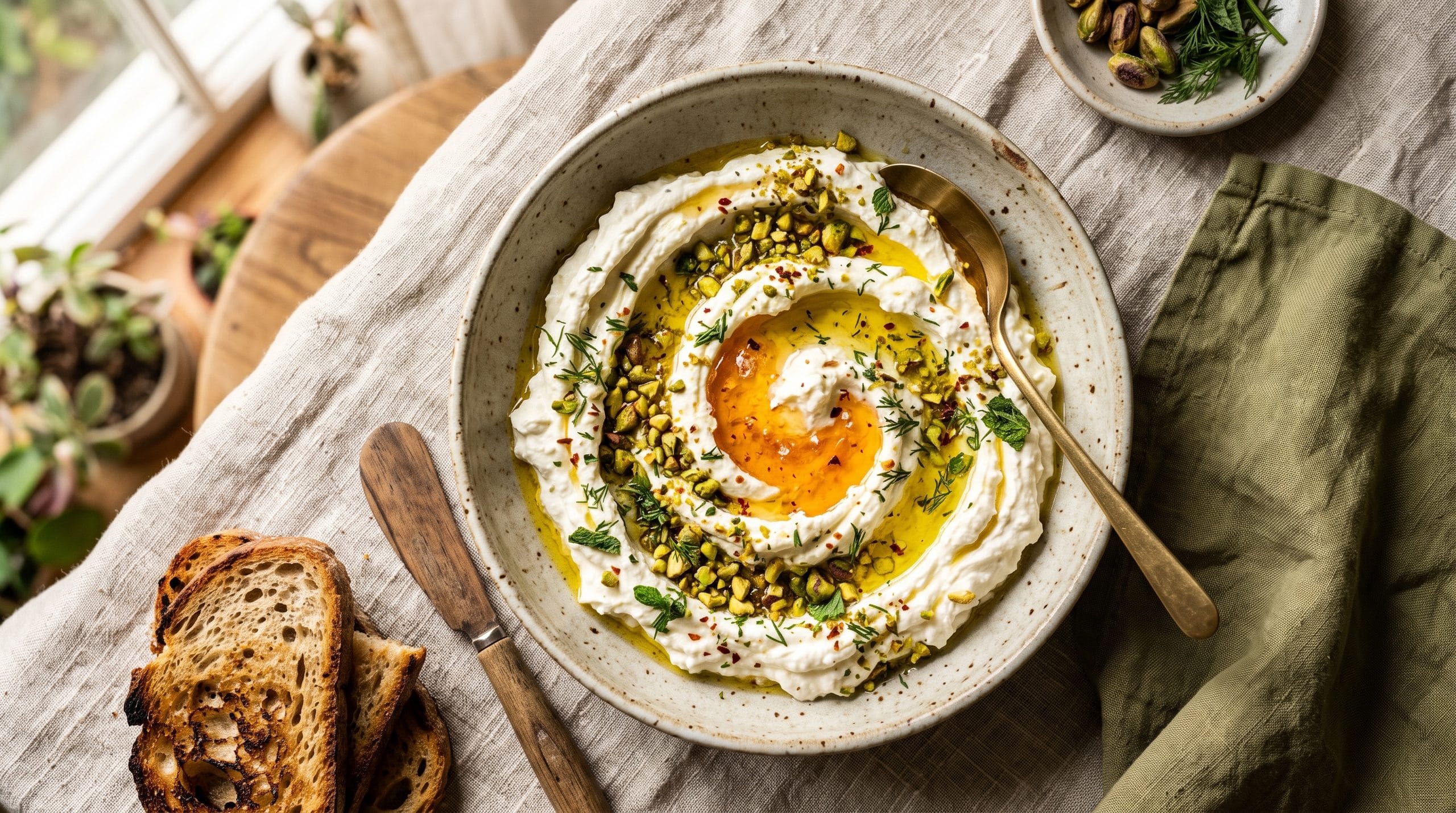
Whipped feta dip has gone viral more than once at this point — it surges, fades for a stretch, then resurfaces again almost every year, usually with a slightly different topping trend riding along with it. That pattern alone tells you something most one-hit recipes can’t: this isn’t a fluke of algorithm timing. There’s an actual texture transformation happening here that people keep rediscovering, and once you understand the mechanism, you’ll never make a flat, grainy dip again.
Jump to: The emulsion & aeration science · The base whipped feta dip recipe · 5 flavor variations · Troubleshooting · Serving it like the viral version · FAQ
Why Blending Feta Turns It Into Something Else Entirely
Feta straight out of the package is crumbly and dense — the opposite of the light, almost mousse-like dip it becomes after a few minutes in a food processor. What’s actually happening is a combination of two separate physical processes: emulsification and aeration.
The Emulsion Part
Feta is roughly a third fat, held inside a protein matrix. When you blend it with a liquid fat — usually olive oil, sometimes mixed with cream cheese or Greek yogurt — the processor’s blade physically breaks the cheese’s protein structure into much smaller particles, and those particles reorganize themselves around tiny droplets of oil. According to dairy science research on cheese protein matrix emulsification, fat suspended in a stabilized protein matrix creates high viscosity and prevents phase separation, identical to the whipping mechanics we use in our whipped cottage cheese with raw honey.
The Aeration Part
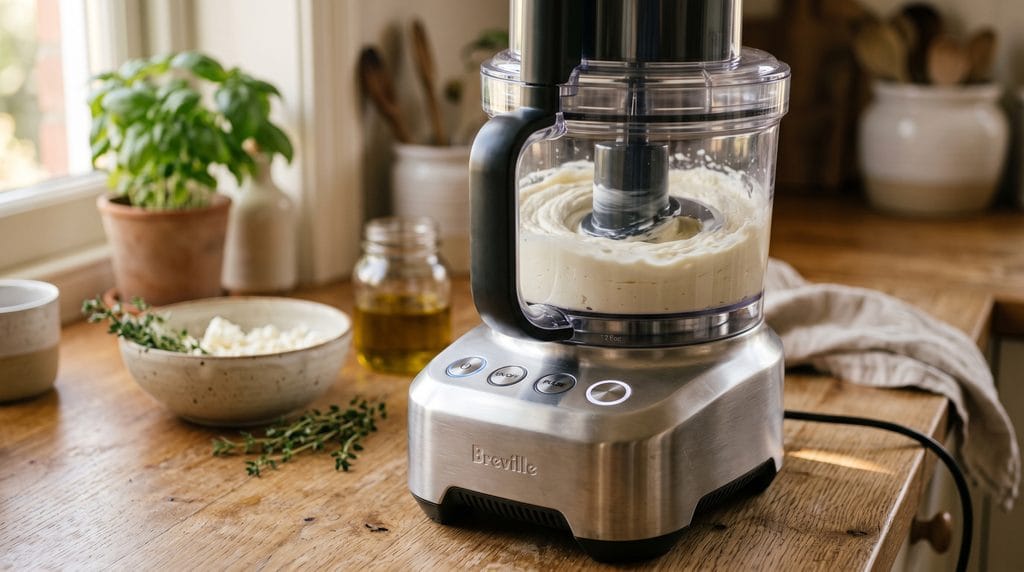
At the same time, the blending process is beating air into the mixture. Those tiny air pockets get trapped inside the now-smoother protein-fat matrix, which is what gives whipped feta its characteristic light, cloud-like texture instead of a dense cheese paste. This is mechanically similar to what happens when you whip butter or cream — mechanical agitation incorporates air, and a stabilized matrix around the air keeps it from immediately collapsing back out.
Why Adding Yogurt or Cream Cheese Changes Everything
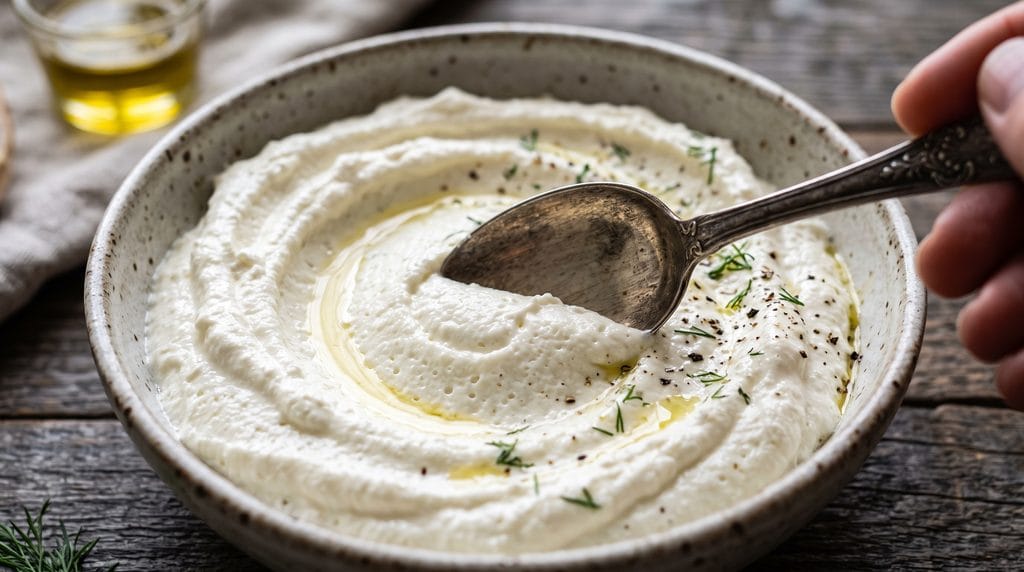
A lot of recipes call for Greek yogurt or cream cheese alongside the feta, and this isn’t just for flavor. Both ingredients bring additional protein and a smoother existing fat structure, which gives the emulsion more material to stabilize around — the result is a dip that holds its light texture longer and is noticeably less likely to separate or “weep” liquid after sitting out, compared to feta blended with oil alone.
The Base Whipped Feta Dip Recipe
Ingredients:
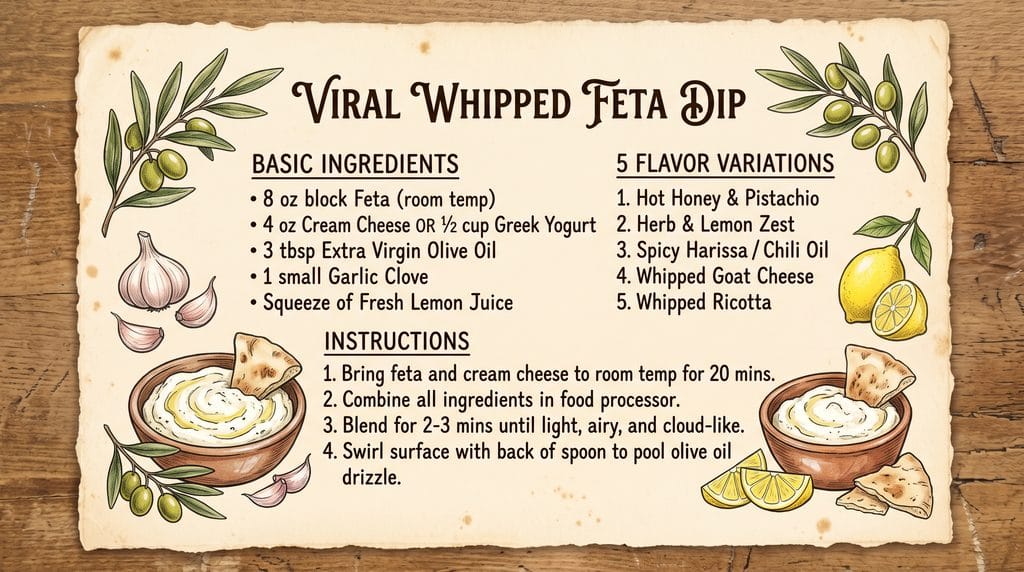
- 8 oz block feta (not pre-crumbled — block feta has more intact structure and whips smoother)
- 4 oz cream cheese or 1/2 cup Greek yogurt, softened to room temperature
- 3 tablespoons olive oil, plus more for serving
- 1 small garlic clove
- A squeeze of lemon juice
Method:
- Let the feta and cream cheese sit at room temperature for about 20 minutes before blending — cold fat doesn’t emulsify as smoothly and tends to leave small lumps.
- Combine everything in a food processor and blend for a full 2–3 minutes, scraping down the sides halfway through. This is longer than most people expect — the texture shift from “grainy” to “cloud-like” genuinely takes that long.
- Taste and adjust lemon and salt, keeping in mind feta is already salty on its own.
- Transfer to a shallow bowl, swirl the top with the back of a spoon to create texture that holds the oil drizzle, and finish with olive oil and your topping of choice.
Five Variations Worth Trying
Whipped feta and honey — the version most responsible for the current viral wave. Drizzle homemade hot honey over the finished dip and top with crushed pistachios or chili flakes for contrast against the sweetness, bringing out the best in our favorite swalty sweet and salty snack pairings.
Herb and lemon whipped feta — fold in finely chopped dill, mint, and extra lemon zest after blending for a brighter, more savory version that pairs well with grilled vegetables.
Spicy whipped feta — blend in a spoonful of harissa or a roasted red pepper for color and heat, finished with a drizzle of safe homemade chili-infused oil.
Whipped goat cheese — same emulsion principle, different cheese. Goat cheese has a higher moisture content than feta, so use slightly less liquid fat to compensate.
Whipped ricotta — milder and creamier by nature since ricotta already has a looser protein structure; needs less blending time to reach the same light texture, usually about a minute less than feta.

Troubleshooting
My dip came out grainy instead of smooth. Usually one of two causes: the feta was too cold when you started, so the fat didn’t emulsify evenly, or you didn’t blend long enough — most people stop at 30–45 seconds when the real texture change happens closer to the two-minute mark.
My dip is weeping liquid after sitting out. This is the emulsion partially breaking — it happens faster in dips made with oil alone and no yogurt or cream cheese, since there’s less protein structure holding everything together. A quick re-blend or vigorous stir usually brings it back together.
It tastes flat even though I added salt. Feta brands vary significantly in saltiness and brininess depending on whether they’re sheep’s milk, goat’s milk, or a blend. Taste before adding extra salt, and lean on lemon juice or garlic to round out flavor instead of just adding more salt on top.
Serving It So It Actually Looks Like the Viral Version
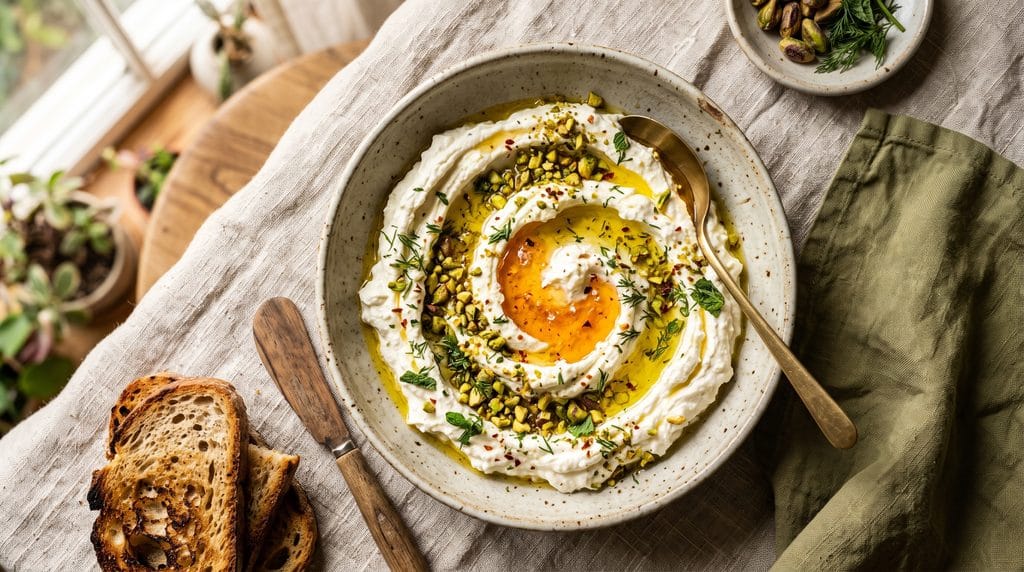
Half of what makes whipped feta photograph so well is the swirl, not just the texture underneath it. Use the back of a spoon to press shallow, deliberate grooves across the surface right after spreading it into the bowl — those grooves are what catch and pool the olive oil drizzle instead of letting it run off flat. Pour the oil slowly in a spiral starting from the center, which lets gravity pull it naturally into the lowest grooves rather than sitting on top in one spot. If you’re adding a topping like crushed pistachios, chili flakes, or fresh herbs, scatter it after the oil goes on, not before — the oil acts as a kind of glue that keeps lighter toppings from sliding off when the bowl gets passed around.

Temperature matters for presentation too. A dip served straight from the fridge looks duller and slightly matte, while one that’s rested at room temperature for fifteen minutes develops a glossier surface sheen, partly because the fat softens just enough to catch light differently. It’s a small detail, but it’s part of why the same recipe can look noticeably more appetizing in some photos than others.
FAQ
Can I make whipped feta ahead of time?
Yes, it keeps well refrigerated for up to five days in an airtight container. Let it sit at room temperature for about 15 minutes before serving, since the emulsion firms up noticeably when cold.
Why does the recipe insist on block feta instead of pre-crumbled?
Pre-crumbled feta is often coated with anti-caking agents that can interfere with how smoothly it blends, and it tends to have a drier, more processed texture than feta cut fresh from a block.
Can I make this dairy-free?
Plant-based feta alternatives exist and will emulsify similarly, though the fat and protein ratios vary by brand, so texture results can be less predictable than with traditional feta.
Is whipped feta the same thing as feta dip you’d buy at the store?
Not usually — most store-bought feta dips use mayonnaise or sour cream as the base and skip the actual whipping process, which is part of why homemade versions have a noticeably lighter, airier texture.
Why does this trend keep coming back instead of fading for good like other viral recipes?
Because the format itself — whip a soft cheese with fat and air until it changes texture — is genuinely flexible. Each time it resurfaces, a new topping trend (hot honey, harissa, specific herb combos) rides along with it, which keeps it feeling fresh even though the underlying technique hasn’t changed in years.
If recipes like this are your thing, I’m sharing more aesthetic, easy entertaining ideas daily on Pinterest — come save this one for later.
