
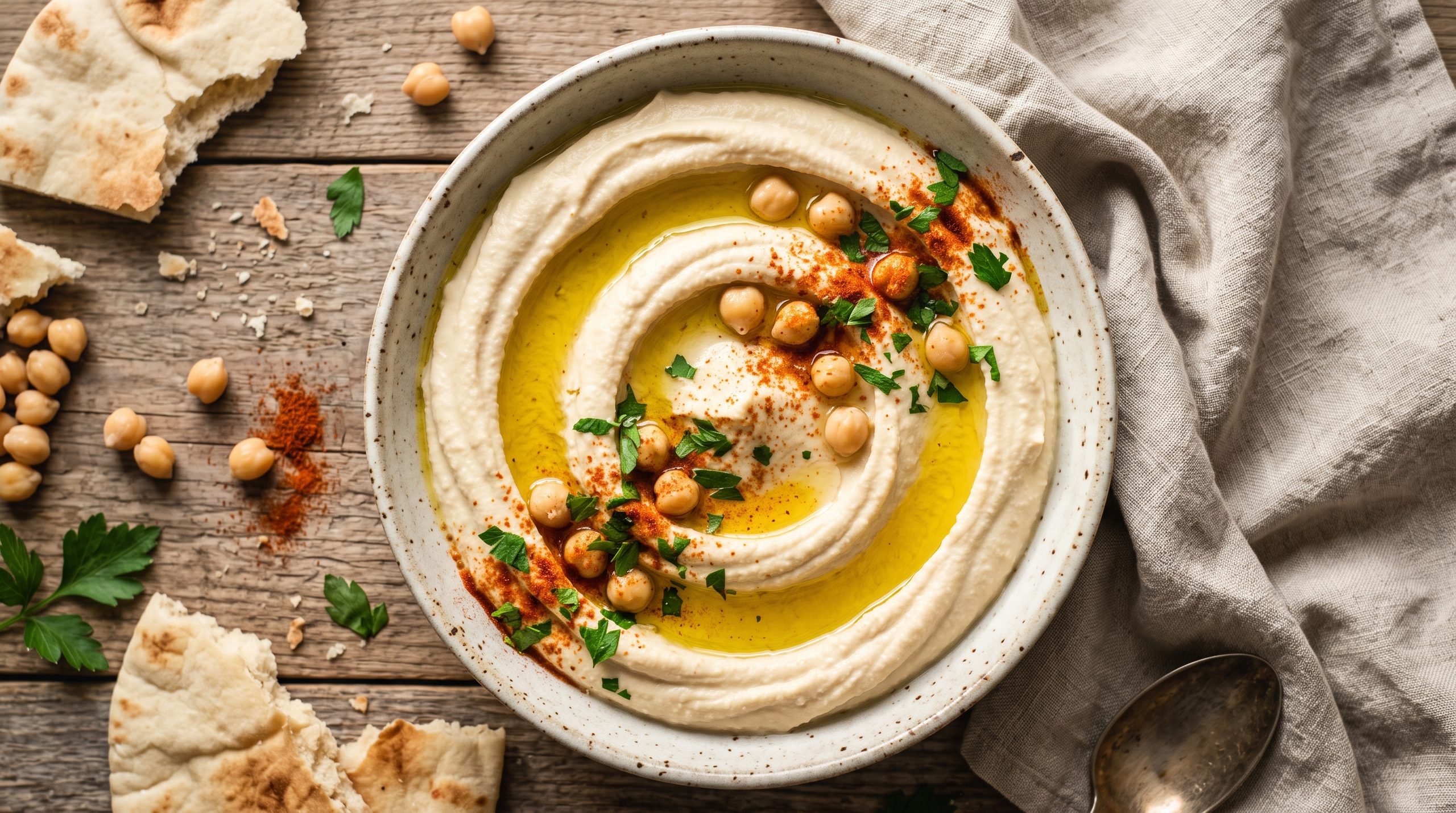
Making the creamiest hummus recipe is one of those kitchen pursuits that never really stops trending because it never really needs to — it’s been a staple for centuries, and right now it’s riding an extra wave thanks to the protein-forward eating trend taking over feeds everywhere. Most homemade versions, though, come out noticeably grainier and denser than the silky, almost whipped texture you get at a good Mediterranean restaurant. That gap isn’t about a secret ingredient. It comes down to three specific, well-understood kitchen chemistry steps that most recipes either skip or explain badly.
Jump to: Why most hummus is grainy · The base creamiest hummus recipe · Why ice water specifically · Troubleshooting · 4 flavor variations · FAQ
Why Most Hummus Comes Out Grainy
Chickpeas have tough outer skins made largely of cellulose and pectin — the same structural compounds that make plant cell walls rigid. Blend chickpeas with their skins intact, and those skins get pulverized into tiny, slightly gritty fragments that no amount of additional blending time fully smooths out. This single detail is the most common reason homemade hummus has a grainy mouthfeel compared to the silky version you get at a restaurant, and it has nothing to do with how good your food processor is.
The Baking Soda Trick, Explained
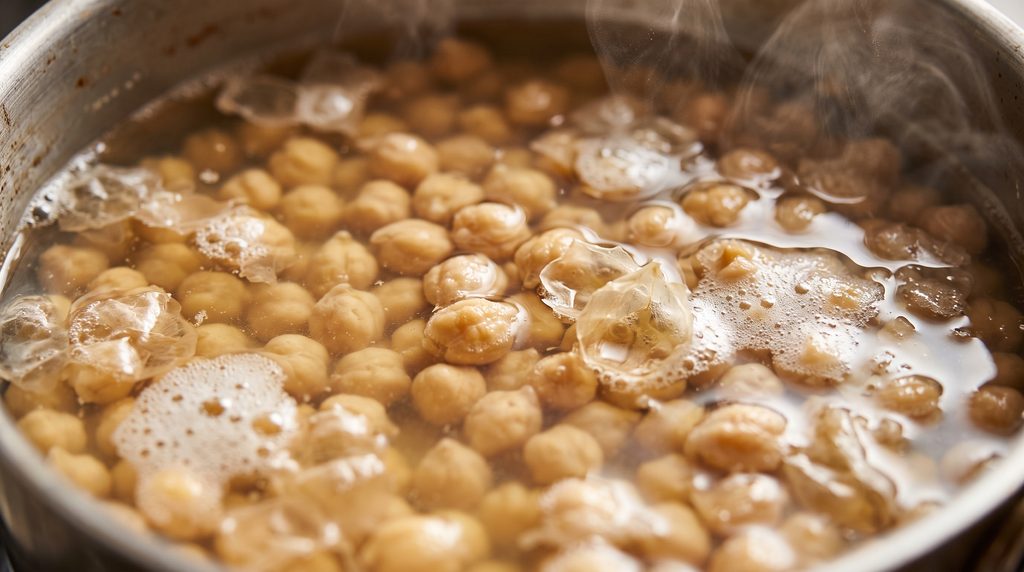
Adding a small amount of baking soda to the cooking water raises the pH of the liquid, which accelerates the breakdown of pectin in the chickpea skins. According to food chemistry research on pectin degradation and alkaline pH softening, an alkaline environment breaks down structural polysaccharides rapidly, allowing cell walls to dissolve and soften evenly.
In practical terms, this means the skins soften and start separating from the chickpeas as they simmer, and many will float free and can be skimmed off before blending. The alkaline environment also helps soften the chickpeas themselves faster and more evenly than plain water would. This isn’t a kitchen myth — it’s a straightforward application of how pH affects pectin structure, the same principle used in vegetable-softening and pickling science.
Why Tahini “Seizes” Before It Gets Smooth
If you’ve ever added lemon juice to tahini and watched it suddenly turn thick and clumpy instead of smooth, that’s not a mistake — it’s a predictable emulsion reaction. Tahini is mostly fat (sesame oil) held in a paste with sesame protein. Adding an acidic liquid like lemon juice disrupts that fat-protein structure suddenly, causing it to seize and stiffen, similar to how cold fat seizes when it hits acid too fast, applying the same emulsion principles we explore in our viral whipped feta dip guide.
The fix is simply to keep whisking or blending past this point — continued agitation re-emulsifies the mixture into a smooth, pourable paste as the proteins reorganize around the new liquid. Recipes that tell you to add lemon juice to tahini first, before anything else, and whisk until it loosens again are setting you up to actually understand and push through this step instead of panicking and adding extra oil to compensate.
The Base Creamiest Hummus Recipe
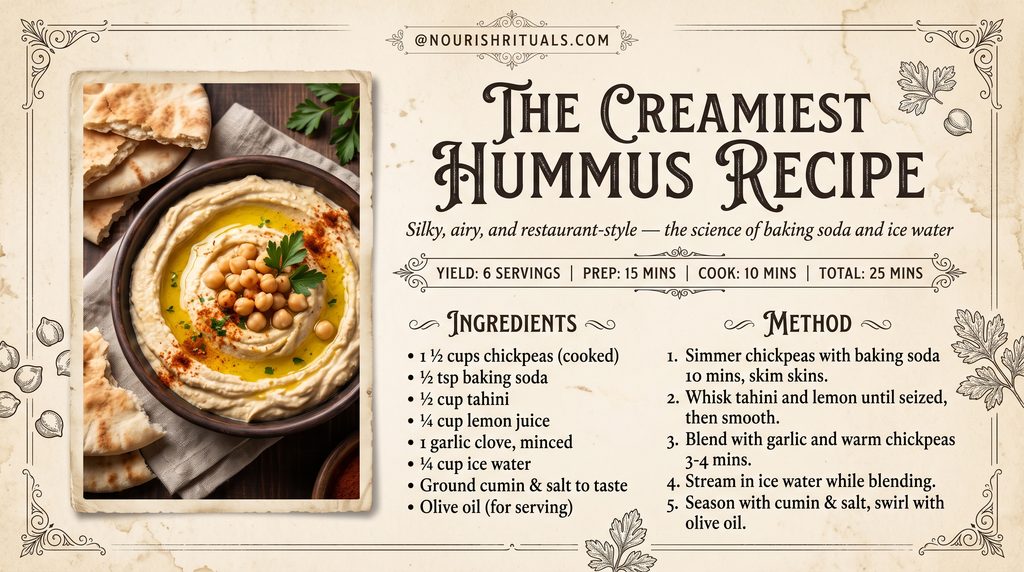
Ingredients:
- 1 1/2 cups cooked chickpeas (canned is fine, or 1/2 cup dried, soaked overnight)
- 1/2 teaspoon baking soda (for the cooking water)
- 1/2 cup tahini
- 1/4 cup fresh lemon juice
- 1 small garlic clove
- 1/4 cup ice water
- 1/2 teaspoon ground cumin
- Salt to taste
- Olive oil, for serving
Method:
- Simmer the chickpeas with baking soda. If using canned, simmer them in water with the baking soda for about 10 minutes, then drain and rinse. If starting from dried, cook them in water with the baking soda until very soft, 45–60 minutes. Skim off any loosened skins that float to the surface as they cook.
- Whisk the tahini and lemon juice together first, before adding anything else. It will seize and thicken almost immediately — keep whisking for a full minute or two past that point, and it will loosen into a pale, smooth, almost whipped paste. This step alone changes the final texture significantly.
- Add the garlic and blend the tahini-lemon mixture briefly in a food processor until fully smooth.
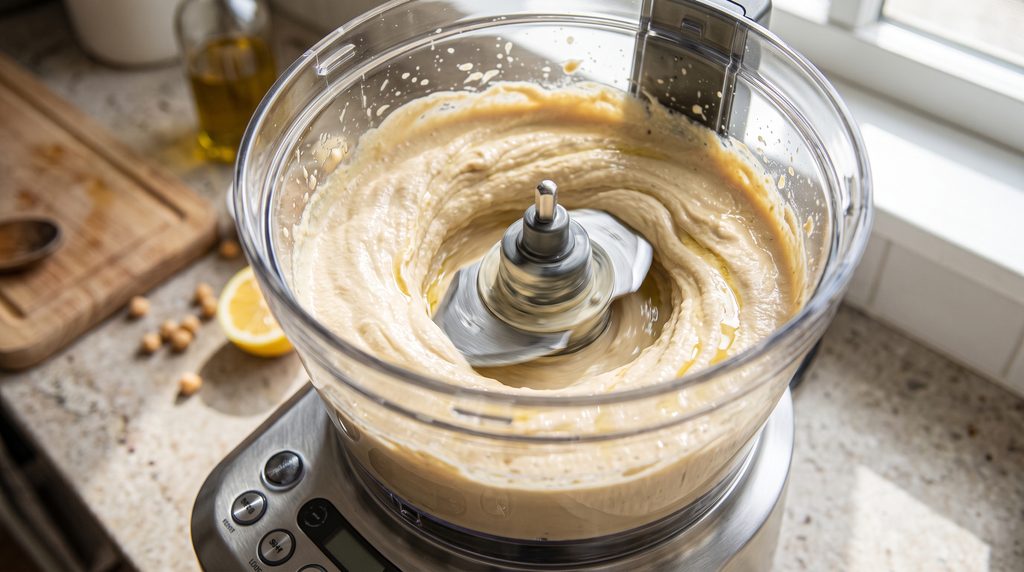
- Add the warm, drained chickpeas and blend continuously for a full 3–4 minutes, longer than feels necessary. This extended blending time is what fully breaks down the chickpea structure into a smooth paste rather than a chunky dip.
- Stream in the ice water gradually while blending. Cold water, added slowly, helps emulsify the mixture into an airy, lighter texture rather than a dense paste — similar in principle to how cold liquid incorporated gradually helps stabilize other emulsions like mayonnaise.
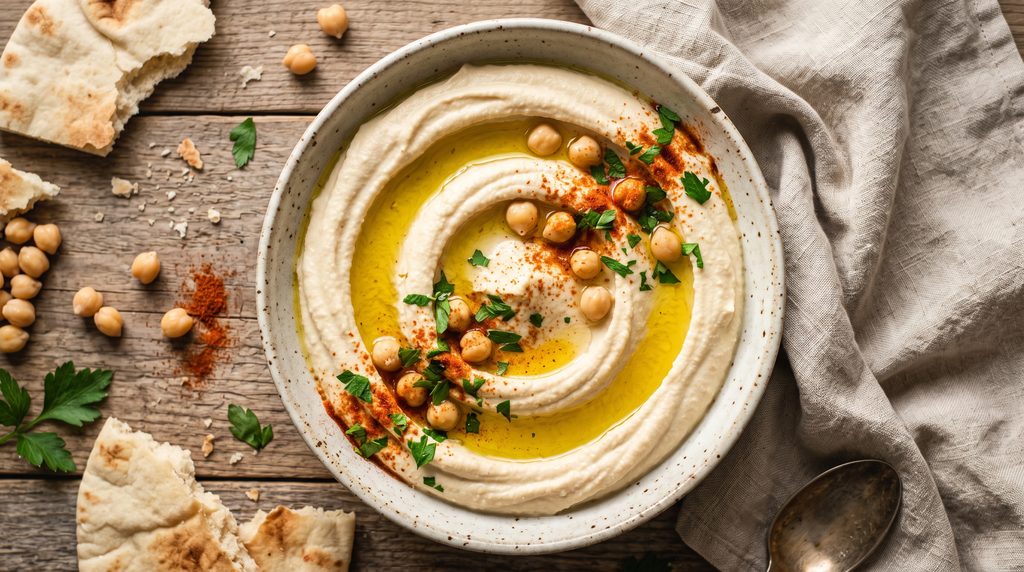
- Season with cumin and salt, blend once more to combine, then transfer to a bowl, swirl the top, and finish with a generous pour of extra virgin olive oil or safe homemade herb-infused oil.
Why Ice Water Specifically, Not Room Temperature
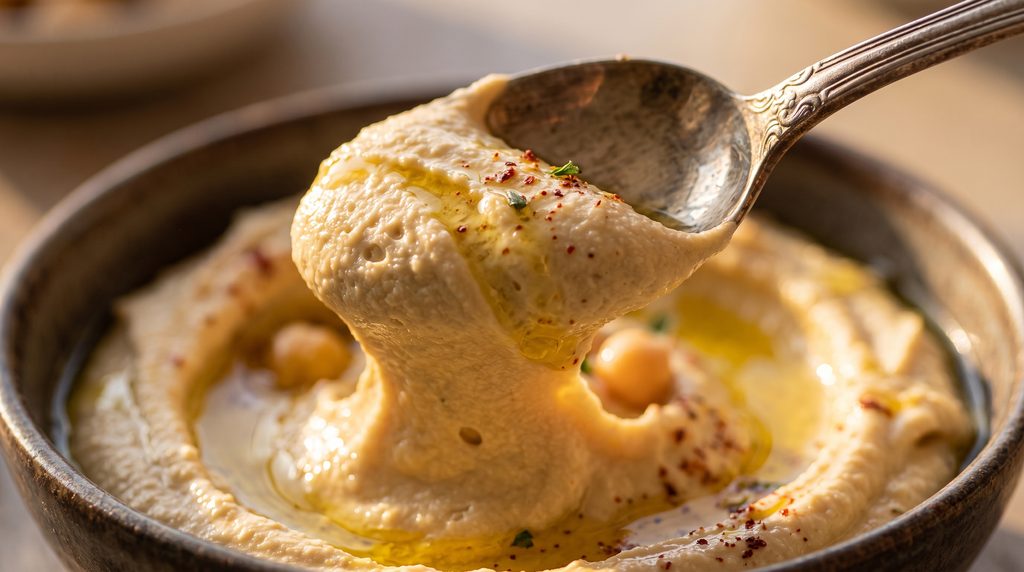
This detail is small but it matters more than it sounds like it should. Cold liquid incorporates into a fat-based mixture more gradually than warm liquid, giving the blending process time to properly distribute tiny water droplets throughout the fat rather than causing the mixture to break or separate. The result is a lighter, almost whipped texture with more volume than the same recipe made with room-temperature water — this is the step most responsible for the difference between dense, heavy hummus and the airy version served at good restaurants, making it an essential centerpiece for an aesthetic Sunday grazing board.
Troubleshooting
My hummus is still grainy even after blending a long time. The chickpea skins are almost always the culprit. Next time, don’t skip the baking soda simmer, and take an extra minute to rub the drained chickpeas gently between a clean towel to remove loosened skins before blending.
My hummus tastes bitter. This is usually the tahini — quality varies significantly by brand, and some are noticeably more bitter than others, especially if the sesame seeds were over-roasted during processing. Store your tahini in airtight glass jar pantry containers to protect it from heat and light.
My hummus is too thick even after adding water. You may need more ice water than the recipe calls for — chickpea starch content varies by batch, so treat the water amount as a starting point and adjust by the tablespoon until you hit the texture you want.
Four Variations Worth Trying
Roasted red pepper hummus — blend in a jarred roasted red pepper, patted dry, for color and a subtle sweetness that pairs well with smoked paprika on top.
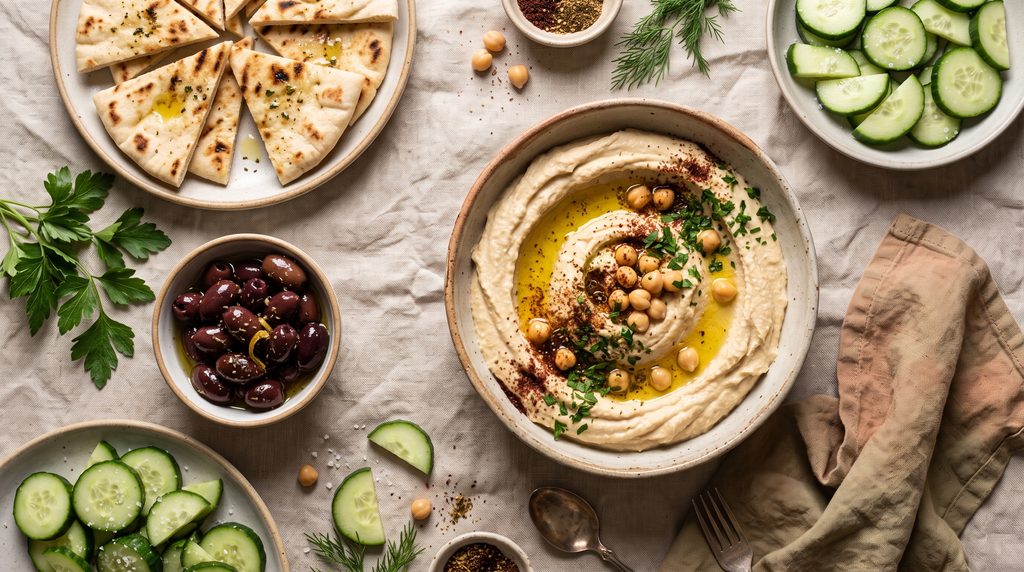
Herb and lemon hummus — fold in finely chopped parsley and extra lemon zest after blending for a brighter, more herbal version.
Spicy harissa hummus — swirl a spoonful of harissa paste into the center before serving instead of blending it in, for visual contrast and concentrated heat in each bite.
Beet hummus — blend in a small roasted beet for a vivid pink color and earthy sweetness; reduce the lemon slightly since beets add their own natural sugar balance.
FAQ
Do I really need to peel every chickpea by hand?
No — the baking soda simmer accomplishes most of the skin removal automatically, which is a far faster and less tedious method than peeling chickpeas one at a time.
Can I make hummus without a food processor?
A high-powered blender works, though you may need to stop and scrape down the sides more frequently, since the mixture is thicker than most blender recipes are designed for.
Why does my hummus taste flat even with enough salt?
Acid balance matters as much as salt in hummus. If it tastes flat, try adding lemon juice in small increments before adding more salt — the brightness often reads as what’s actually missing.
How long does homemade hummus keep?
About 4–5 days refrigerated in an airtight container. The texture firms up when cold, so let it sit at room temperature for 10–15 minutes before serving for the best consistency.
Can I use dried chickpeas instead of canned for better texture?
Yes, dried chickpeas cooked from scratch generally produce a creamier result than canned, partly because you control the cooking liquid and baking soda exposure more precisely, and partly because canned chickpeas are often firmer to begin with.
If recipes with this level of detail are your thing, I’m sharing more aesthetic, easy entertaining ideas daily on Pinterest — come save this one for later.
