
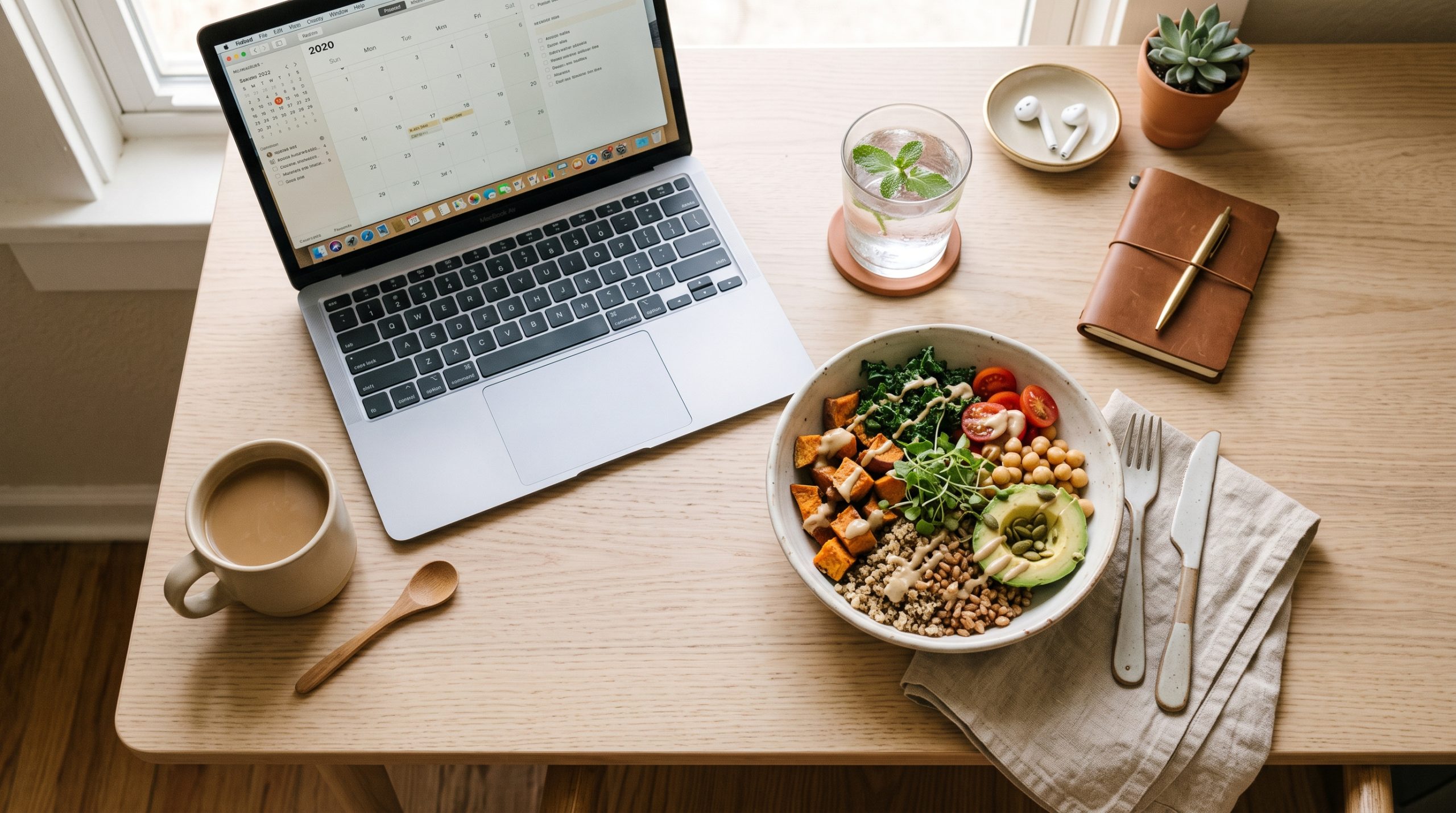
For a while, my WFH lunch ideas were limited to whatever was closest — a handful of crackers standing at the counter, a bowl of cereal, half a sandwich eaten over my keyboard between calls. It wasn’t that I didn’t have time. I just hadn’t connected the dots between what I ate at noon and how foggy I felt by three.
That fog has a name now, more or less — people call it the 2:30 slump, and it shows up reliably enough that workplace nutrition data actually tracks it. The lunches most likely to trigger it are exactly the ones that feel fastest in the moment: heavy on refined carbs, light on everything else. Building a lunch that actually holds you through the afternoon doesn’t take longer, it just takes a different shape.
Why Lunch Wrecks Your Afternoon
The mechanism is fairly straightforward once you see it. A lunch that’s mostly refined carbohydrate — white bread, chips, a big bowl of plain pasta — breaks down into glucose fast, which spikes your blood sugar quickly. Your body responds by releasing insulin to bring that sugar back down, and it often overcorrects a little, leaving you on the downside of the spike right around the time you’re supposed to be deep in afternoon work. That’s the crash people are describing when they say lunch made them tired.
Protein and fiber both slow this process down. Protein takes longer to digest and doesn’t spike blood sugar the way refined carbs do, and fiber physically slows how fast the stomach empties, which smooths out the glucose curve instead of letting it spike and drop. A lunch built around both isn’t just “healthier” in some abstract sense — it’s the specific mechanism behind staying focused at 3pm instead of reaching for a second cup of coffee to compensate.
The Structure Worth Building Around
I stopped thinking about lunch as one dish and started thinking about it as three components that need to show up together, regardless of what form they take. It’s the same logic behind building a breakfast grazing board — protein, fiber, and fat all doing their part, just packed into a single bowl instead of spread across a board.
1. A Real Protein Portion
Not a garnish — an actual portion. Chickpeas, grilled chicken, tofu, a couple of eggs, or a scoop of Greek yogurt. This is the piece doing the most work against the afternoon crash, so it shouldn’t be an afterthought.
2. Fiber From Something Whole
Whole grains, beans, or a genuinely substantial portion of vegetables — not a token side salad. This is what slows digestion down and stretches out how long the meal actually holds you.
3. A Bit of Fat
Olive oil, avocado, nuts, or tahini. Small amounts, but enough to add satiety and help your body absorb fat-soluble nutrients from the rest of the meal.
Five Lunch Ideas Built On That Structure
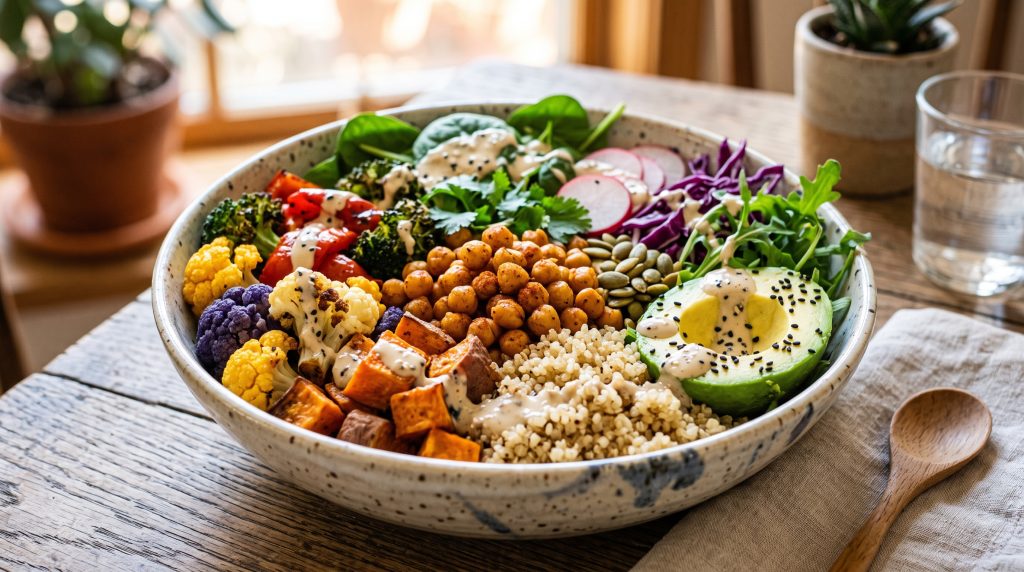
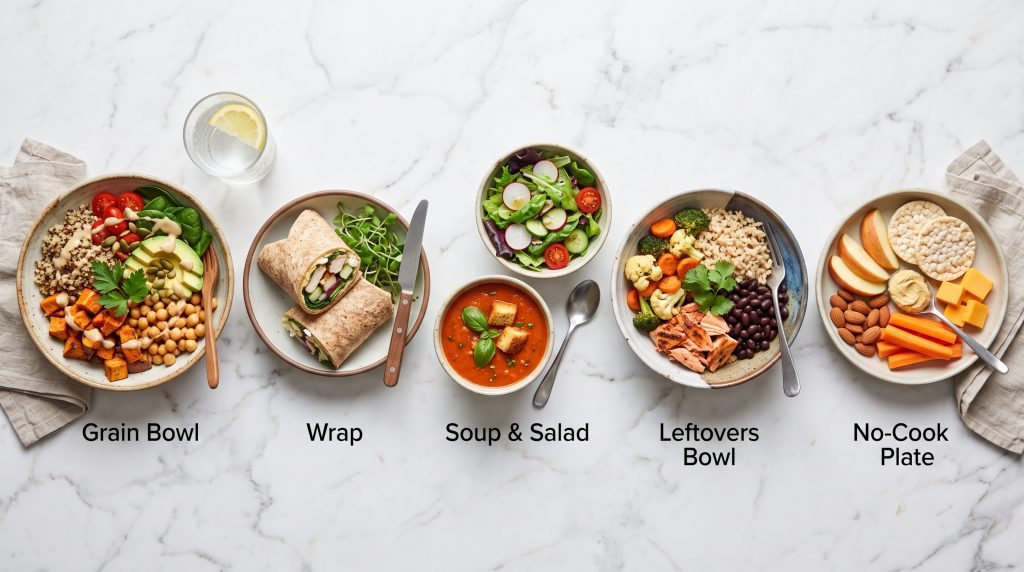
1. Fifteen-Minute Grain Bowl
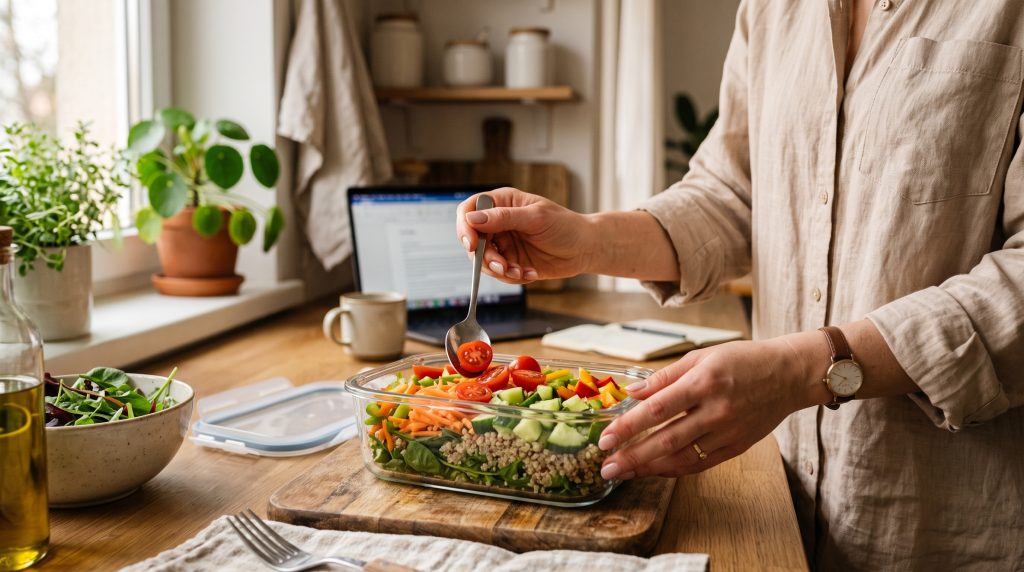
Precooked quinoa or farro, a handful of roasted or raw vegetables, a protein of choice, and a simple, creamy lemon-tahini dressing. This is the one to make when you’ve got a working morning and need something fast that still hits all three components.
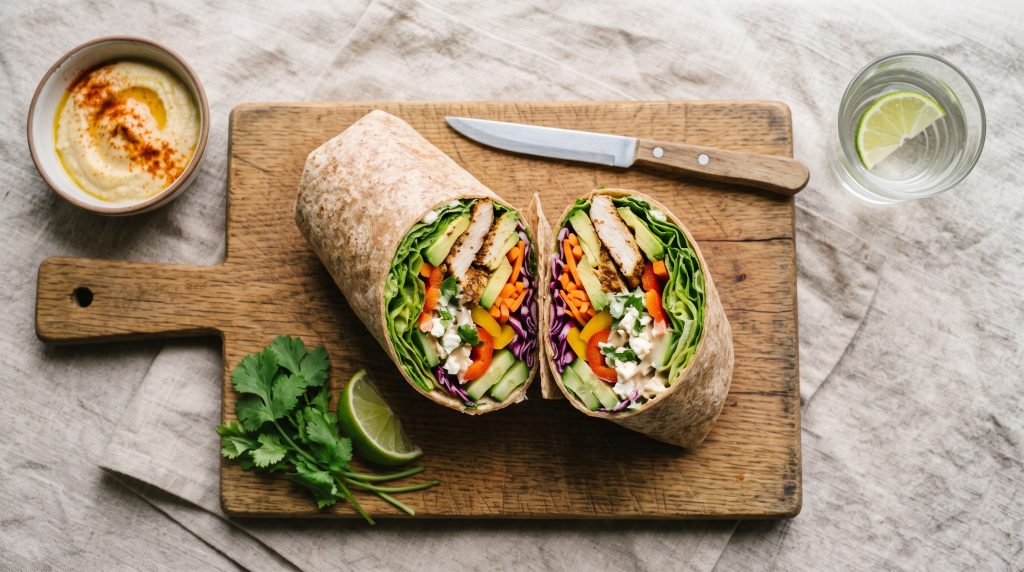
2. Mediterranean Wrap
Hummus, grilled chicken or falafel, cucumber, tomato, and feta rolled into a whole grain wrap. Portable enough to eat one-handed through a call, which matters more on WFH days than people admit.
3. Soup and Salad Combo
A protein-forward soup — lentil, white bean, or chicken vegetable — paired with a small side salad. The combination of warm and cold, soft and crunchy, tends to feel more like an actual meal than either one alone, even though it’s simple to put together.
4. Leftovers, Reimagined
Last night’s roasted vegetables and protein, reheated and tossed over greens with a fresh dressing instead of eaten cold straight from the container. The five extra minutes of turning it into a bowl instead of a reheated plate makes a real difference in whether it actually feels like lunch.
5. No-Cook Protein Plate
Hard-boiled eggs, a handful of nuts, sliced cheese, cherry tomatoes, and whole grain crackers arranged on a plate. Zero cooking, and it still checks every box — good for the days when even fifteen minutes feels like too much. If you’ve already got a batch of Sunday egg bites in the fridge, swap those in for the hard-boiled eggs — same protein, zero extra prep.
Making It Feel Like a Break, Not a Task
Preparing these healthy lunch ideas is only half of it. The other half is actually stepping away from the desk to eat it, which sounds obvious but is genuinely rare on WFH days — most people report barely leaving their workstation for lunch even when nothing’s stopping them. Moving to a different room, or even just turning the chair away from the screen for fifteen minutes, does something a laptop-adjacent lunch never quite manages. It’s the difference between refueling and just topping off the tank while the engine’s still running.
Frequently Asked Questions
How much protein does lunch actually need?
Somewhere around 20-30 grams is a reasonable target for most people, roughly the amount in two eggs plus a handful of nuts, or a palm-sized portion of chicken or tofu. It doesn’t need to be exact, just present in a real portion rather than a garnish.
Is meal prepping necessary for this to work?
No, though it makes the fast options faster. Precooking a batch of grains or roasting a tray of vegetables on a slower day means the weekday version of these lunches takes closer to five minutes than fifteen, but every option above can be built from scratch same-day if you’d rather not prep ahead.
What if I genuinely only have five minutes?
The no-cook protein plate is built for exactly that. Hard-boiled eggs and nuts keep for days, and the whole thing comes together without turning on a stove or standing over a cutting board for more than a minute or two.
Does the 2:30 slump happen even with a healthy lunch?
Some natural dip in energy in the early-to-mid afternoon is normal and tied to circadian rhythm, not just food. What a protein-and-fiber lunch does is prevent the sharper, steeper crash that comes specifically from a blood sugar spike — it won’t eliminate every dip, but it takes the worst of it off the table.
Can I still have carbs at lunch?
Absolutely, carbs aren’t the problem on their own — refined carbs without protein or fiber alongside them are. A grain bowl with quinoa, or a wrap with a whole grain tortilla, still includes plenty of carbohydrate, it’s just paired with enough protein and fiber to slow down how fast it hits your bloodstream.
None of these take longer than what I used to grab out of habit. They just actually get me through the afternoon instead of setting me up to fight through it.
Find more slow living recipes and rituals like this one on our Pinterest: @Nourish_Rituals
