
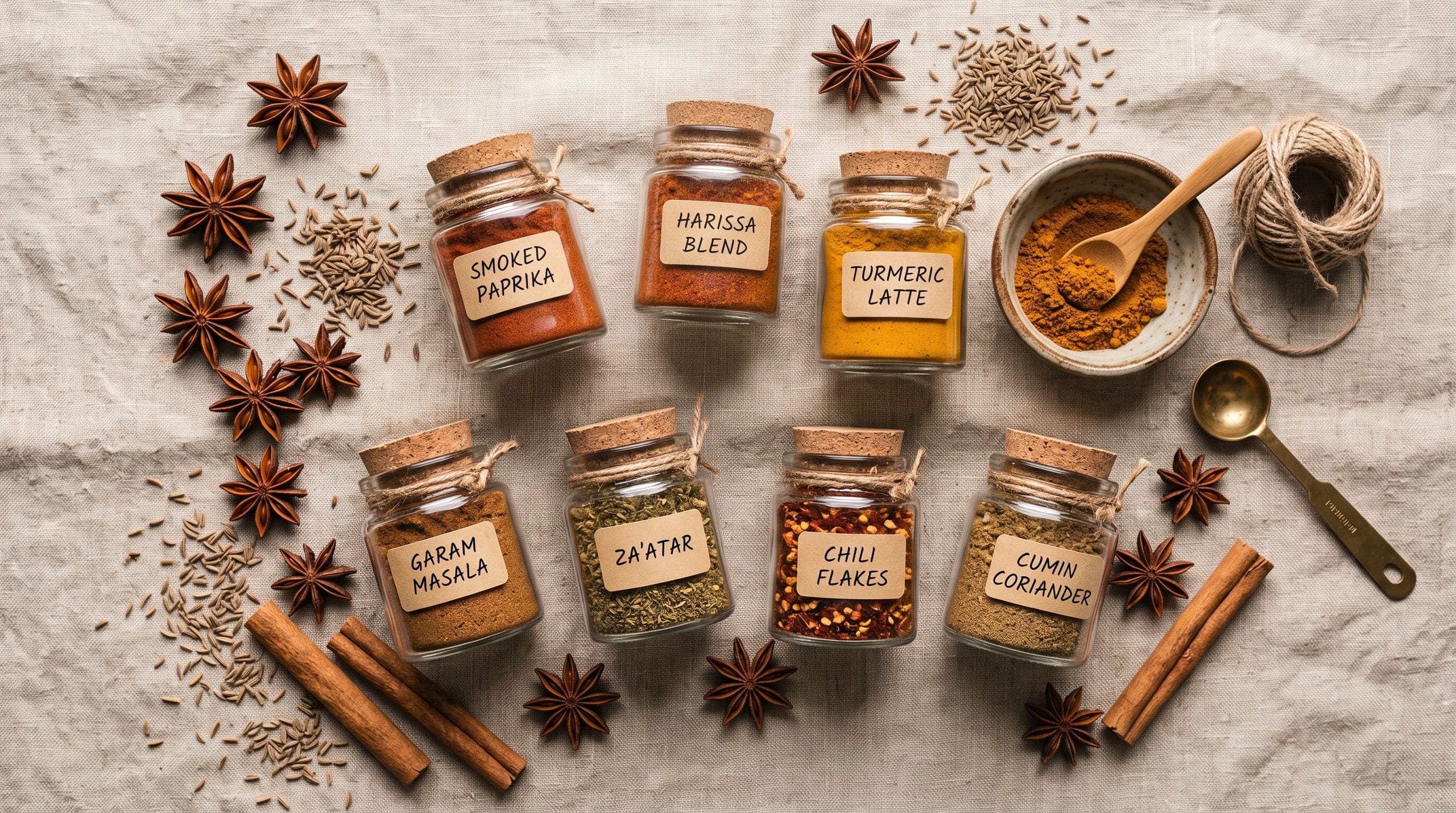
Making homemade spice blends started as a quiet little experiment a while back where I compared the ingredient list on a store-bought taco seasoning packet to what I actually had in my spice cabinet, and it was almost entirely things I already owned, plus cornstarch and a fair amount of added salt I hadn’t asked for. That packet cost more per ounce than buying the same spices individually. Making your own blends turns out to be one of those small kitchen habits that quietly pays for itself, and it’s a lot easier than it looks once you understand the basic logic behind it.
Jump to: Why toasting spices matters · The basic method · Structure behind homemade spice blends · 3 blends to start with · How to store blends · FAQ
Why Toasting Whole Spices Matters
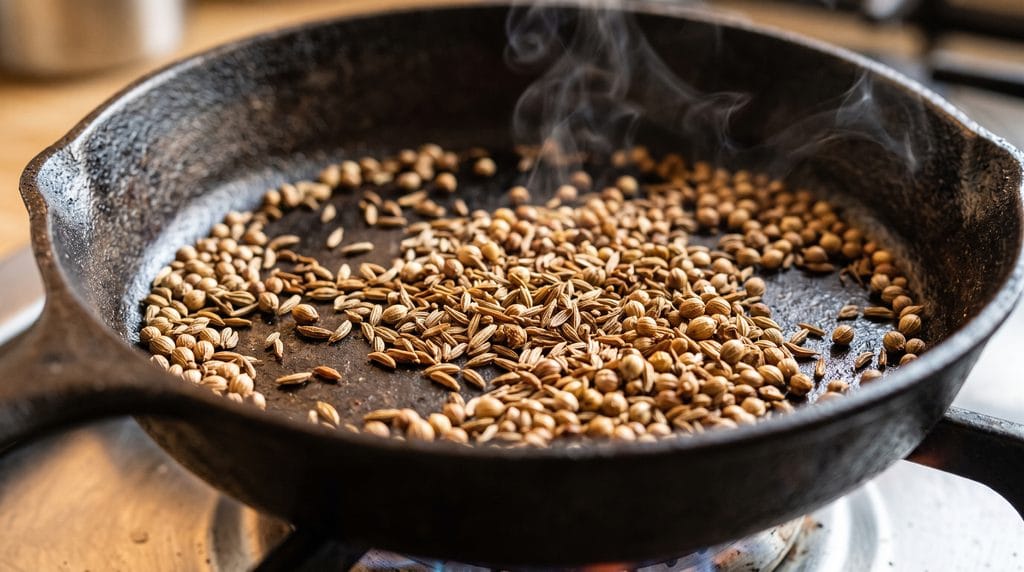
Whenever a recipe calls for whole spices like cumin, coriander, or fennel seeds, toasting them briefly before grinding isn’t just tradition — it changes the actual chemistry of the flavor. According to food science research on spice volatile oils and heat activation, dry heat breaks down cellular walls just enough to release essential aromatic compounds and intensify flavor depth, the same basic browning effect at work when toasting ingredients for our golden turmeric milk. A spice ground straight from raw seeds tastes noticeably flatter than one that’s been toasted first, even though the ingredient list is identical.
To toast, add whole spices to a dry skillet over medium heat and shake the pan frequently for 1 to 3 minutes, until they turn a shade darker and smell distinctly more fragrant. They go from perfectly toasted to burnt fast, so stay close and pull them off heat the moment the smell shifts from raw to warm and nutty.
The Basic Method
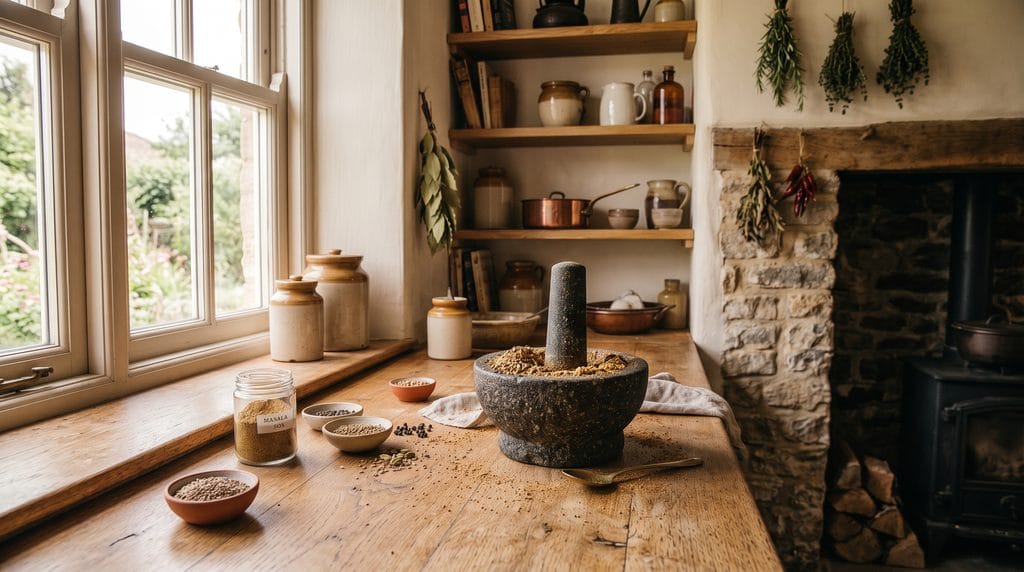
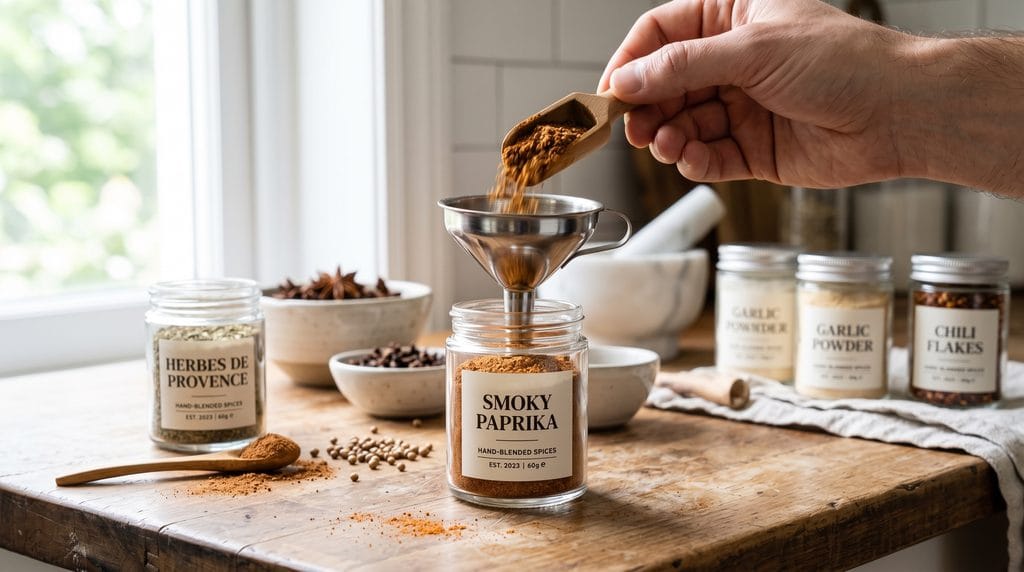
Toast your whole spices if the blend calls for any, let them cool for a minute, then grind in a spice grinder, a clean coffee grinder kept specifically for spices, or a mortar and pestle for smaller batches. Combine with any pre-ground spices the blend needs, along with dried herbs, salt, and any other seasonings. Store in a small airtight jar, and give it a shake before each use since ground spices can settle unevenly.
Understanding the Structure Behind Homemade Spice Blends
Once you make a few blends, a pattern starts to show up underneath all of them. Most savory spice blends are built from a few functional categories layered together: a warm, earthy base like cumin or coriander that gives the blend its depth; a color-and-mild-heat layer like paprika or chili powder; an aromatic layer like garlic and onion powder that ties everything together; and a small accent of something sharper or more distinctive, like cinnamon in a curry blend or oregano in a taco seasoning, that gives it a recognizable identity rather than just tasting generically savory.
Once that structure clicks, you don’t really need to follow anyone’s exact ratios anymore. You can taste a blend you like at a restaurant, guess roughly which categories are doing which job, and build your own version at home through trial and adjustment, tasting as you go rather than measuring precisely, much like customizing safe homemade infused oils.
3 Blends to Start With
Taco seasoning — 2 tablespoons chili powder, 1 tablespoon ground cumin, 1 teaspoon each of paprika, garlic powder, and onion powder, a half teaspoon of dried oregano, and salt to taste. No fillers, no unnecessary sugar, and it scales up easily if you want to make a jar’s worth at once.
Curry powder — toast and grind 2 tablespoons coriander seeds, 1 tablespoon cumin seeds, and 1 teaspoon whole peppercorns, then mix with 1 tablespoon ground turmeric, a half teaspoon ground ginger, and a quarter teaspoon each of ground cinnamon and cardamom. This is a base you can adjust significantly toward milder or spicier depending on what you’re cooking.
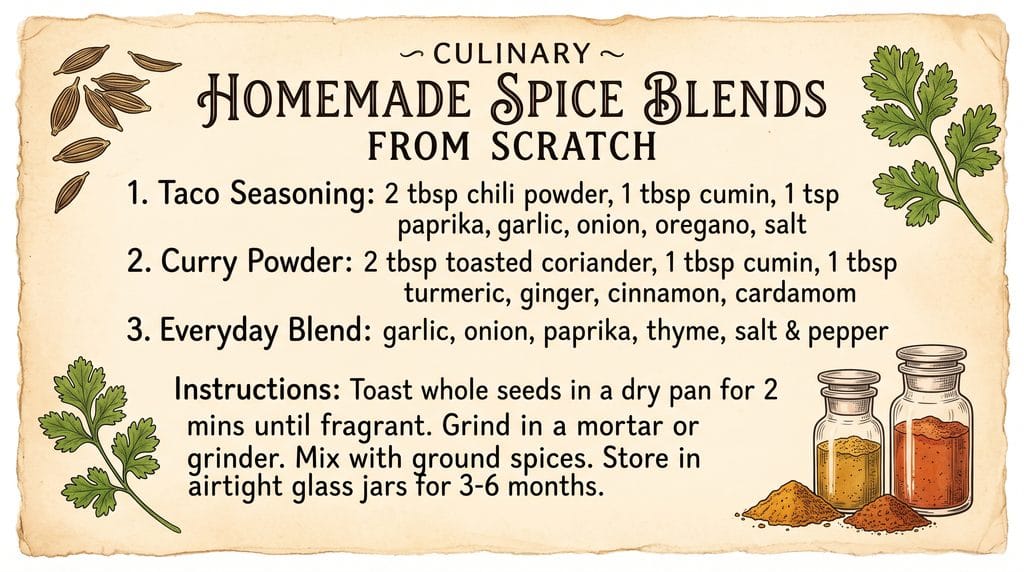
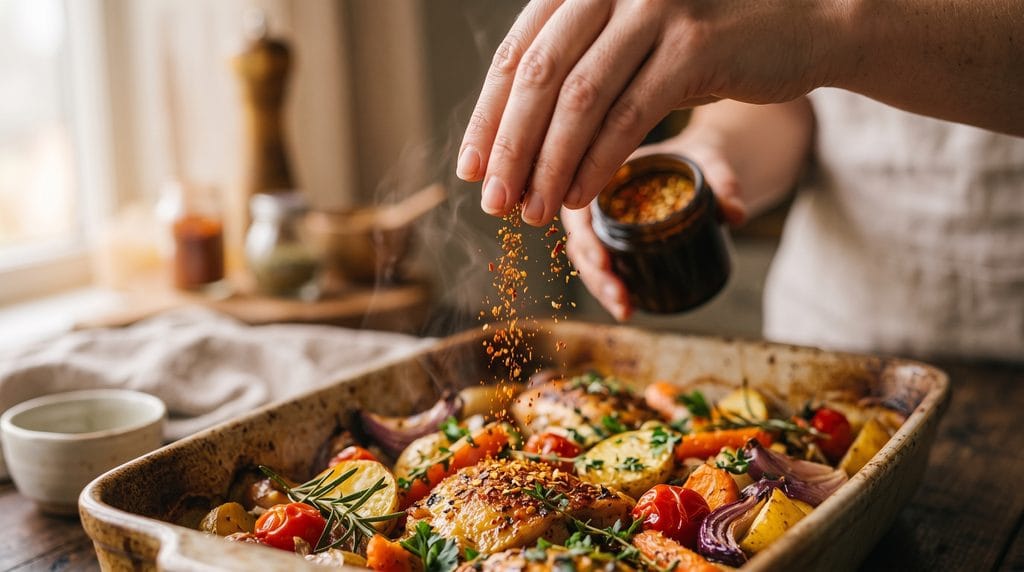
Everyday all-purpose seasoning — 1 tablespoon each of garlic powder, onion powder, and paprika, 2 teaspoons dried thyme, and salt and pepper to taste. Good on roasted vegetables, eggs, or really anything that needs a quick flavor boost without much thought.
How to Store Blends So They Actually Last
Ground spices lose potency faster than most people expect, mostly through exposure to light, heat, and air, all of which speed up the breakdown of the aromatic oils responsible for flavor in the first place. Store finished blends in airtight glass jars, away from direct sunlight and away from the stove, where heat from cooking speeds up that same degradation. Keeping your blends organized neatly is simple when following our guide on creating a non-toxic pantry with glass jar organization. Most homemade ground blends stay at their best for about 3 to 6 months, noticeably longer if you started with whole spices you ground yourself rather than pre-ground ones, since whole spices hold their potency far longer before grinding than after.
Labeling with the date you made each blend is worth the extra ten seconds — it’s easy to lose track of which jar is fresh and which has been sitting since last year, especially when maintaining your autumn pantry reset into glass jars.
Frequently Asked Questions
Do I really need a dedicated spice grinder?
Not strictly — a clean coffee grinder works fine, though it’s worth keeping one set aside just for spices, since coffee oils can linger and affect flavor otherwise. A mortar and pestle works too for smaller batches, just with more manual effort.
How much does this actually save compared to buying packets?
It varies by blend, but buying whole spices in bulk and mixing your own generally costs meaningfully less per batch than pre-made seasoning packets, especially once you’re making blends regularly enough to buy spices in larger quantities.
Can I substitute pre-ground spices if I don’t have whole ones?
Yes, the blends will still work well — you’ll just miss out on the extra depth that toasting whole spices adds. Pre-ground spices are also worth buying in smaller quantities since they lose potency faster sitting on a shelf.
Why does my homemade blend taste different from the store-bought version I’m used to?
Store-bought blends often include added sugar, anti-caking agents, or a higher salt ratio than a home blend typically has, which changes the overall flavor balance. Adjusting salt and a small pinch of sugar in your own version can get you closer if that’s the flavor profile you’re used to.
How do I know if an old spice blend has gone bad?
Ground spices rarely spoil in a way that’s unsafe to eat, but they do lose flavor over time. If a blend smells faint or dusty rather than distinctly aromatic when you open the jar, it’s past its best and worth replacing rather than risking a flat-tasting dish. A quick rub between your fingers can also tell you a lot — a fresh blend should release noticeable scent just from that light friction, while a tired one barely reacts at all.
Make a batch and see how much more control you get over flavor — more pantry projects like this live over on @Nourish_Rituals.
