
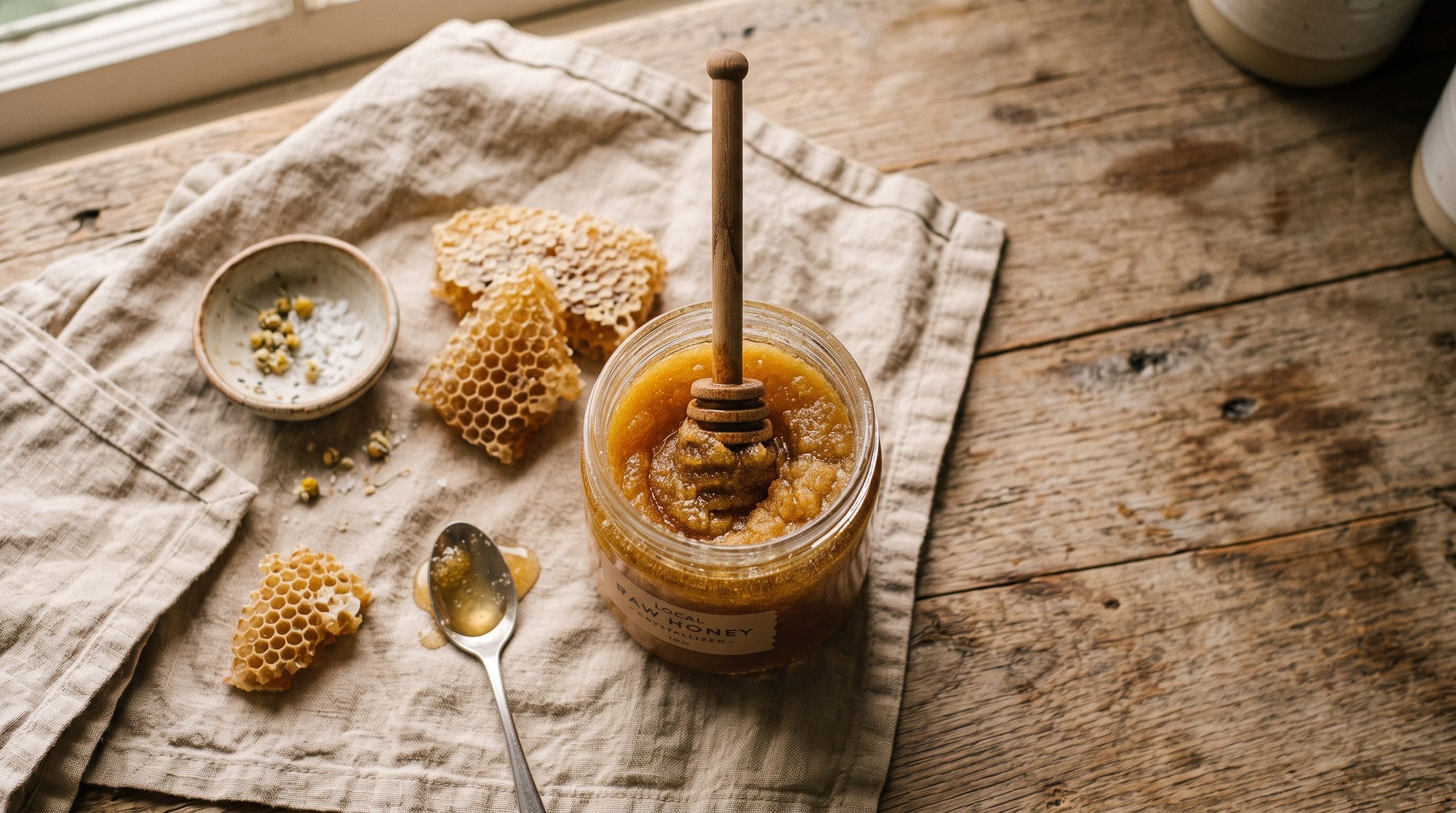
Dealing with crystallized honey happens at some point to every honey jar in your pantry — it turns cloudy, then grainy, then almost solid enough to stand a spoon up in. If your first instinct was to check the expiration date or consider it ruined, you’re not alone — and you’re also not right. Crystallization is one of the most misunderstood things sitting in most kitchens, and understanding what’s actually happening in that jar changes both how you fix it and how you think about “raw” versus “regular” honey for good.
Jump to: Crystallization is chemistry · How to fix crystallized honey · How to slow it down · When it’s actually a problem · FAQ
Crystallization Isn’t Spoilage — It’s Chemistry
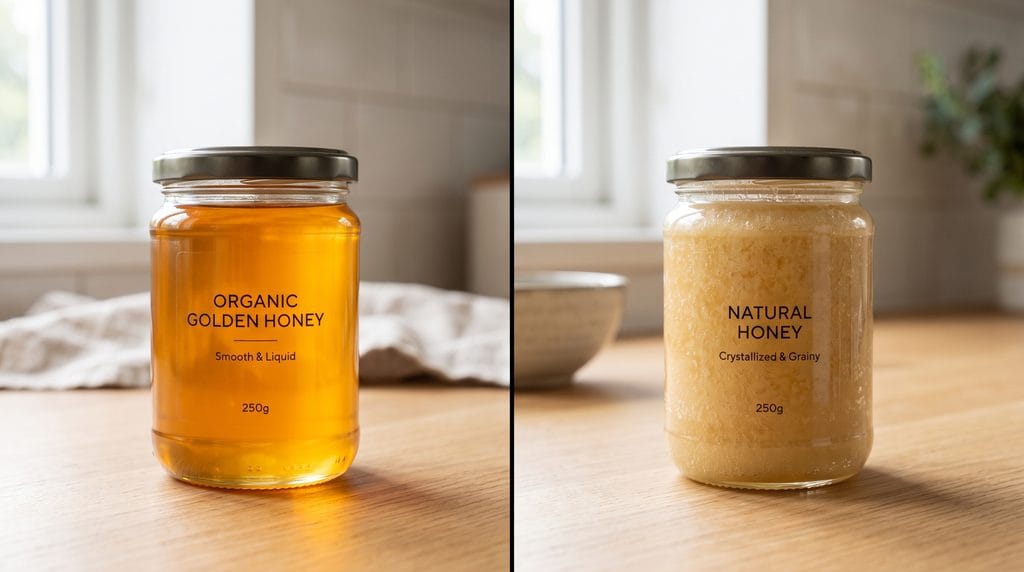
Honey is, at its core, a supersaturated sugar solution. That means it holds more dissolved sugar — mostly glucose and fructose — than water could normally keep dissolved at room temperature. The only reason it stays liquid at all is that honey is extremely low in water (typically 15–18%) and viscous enough to physically slow down what the sugar molecules “want” to do, which is fall out of solution and form solid crystals.
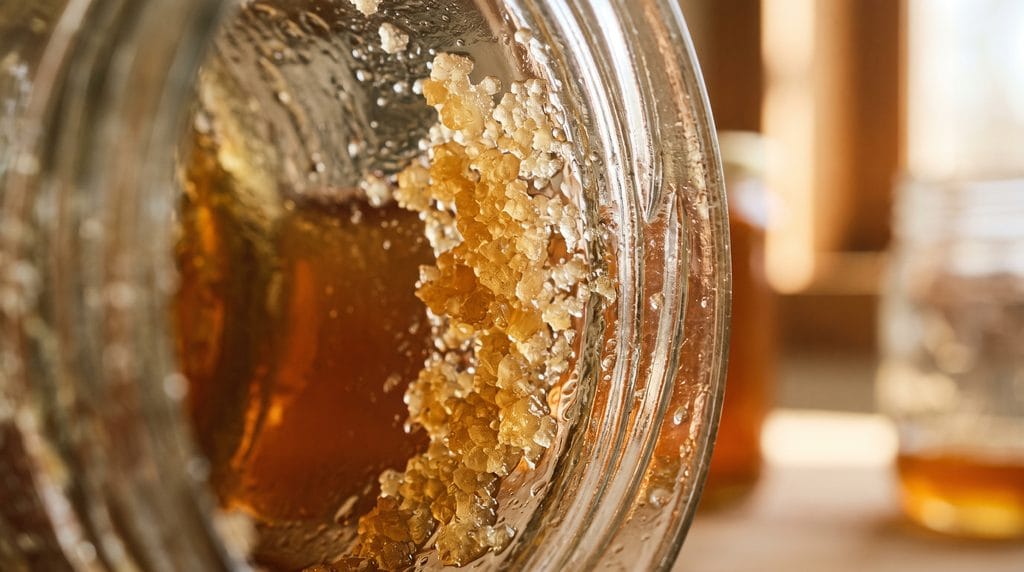
Glucose is the troublemaker here. It’s less soluble than fructose, meaning it reaches its saturation point faster. According to food chemistry research on honey crystallization mechanisms, once glucose molecules start finding each other and locking into a crystal lattice — usually triggered by a tiny particle like a bit of pollen, a wax fragment, or an air bubble acting as a nucleation site — more glucose molecules join the growing crystal. That’s the graininess you feel on your tongue. The fructose mostly stays liquid, which is why crystallized honey often looks like wet sand suspended in syrup rather than a solid block.
Why Raw Honey Crystallizes Faster Than the Squeeze-Bottle Kind
This is the detail most people get backwards. Raw, minimally filtered honey crystallizes faster than the ultra-processed honey in a bear-shaped bottle — and that’s a sign of quality, not a flaw. Commercial honey is often heated and ultra-filtered specifically to strip out the pollen grains, wax particles, and micro air bubbles that act as nucleation sites. Fewer nucleation sites means fewer starting points for crystals to form, so the honey stays liquid on the shelf far longer. Raw honey keeps all of that material in, along with the enzymes and trace pollen that give it more complex flavor, making it the ideal base for recipes like our 10-minute homemade hot honey.
The Glucose-to-Fructose Ratio Is Basically a Timer
Different floral sources produce honey with different sugar ratios, and that ratio predicts how fast a jar will crystallize almost like a countdown. Clover and dandelion honey are relatively high in glucose and will often turn solid within a month or two of harvest. Tupelo and acacia honey are unusually high in fructose and can stay liquid on a shelf for a year or more. If you’ve ever wondered why one jar from the farmers market turned solid almost immediately while another from a different vendor stayed pourable for months, this is almost always why — not a difference in freshness or quality.
How to Fix Crystallized Honey the Right Way
The good news: crystallization is completely reversible, and the fix doesn’t require anything you don’t already own.
The Warm Water Bath Method
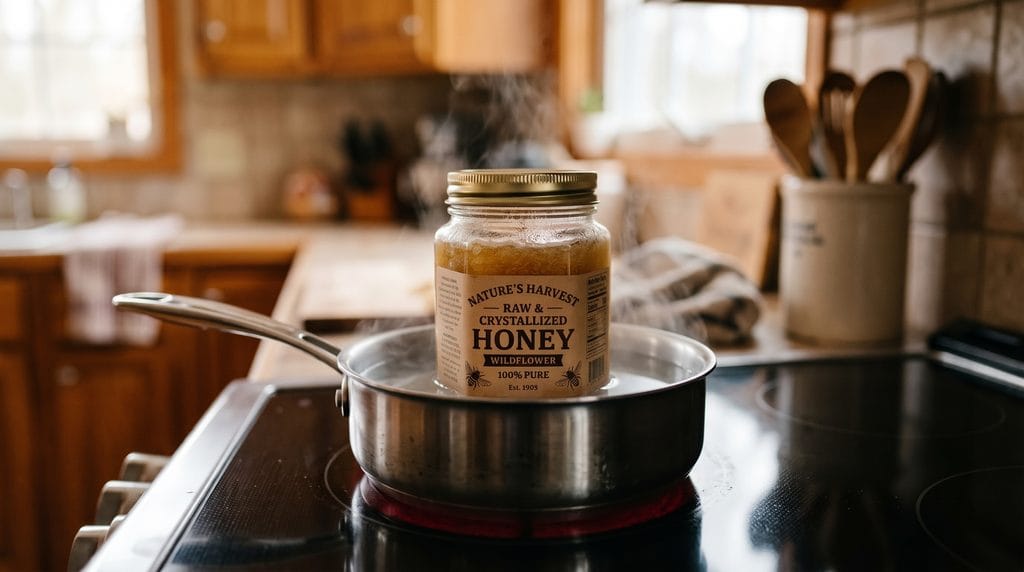
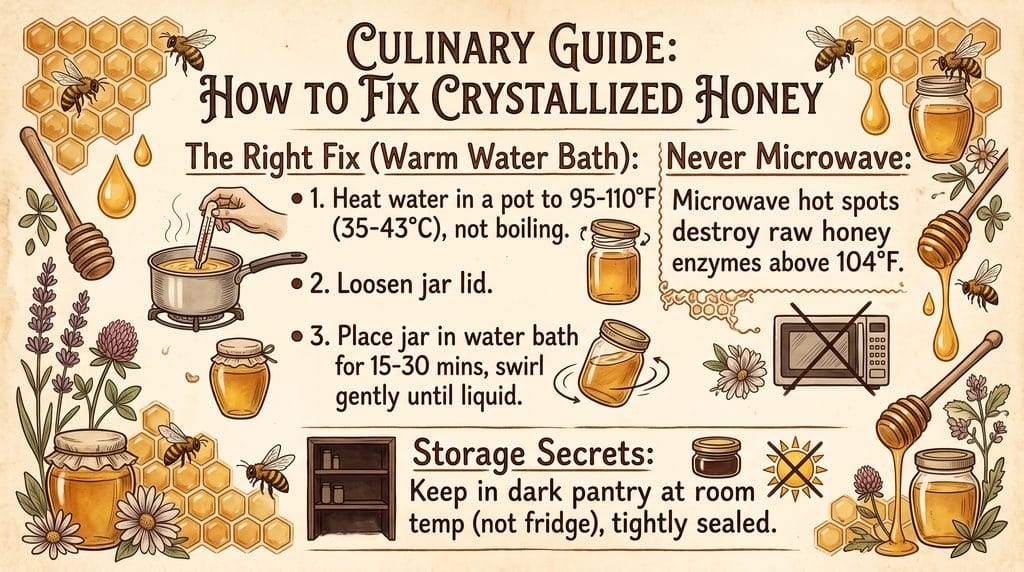
- Fill a saucepan or heatproof bowl with warm — not boiling — water, ideally around 95–110°F (35–43°C).
- Loosen the lid on the honey jar so pressure doesn’t build up as it warms, but don’t remove it fully.
- Set the jar in the water bath and let it sit, checking and swirling gently every few minutes.
- As the temperature rises, the crystal lattice breaks apart and the sugars redissolve. A full jar usually takes 15–30 minutes depending on how solid it’s become.
- Once it’s fully liquid, dry the jar and use it as normal.
Why You Should Never Microwave It Straight
Microwaving honey directly is the fastest way to ruin what made raw honey worth buying in the first place. Honey’s beneficial enzymes — including diastase, which is often used as a quality marker for raw honey — start breaking down at temperatures above about 104°F (40°C), and microwaves heat unevenly, creating hot spots that can spike well past that threshold in seconds even while the rest of the jar is still cool. If you do need to use a microwave in a pinch, transfer the honey to a microwave-safe container, use 10-second bursts on low power, and stir between each one so heat distributes evenly rather than scorching one pocket.
How to Slow Crystallization Down Next Time
You can’t stop crystallization permanently — it’s the natural end state of a supersaturated sugar solution — but you can buy yourself months, sometimes years.
Store it at room temperature, not the fridge. Cold temperatures actually accelerate crystallization because they slow the sugar molecules just enough to make it easier for crystals to lock into place. A cool, stable shelf — as detailed in our guide on creating a non-toxic pantry with glass jar organization — is the sweet spot.
Keep the lid tightly sealed between uses. Honey is hygroscopic, meaning it pulls moisture from the air. Extra moisture changes the water ratio just enough to speed up crystal formation, especially in humid kitchens.
Buy smaller jars if you go through honey slowly. Every time you open the jar, you introduce a few new potential nucleation sites — dust, condensation, a wet spoon. Less time open means fewer chances for crystals to get a foothold.
Store it away from vibration and temperature swings. A shelf near a fridge motor or a spot that gets warm during the day and cool at night encourages faster crystal growth than a stable, undisturbed spot.
When Crystallized Honey Actually Is a Problem
Crystallization on its own is never a safety issue — honey’s low water content and acidity make it naturally resistant to bacterial growth for years. What is worth paying attention to:
- Fermentation smell (sour, boozy, or yeasty) means the water content was too high to begin with, often from harvesting honey before bees fully capped and dehydrated it. This is a production issue, not a storage one, and that jar is worth returning if you bought it recently.
- Mold on the surface is rare in true honey but can happen if moisture got in from a dirty or wet utensil. If you see visible mold, discard that jar.
- A change in color to noticeably darker with a burnt smell after you’ve heated it usually means it got too hot during a fix attempt — still technically safe to eat, but the flavor and enzyme content won’t recover.
FAQ
Does crystallized honey lose its health benefits?
No. The sugar structure changes, but the vitamins, antioxidants, and trace enzymes stay intact. Only excessive heat during a “fix,” not crystallization itself, degrades them.
Can I just eat crystallized honey as-is?
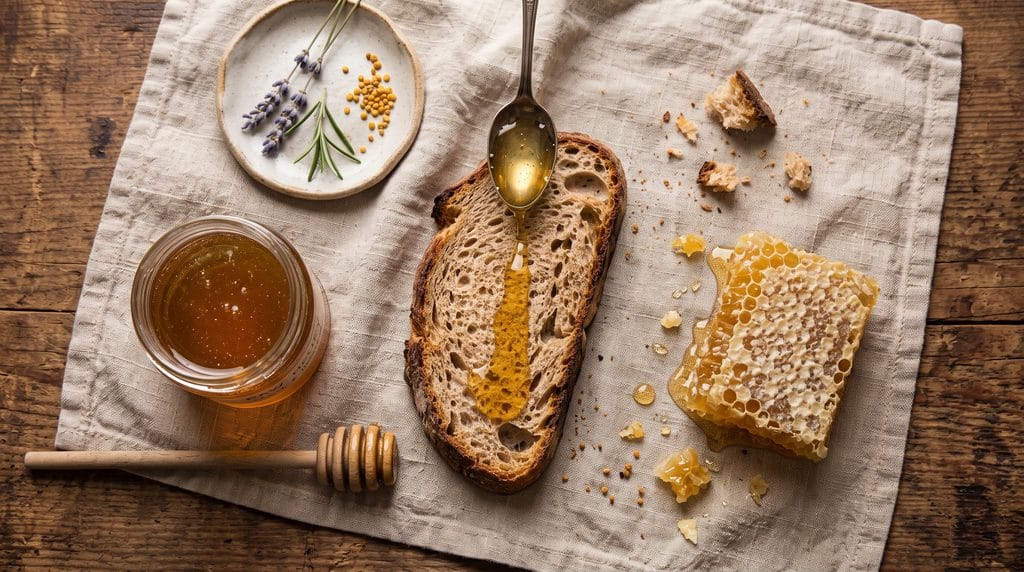
Yes — it’s safe and some people prefer the texture, especially spread on toast or paired with whipped cottage cheese with raw honey where it doesn’t run everywhere. Many bakeries intentionally use crystallized honey for spreadability.
Why does my honey crystallize unevenly, with a hard layer at the bottom?
This usually happens when a jar sits undisturbed for a long time — crystals are slightly denser and settle downward, creating a firmer layer at the base while the top stays softer.
Is crystallized honey a sign it’s fake or diluted with sugar syrup?
Actually the opposite is more common — ultra-processed, syrup-cut honey is specifically filtered and treated to resist crystallization, so a jar that never crystallizes over a year or more is worth more suspicion than one that does.
Can I re-crystallize honey on purpose to make creamed honey?
Yes — this is exactly how creamed honey is made. Seeding liquid honey with a small amount of already finely crystallized honey and storing it cold controls the crystal size, producing a smooth, spreadable texture instead of gritty crystals, perfect for stirring into a warm cup of honey lemon ginger tea.
If pantry science like this is your kind of rabbit hole, I’m posting more slow-living kitchen breakdowns daily on Pinterest — come save this one for later.
