
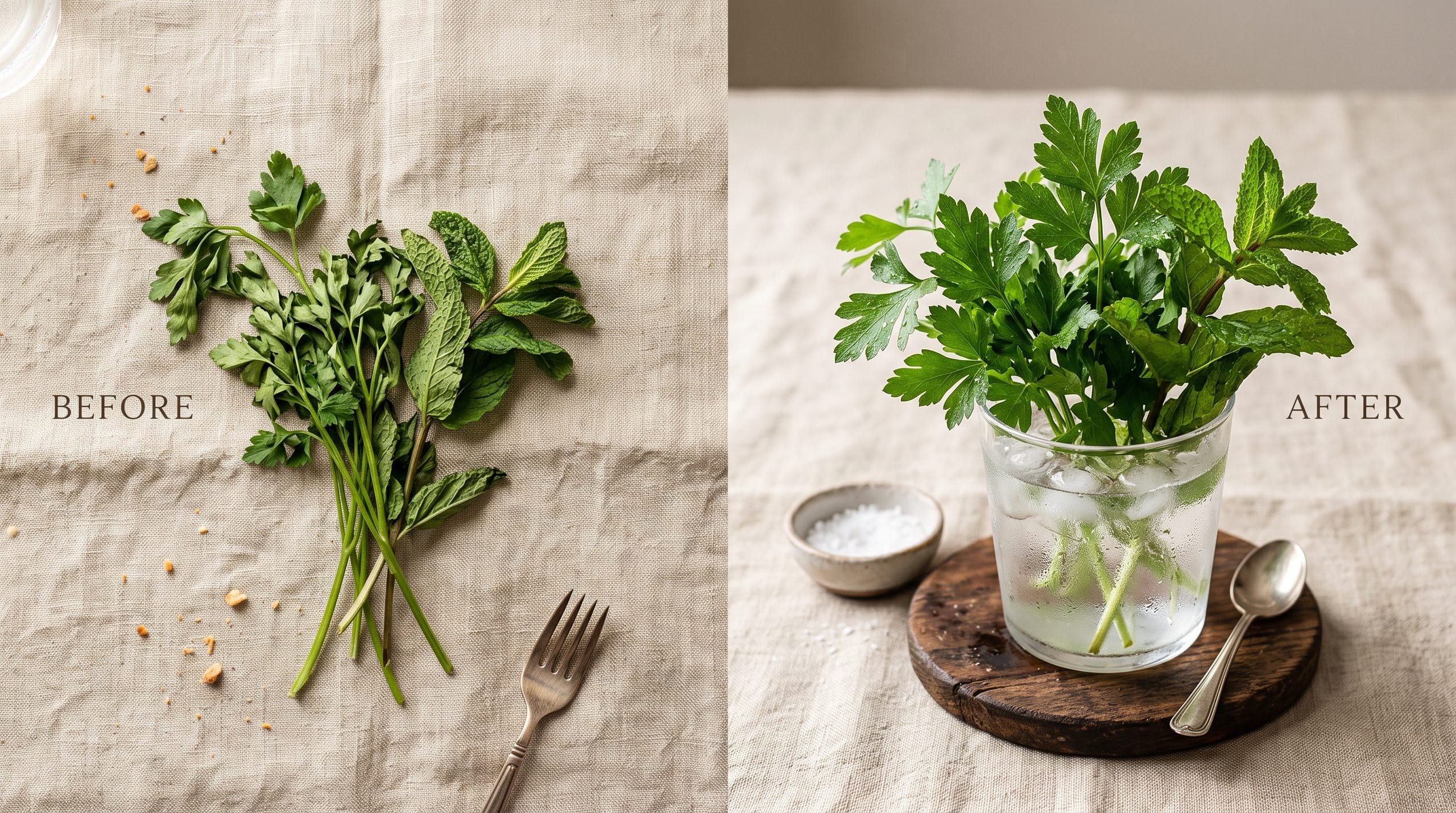
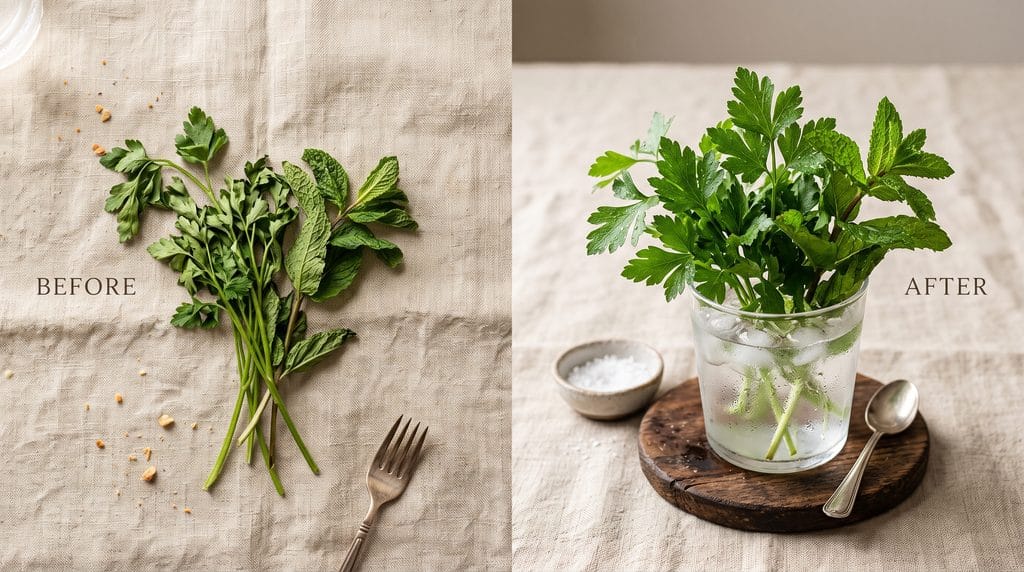
Mastering the art of reviving wilted vegetables and herbs became a necessity after I threw out more sad, limp herb bunches than I’d like to admit before I actually looked into whether reviving them was real or just an internet myth. It’s real, and it’s genuinely one of the more satisfying kitchen tricks once you understand why it works, because it isn’t magic — it’s just basic plant biology, and once you know the mechanism, you can apply it to almost anything wilted in your fridge instead of memorizing a list of specific tricks per vegetable.
Jump to: Why vegetables wilt · The basic method · What works best for what · What won’t come back · FAQ
Why Vegetables Wilt, and Why Water Fixes It
Plant cells stay firm and crisp because of something called turgor pressure — water pushing against the inside of each cell wall, keeping the whole structure rigid, the same way air pressure keeps a balloon round. According to botanical research on plant cell turgor pressure and rehydration, water loss directly reduces intracellular hydrostatic pressure, leading to mechanical collapse of non-lignified plant tissues.
As produce sits after harvest, it slowly loses water through its surface faster than it can replace it, and as internal water pressure drops, the cell walls lose their rigidity and the vegetable goes limp. It’s a physical, mechanical change, not decay or spoilage, which is exactly why it’s often reversible rather than permanent.
This is also why produce wilts faster in a dry fridge or near the vents where cold air blows directly, and why some vegetables hold up far longer than others sitting in the same crisper drawer. Thinner-walled, higher-surface-area produce like leafy greens and herbs lose water fast because there’s simply more surface exposed relative to their volume. Denser vegetables like carrots or potatoes have much less relative surface area, which is part of why they stay firm for weeks while a bunch of cilantro can look sad within days of the same storage conditions.
Submerging wilted produce in cold water gives those cells a chance to reabsorb water through osmosis, moving from an area of higher water concentration outside the cell to the more depleted area inside it. Cold water specifically slows down the plant’s own metabolic processes while this rehydration happens, which is part of why an ice bath works better and faster than room-temperature water alone. Given enough time, cell turgor pressure rebuilds, and the vegetable firms back up.
The Basic Method for Reviving Wilted Vegetables
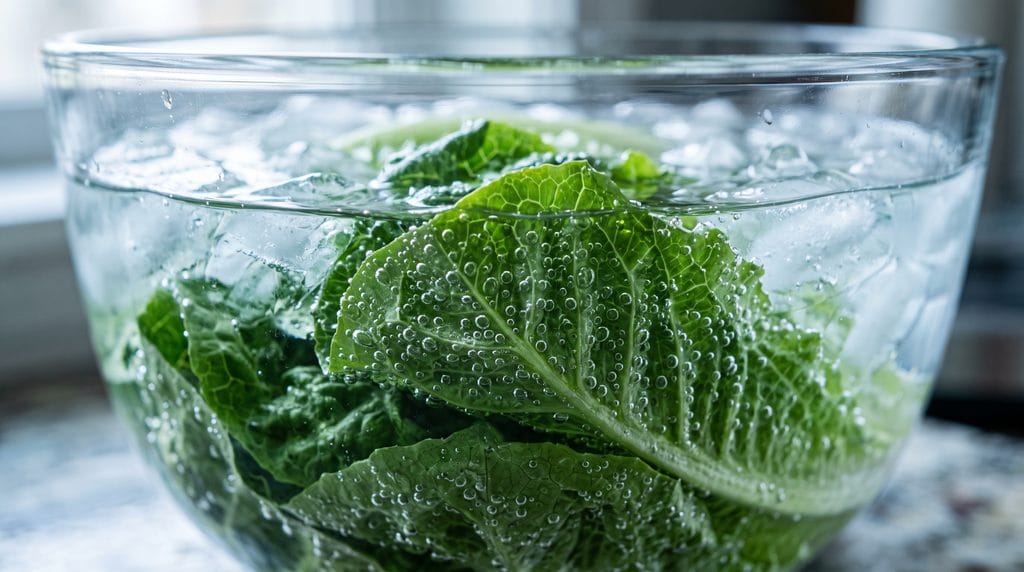
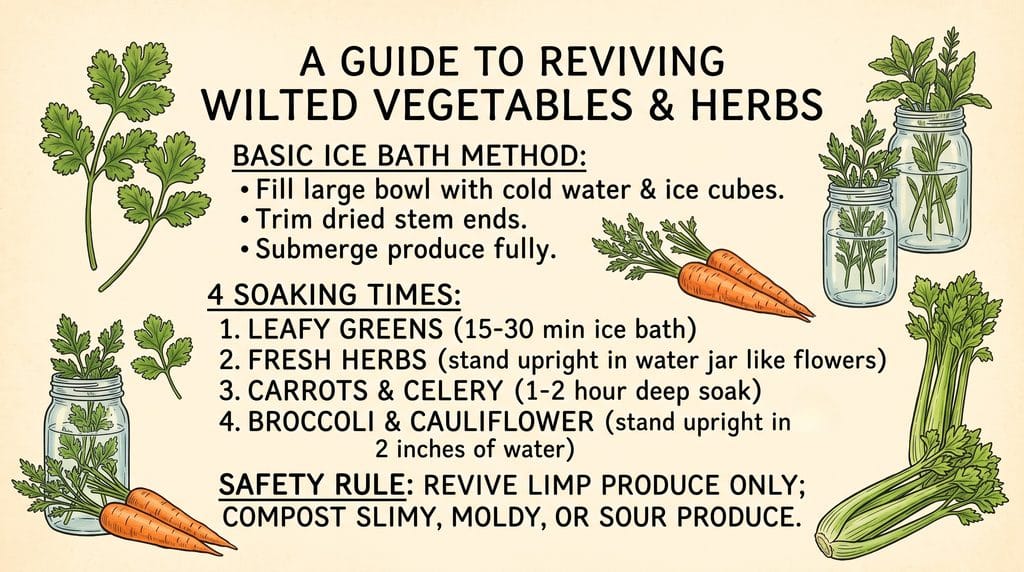
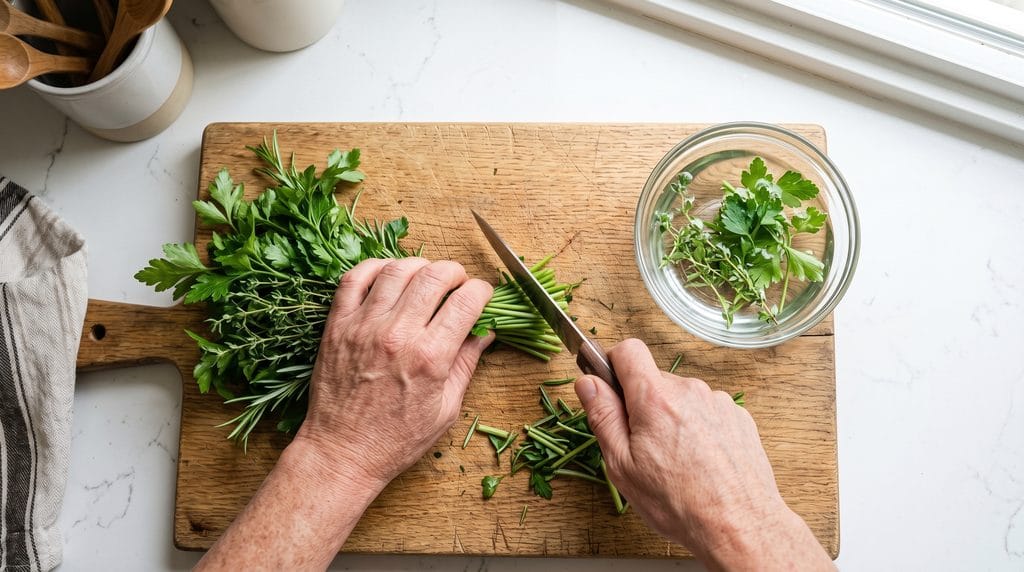
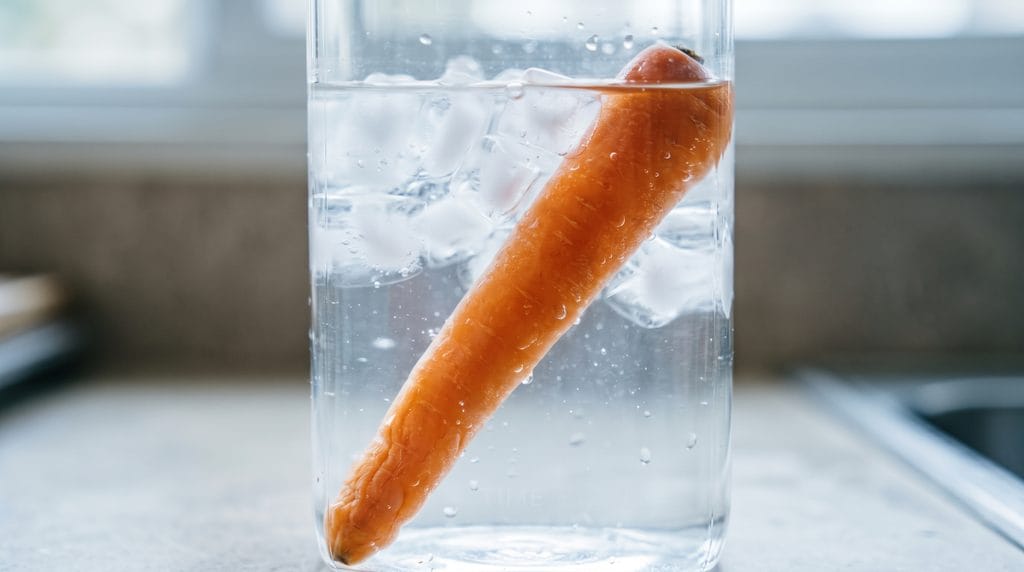
Fill a large bowl with cold water and a generous handful of ice. Trim any dry, browned ends from stems first, since fresh cut ends absorb water more efficiently than old, sealed-over ones. Submerge the wilted produce fully and let it sit in the fridge for anywhere from 15 minutes to a couple of hours, depending on how far gone it is and what type of vegetable or herb you’re working with.
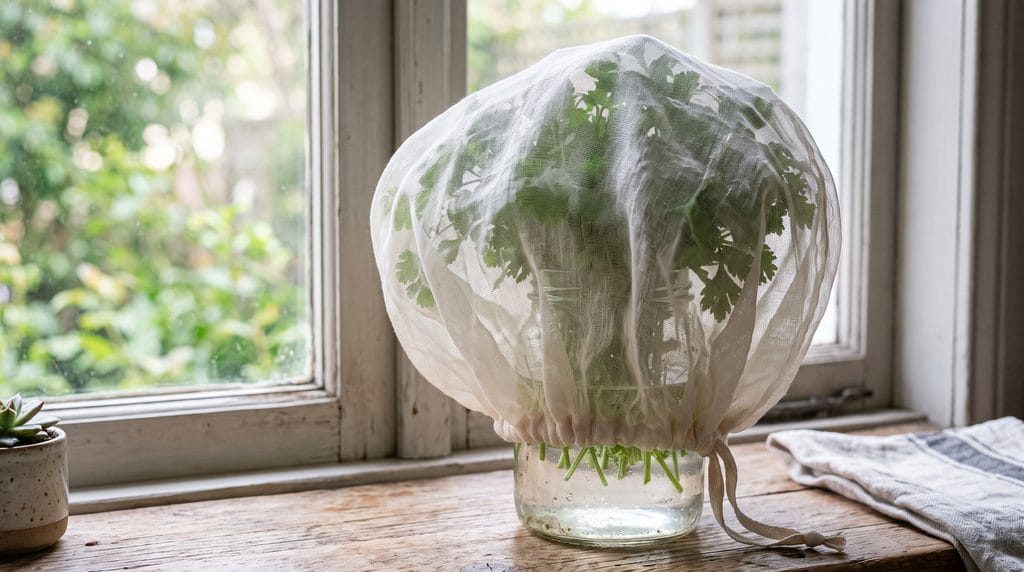
Herbs with stems, like cilantro or parsley, do especially well treated more like cut flowers than submerged produce — trim the stems and stand them upright in a jar of water instead of a bowl, loosely covered with a produce bag, and leave them in the fridge, much like storing ingredients in our glass jar pantry organization. This method can keep already-fresh herbs going for well over a week, not just revive wilted ones.
What Works Best for What
Leafy greens and lettuce — a 15 to 30 minute ice bath usually brings noticeable crispness back, since their thin leaf structure absorbs water quickly.
Herb bunches — the upright jar-of-water method works better than submerging entirely, and can both revive wilted herbs and extend the life of fresh ones significantly.
Carrots and celery — these can take a longer soak, sometimes a few hours, since their denser structure absorbs water more slowly than leafy vegetables do.
Broccoli and cauliflower — trim the stem end and stand the whole head upright in a couple inches of water in the fridge for a few hours, similar to the herb method, rather than a full submerged soak.
What Won’t Come Back, and Why
This trick works on structural wilting, not actual decay. If produce has visible mold, a slimy texture, or a genuinely off smell, that’s microbial spoilage, not dehydration, and no amount of soaking will fix it or make it safe to eat. The line to watch for is simple: a vegetable that’s limp but still smells clean and looks intact is a good candidate for reviving. One that smells sour, looks slick, or has any fuzzy spots should be composted instead.
It’s worth building the habit of checking wilted produce before tossing it, mostly because of how much of it is genuinely salvageable, fitting seamlessly into mindful minimalist kitchen habits and our favorite eco-friendly kitchen swaps. A lot of what ends up in the trash from a produce drawer isn’t spoiled at all — it’s just dehydrated, and dehydration alone is one of the easiest, cheapest problems in the whole kitchen to fix. Over a few months of actually using this instead of defaulting to the compost bin, it adds up to a noticeable amount of produce, and money, that would have otherwise gone to waste for no real reason beyond looking a little sad in the crisper drawer.
Frequently Asked Questions
Does this work on fruit too, or just vegetables?
It works best on vegetables and herbs specifically, since their cell structure is what’s driving the wilting in the first place. Fruit softening is usually a different process tied to ripening and enzymatic breakdown, which an ice bath won’t meaningfully reverse.
Why does the fridge matter, not just cold water?
Letting the soak happen in the fridge keeps the water cold for longer and slows any bacterial growth during the soaking window, especially if you’re leaving something submerged for a couple of hours rather than a quick 15-minute dip.
Will revived vegetables taste different from fresh ones?
Texture-wise, they typically come back very close to fresh. Flavor can be very slightly diluted in delicate herbs since some flavor compounds are water-soluble, but it’s a minor difference and rarely noticeable once the produce is actually cooked or dressed.
How many times can I revive the same vegetables?
This works well for one revival, but it’s not an indefinite cycle — each wilt-and-revive round does gradually break down the cell structure further, so it’s best treated as a way to save produce you’re about to use soon, not a way to keep something edible indefinitely.
Is there a way to prevent the wilting in the first place?
Storing herbs upright in water in the fridge from the start, rather than loose in a bag, prevents a lot of wilting before it happens. For leafy greens, a slightly damp paper towel wrapped around them before bagging helps maintain moisture without trapping excess condensation, which can actually accelerate spoilage if the greens end up sitting in standing water instead of just gentle humidity.
Save your next sad bunch of herbs and see the difference — more eco-minded kitchen tips like this live over on @Nourish_Rituals.
