
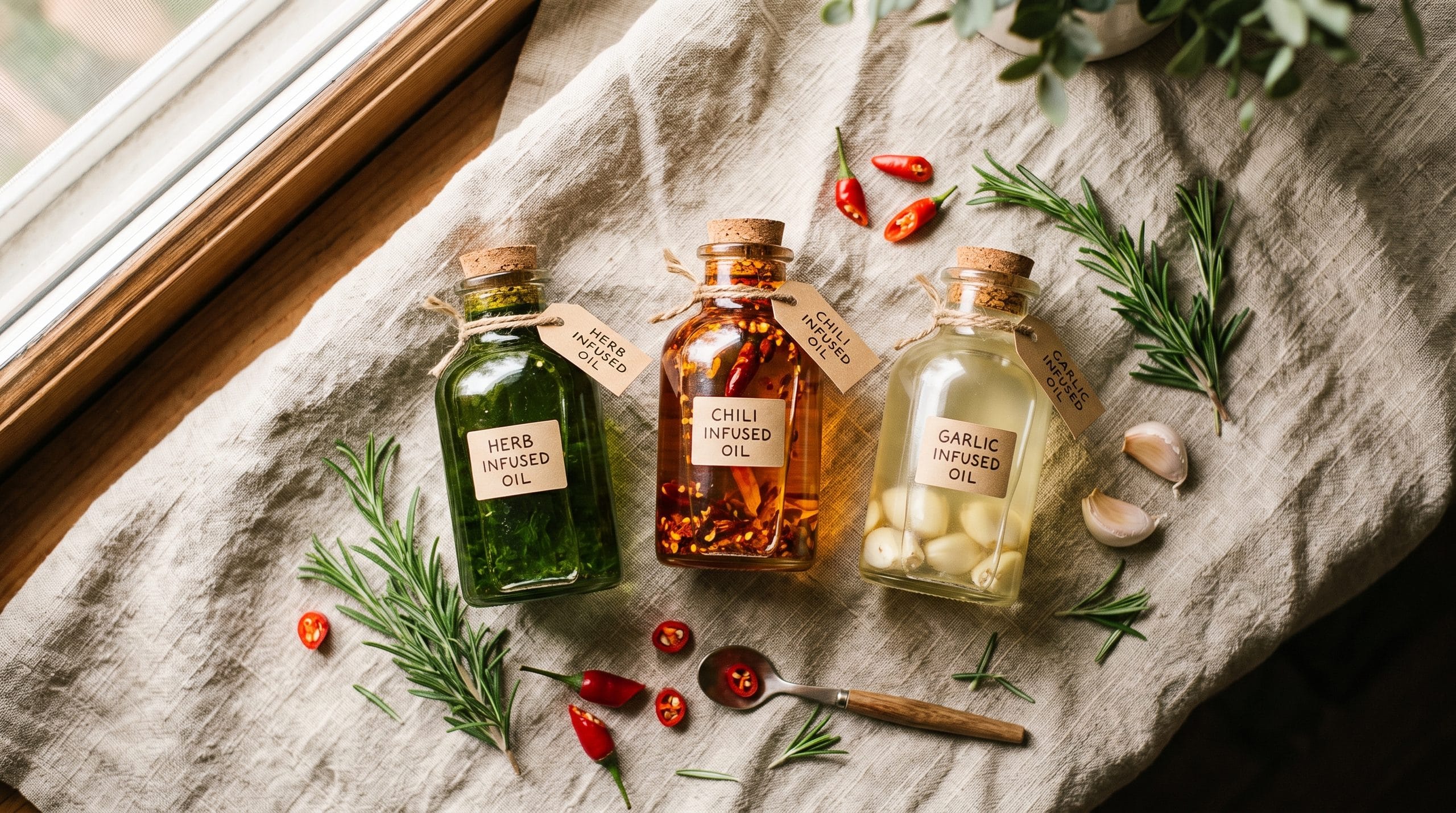
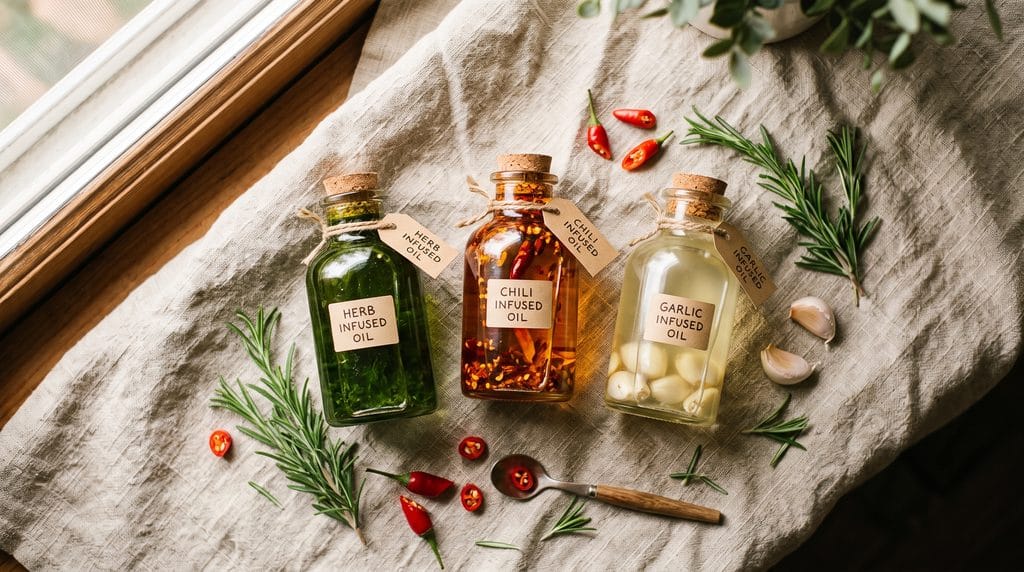
Making safe infused oils at home is something I almost didn’t write the way it needed to be written, because the honest version involves telling you that one of the most popular infused oil recipes on the internet — fresh garlic steeped in oil at room temperature — carries a real, documented risk that most recipe cards never mention. This isn’t meant to scare you off infused oils entirely. It’s meant to actually explain which methods are safe, which aren’t, and why, so you can make oils you’ll actually want to keep using.
Jump to: The risk nobody talks about · What makes infused oils safe · Dried herb oil method · Fresh herb & chili oil method · Fresh garlic workaround · Why safety comes first · FAQ
The Risk Nobody Talks About
Oil is an anaerobic environment, meaning it contains essentially no oxygen. Most bacteria need oxygen to grow, which is part of why oil seems shelf-stable and safe by default. But Clostridium botulinum, the bacteria responsible for botulism, is different — it thrives specifically in low-oxygen, low-acid environments, and fresh garlic, along with fresh herbs, can carry its spores from the soil they grew in. Combine those spores with an oxygen-free oil and leave it at room temperature, and you’ve built close to an ideal environment for that bacteria to grow and produce toxin, often without any visible sign, smell, or taste change to warn you.
This is exactly why the FDA and CDC guidelines on foodborne botulism prevention specifically warn against steeping fresh garlic or herbs in oil and storing it at room temperature, even though it’s one of the most common infused oil methods you’ll find online. It’s not a rare, overblown risk — it’s a well-documented cause of actual botulism outbreaks tied specifically to homemade garlic oil, and it’s worth taking seriously precisely because it’s so easy to make correctly once you understand what the danger actually is.
What Actually Makes Infused Oils at Home Safe
There are two reliable paths to a safe infused oil, and understanding why they work makes the whole topic much less confusing. The first is using dried ingredients instead of fresh ones — dried herbs and dried garlic carry dramatically lower spore counts and much less available moisture for bacteria to use, which is why shelf-stable, dried-ingredient infused oils are considered safe to store at room temperature, perfect for long-term glass jar pantry organization.
The second path is refrigeration plus a short shelf life. If you’re using fresh ingredients, keeping the finished oil refrigerated slows bacterial growth enough to be safe, but only for a limited window, generally understood to be about 4 days for something like fresh garlic in oil, kept cold the entire time. Refrigeration doesn’t make it indefinitely safe — it just buys a short, defined amount of time.
Method 1: Dried Herb Oil (Room Temperature Stable)
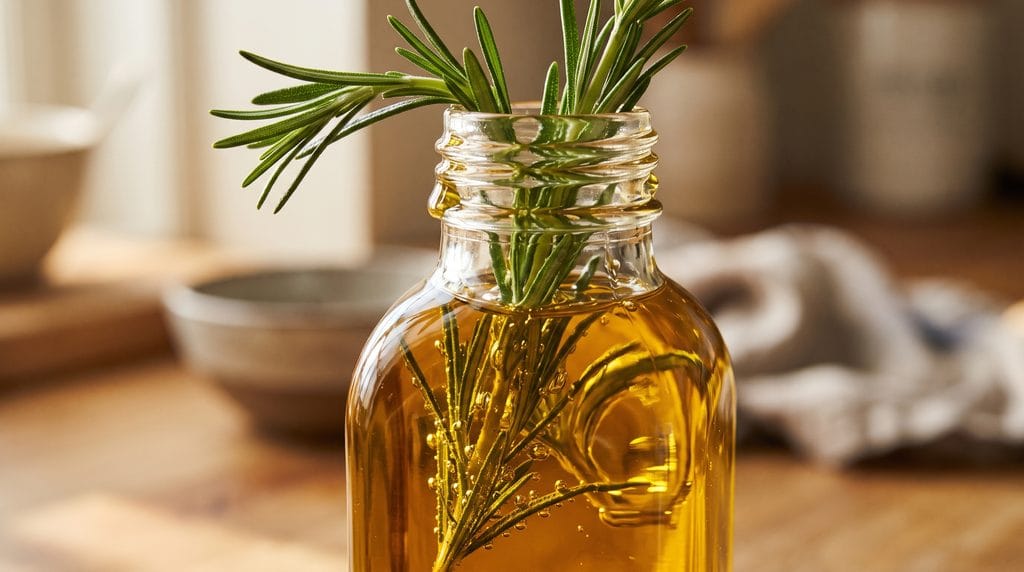
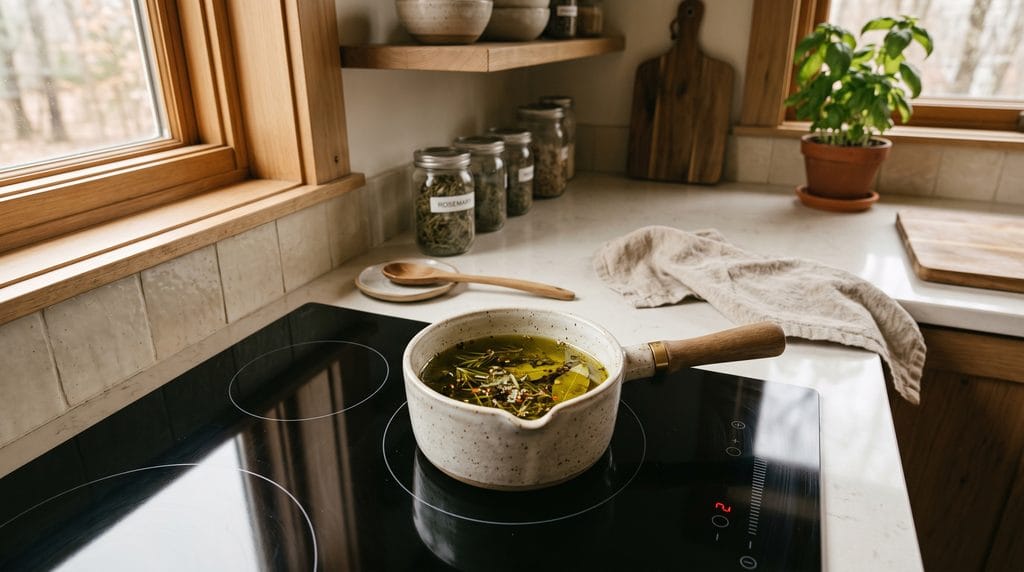
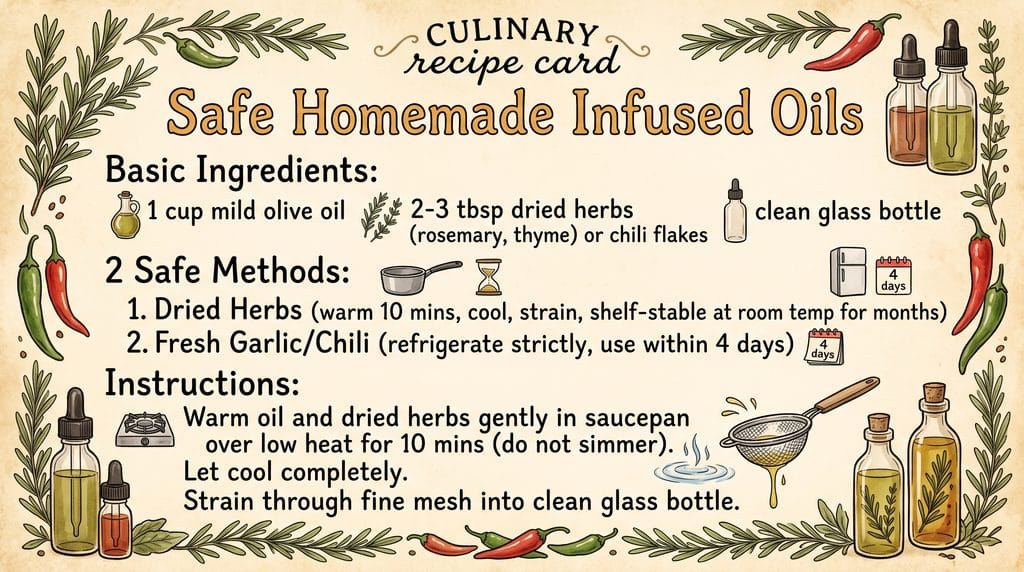
Combine 1 cup of a neutral or mild olive oil with 2 to 3 tablespoons of dried herbs — rosemary, thyme, oregano, or a mix. Warm gently in a small saucepan over low heat for about 10 minutes, just until fragrant, without letting it simmer or bubble. Let it cool completely, then strain into a clean, dry bottle. This version is genuinely shelf-stable at room temperature for several months, since the dried herbs carry minimal risk to begin with, making it a great base for our homemade salad dressing recipes.
Method 2: Fresh Herb or Chili Oil (Refrigerated, Short Shelf Life)
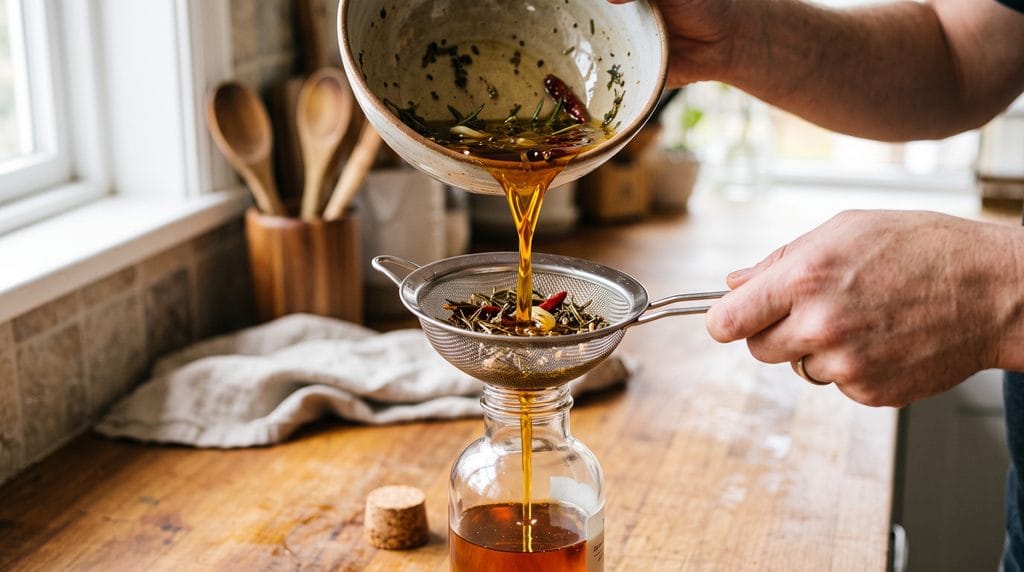
Combine 1 cup of oil with a handful of fresh herbs or sliced fresh chilies. Warm gently the same way as above, cool completely, then strain and bottle. Store this version in the fridge, and plan to use it within about 4 days. Label the bottle with the date you made it — it’s easy to lose track otherwise, and this is the one category where “when in doubt, throw it out” genuinely applies, unlike our shelf-stable fermented hot sauce guide where lactic acid preserves the peppers naturally.
What to Do Instead of Fresh Garlic Oil
If garlic flavor is what you’re actually after, there’s a safer workaround that gets you most of the way there without the room-temperature risk: use dried granulated garlic instead of fresh cloves, following the dried-herb method above. You lose a small amount of the sharper, fresher garlic bite, but you gain a genuinely shelf-stable oil instead of a short-lived refrigerated one. If you want fresh garlic flavor specifically, make a small batch using the fresh method, refrigerate it, and commit to using it within that 4-day window rather than trying to stretch it further.
Why This Guide Spends So Much Time on Safety
It might seem excessive to devote this much space to a single risk in what’s otherwise a simple kitchen project, but infused oils are a genuinely unusual case in home cooking. Most food safety issues give you some kind of warning — an off smell, a strange texture, visible mold. Botulism risk in oil doesn’t work that way, which is exactly why guidance here needs to be more explicit than “use your judgment” or “if it smells off, don’t eat it.” Once you understand the two safe paths — dried ingredients at room temperature, or fresh ingredients refrigerated and used quickly — the actual cooking part of this project is genuinely easy. The safety piece just has to come first, as we do in our autumn pantry reset into glass jars.
Frequently Asked Questions
How would I even know if an oil had gone unsafe? Would it smell bad?
This is exactly what makes the risk serious — botulinum toxin often produces no detectable smell, taste, or visual change in the oil. You genuinely cannot rely on your senses to catch it, which is why following safe timelines and methods matters more than trusting how the oil looks or smells.
Is store-bought infused oil safer than homemade?
Generally yes, since commercial producers add acidifying agents or follow regulated processes specifically designed to prevent this risk, which home cooks typically don’t have access to or knowledge of.
Can I freeze infused oil instead of refrigerating it to make it last longer?
Freezing does slow bacterial growth further and can extend usability somewhat, but it’s not a guarantee of safety on its own and isn’t a substitute for using fresh-ingredient oils within a short window. Refrigeration with a defined short shelf life remains the standard safe approach, and freezing is best thought of as an extra layer of caution rather than a way to stretch the timeline significantly further.
What about oils I see in restaurants with fresh garlic sitting out?
Commercial kitchens are often held to different regulatory standards and may use acidified products specifically designed for safety, which isn’t something to replicate at home without the same safeguards in place.
Does this risk apply to all oils, or just olive oil?
It applies to any oil, since the risk comes from the low-oxygen environment oil creates in general, not from any property specific to olive oil. The same caution applies to infusing in avocado oil, vegetable oil, or any other type, so switching oils isn’t a workaround for the timeline.
Make a batch the safe way and see how much flavor it still adds — more pantry projects like this live over on @Nourish_Rituals.
