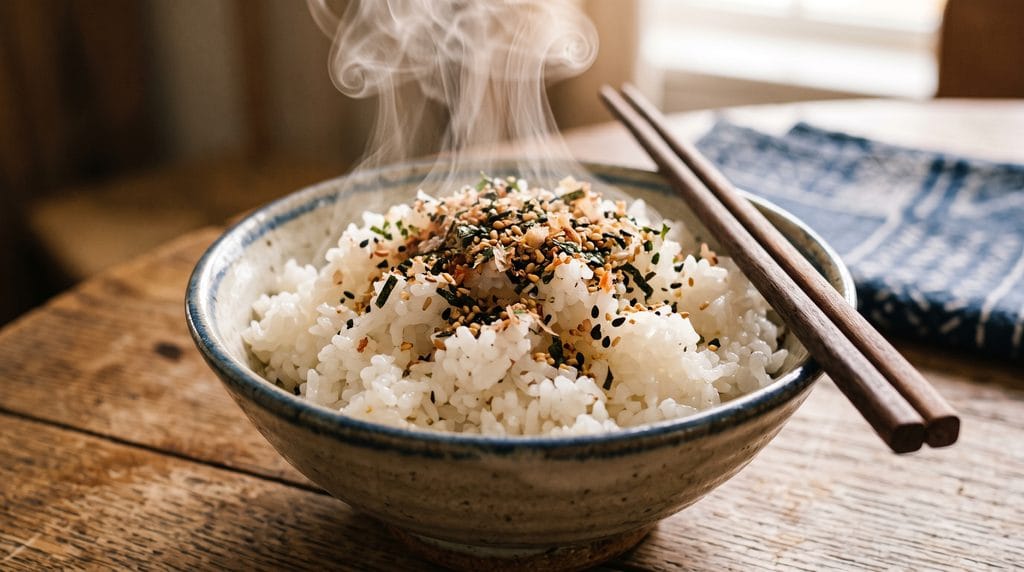
Furikake seasoning is suddenly filling up every food feed, shaken over rice, eggs, popcorn, and even pasta. It looks like a new discovery, and social media is treating it like one — but furikake has been sitting in Japanese pantries since the early 1900s, and the reason it’s crossing over now is the same reason it never left Japanese kitchens in the first place: it’s one of the most efficient flavor tools that exists, and once you understand why, you’ll want a jar of it permanently on your counter.
Jump to: What furikake actually is · Where it came from · The science of umami synergy · How to make furikake seasoning · 5 variations · Where to use it · FAQ
What Furikake Actually Is
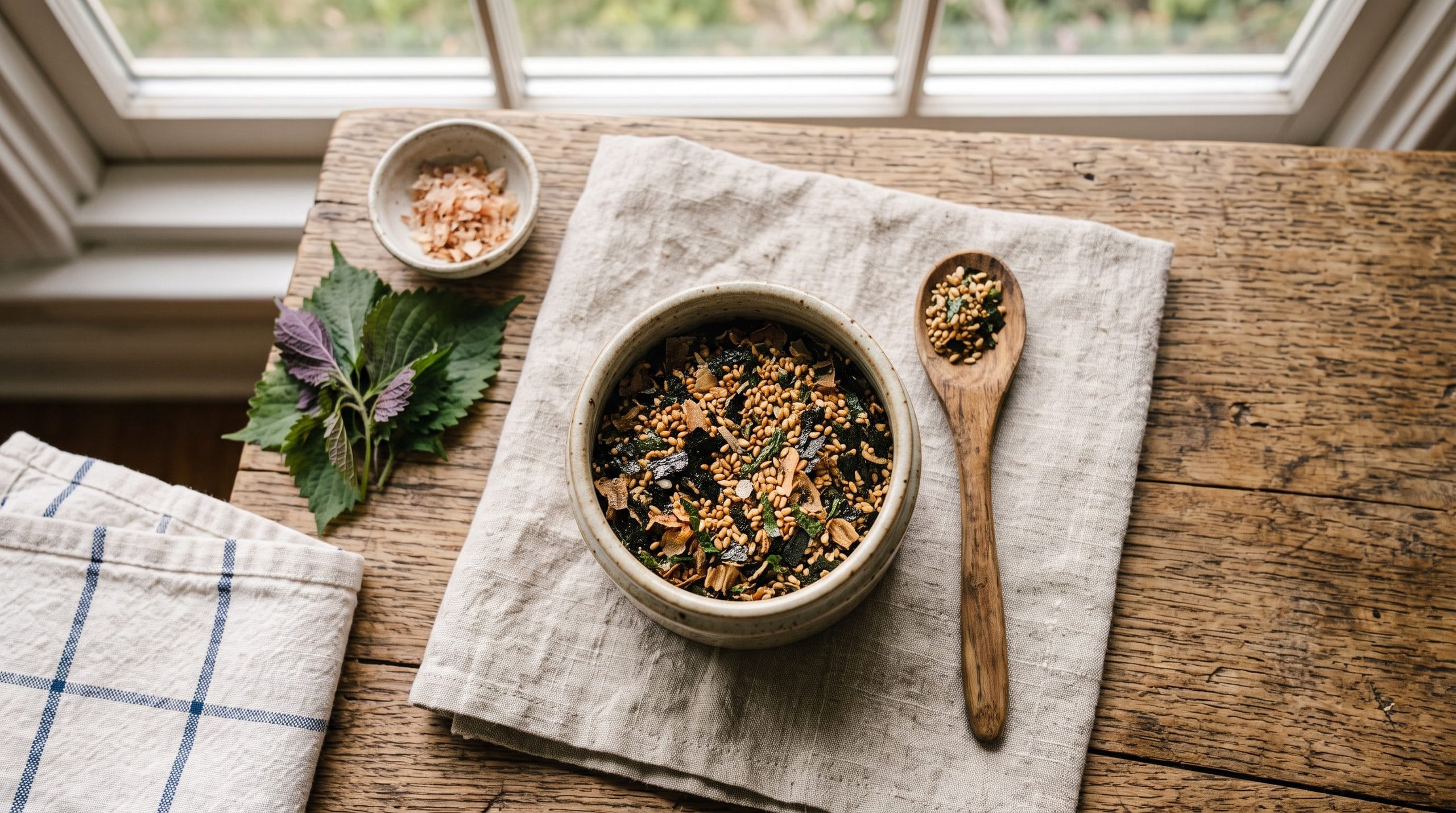
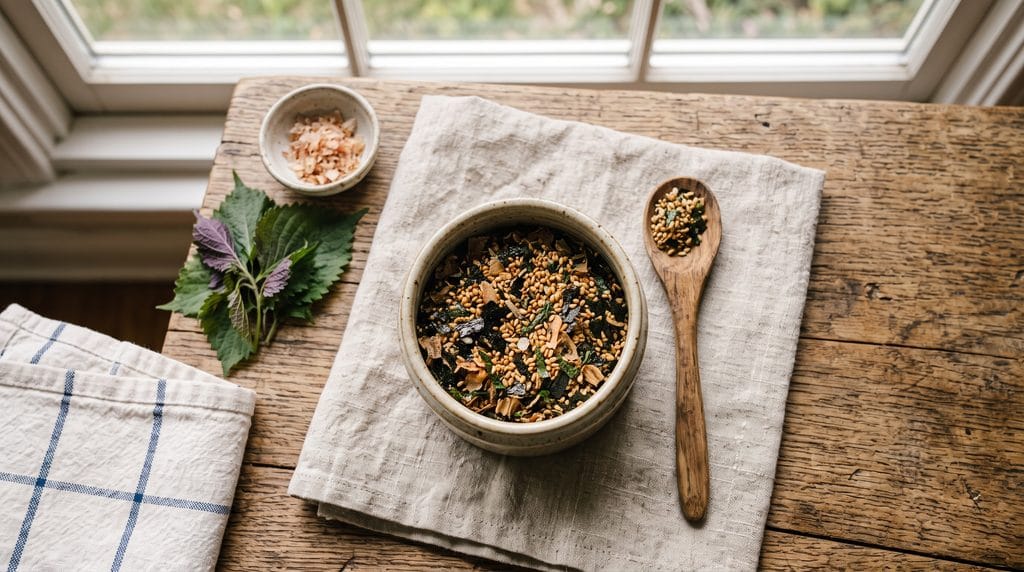
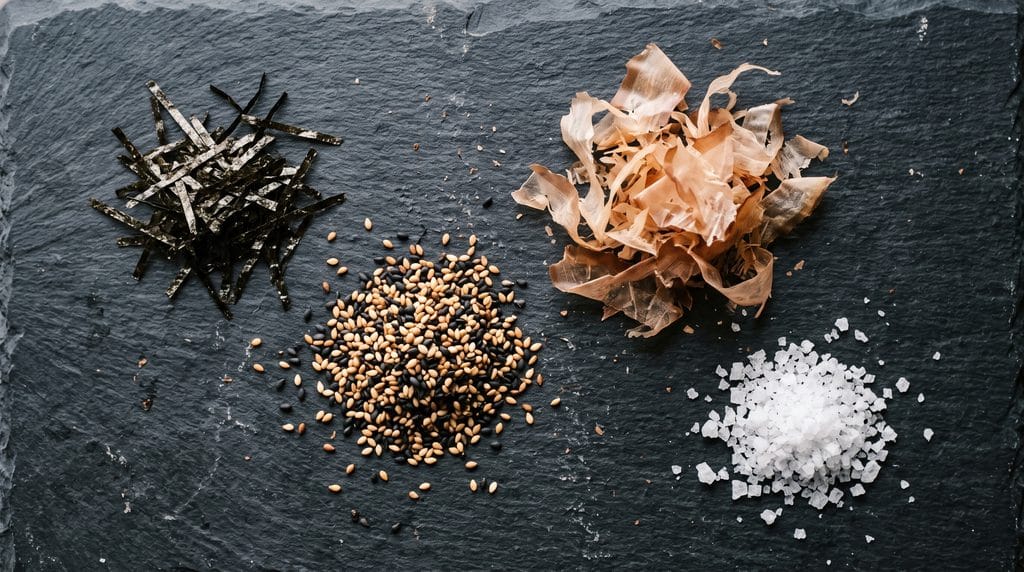
Furikake is a dry seasoning blend, traditionally built around dried, crumbled nori (seaweed), sesame seeds, and bonito flakes, often with salt, sugar, and sometimes dried fish or egg mixed in. It’s meant to be shaken directly onto food — the name literally comes from the Japanese verb furikakeru, meaning “to sprinkle onto.” There’s no cooking involved and no liquid; it’s designed to sit in a jar for months and get used a pinch at a time, fitting into our collection of homemade spice blends from scratch.
Where It Actually Came From
Furikake has a genuinely practical origin story that has nothing to do with trends. It was developed in the early 20th century, reportedly by a pharmacist trying to address calcium deficiency in the Japanese diet by grinding fish bones into a fine, palatable powder that people would actually want to eat. Sesame and seaweed were added over time both for flavor and for their own nutritional density, and by the mid-20th century it had become a fixture in Japanese school lunches and home kitchens specifically because it made plain rice more appealing to kids without requiring a recipe. That’s the part worth sitting with: this is a hundred-year-old solution to the very modern problem of “how do I make a boring bowl of something taste good in five seconds.”
The Science: Why Furikake Makes Almost Everything Taste Better
This is where furikake stops being a nice pantry find and becomes something worth understanding, because the effect it has on food isn’t random — it’s a specific, well-documented flavor chemistry phenomenon called umami synergy.
Two Kinds of Umami, Working Together
Umami — the savory “fifth taste” alongside sweet, sour, salty, and bitter — comes primarily from a compound called glutamate, which is naturally abundant in ingredients like seaweed. But there’s a second category of umami compounds, called ribonucleotides, found in things like bonito flakes (rich in inosinate) and dried mushrooms (rich in guanylate). According to food science research on umami synergy between glutamate and inosinate, combining these two categories creates an exponential multiplication of perceived savory depth rather than simple addition.
Furikake happens to combine both categories almost by accident of tradition: nori supplies the glutamate, bonito flakes supply the ribonucleotides, and sesame contributes fat and roasted, nutty aromatic compounds that round out the whole thing, similar to the nutty depth we celebrate in our black sesame latte ritual. It’s a flavor-synergy formula that predates the scientific explanation for why it works by about eighty years.
Why This Matters for Plain, Simple Food
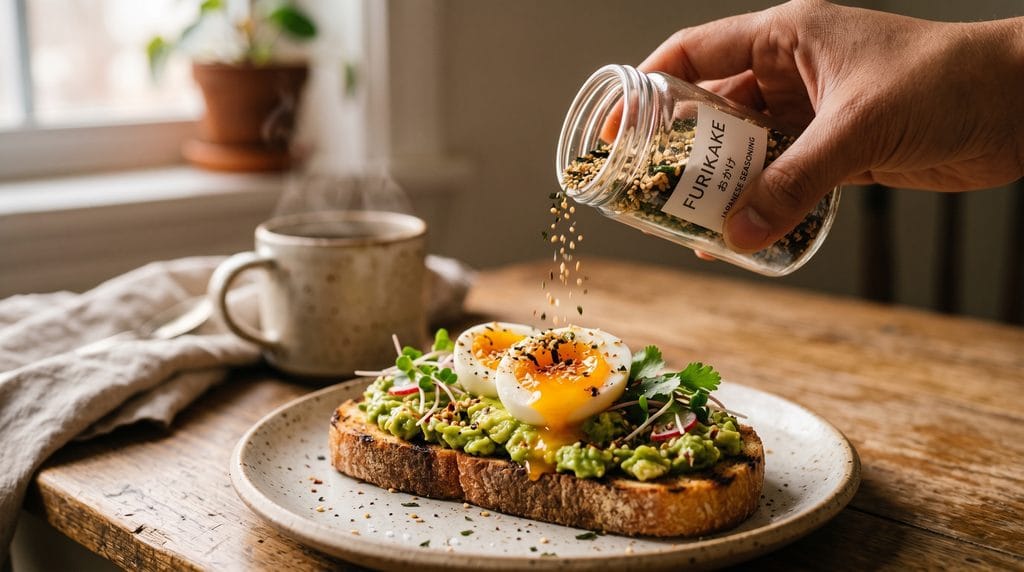
The synergy effect is strongest precisely on foods that don’t have much competing flavor of their own — plain rice, scrambled eggs, roasted vegetables, popcorn, or our favorite aesthetic avocado toast with a jammy egg. That’s exactly why furikake reads as almost magical on simple dishes: there’s nothing else in the bowl to distract from the umami boost, so it lands at full strength. It’s also why furikake pairs oddly well with Western comfort food right now — a plain baked potato or buttered pasta is exactly the kind of low-competition canvas where the synergy effect is most noticeable.
How to Make Your Own Furikake Seasoning at Home
Store-bought furikake is widely available, but a homemade version lets you control the salt and sugar, skip the fish if you want a vegetarian version, and use up nori sheets that have gone slightly stale for sushi.
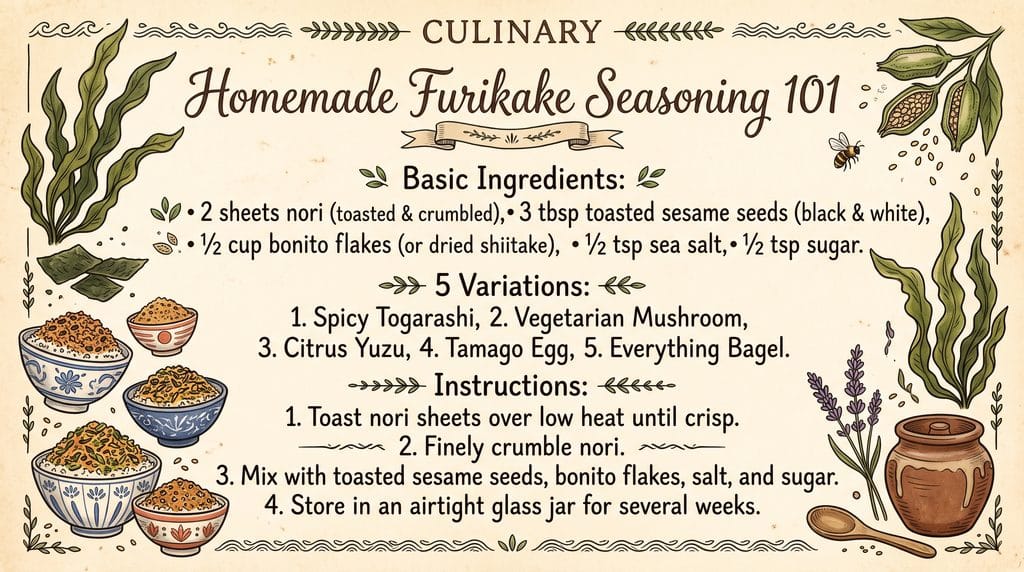
Basic Recipe
Ingredients:
- 2 sheets of nori, toasted and crumbled (or torn into small pieces and pulsed briefly in a food processor)
- 3 tablespoons toasted sesame seeds (a mix of white and black is traditional and looks striking)
- 1/2 cup bonito flakes, crushed slightly (omit for a vegetarian version, or substitute dried shiitake for a mushroom-based umami boost)
- 1/2 teaspoon salt
- 1/2 teaspoon sugar
Method:
- If your nori isn’t already toasted, wave each sheet briefly over a low flame or in a dry skillet for a few seconds per side until it turns fragrant and slightly darker.
- Crumble the nori finely by hand or pulse it briefly in a food processor — you want small flakes, not powder.
- Combine all ingredients in a bowl and mix well.
- Store in an airtight jar. Because it’s completely dry, it keeps at room temperature for several weeks, or up to a few months in the freezer. Storing your blends in clean glass jar pantry organization keeps them crisp and moisture-free.
Five Variations Worth Trying
Spicy furikake — add a pinch of togarashi (Japanese chili flake blend) or crushed red pepper for heat that cuts through fatty foods like fried eggs or ramen.
Vegetarian mushroom furikake — swap bonito flakes for finely crumbled dried shiitake mushrooms, which supply the same ribonucleotide-based umami without any fish.
Citrus furikake — add a small amount of finely grated dried yuzu or lemon zest for brightness, especially good over grain bowls or roasted fish.
Egg furikake (tamago furikake) — mix in finely crumbled freeze-dried scrambled egg for a richer, slightly sweeter version traditionally used on rice in Japanese lunchboxes.
Everything-bagel furikake — a Western hybrid: add a bit of dried onion and garlic flake to the base recipe for a crossover blend that works equally well on rice or on cream cheese toast.

Where to Actually Use It
Beyond rice, furikake works on scrambled or fried eggs, popcorn (toss it with a little melted butter first so it sticks), roasted or steamed vegetables, avocado toast, plain buttered pasta, baked potatoes, cottage cheese, and even popcorn-style snack mixes. The general rule: the plainer the base, the more dramatic the effect.
FAQ
Is furikake the same as togarashi?
No. Togarashi is a chili-based Japanese spice blend focused on heat, while furikake is built around umami-rich ingredients like seaweed and bonito. Some blends combine elements of both, but they serve different flavor purposes.
Can I make furikake without bonito flakes?
Yes — dried shiitake mushrooms are the closest substitute, since they provide the same category of umami compound (guanylate instead of inosinate), which still creates the synergy effect with the glutamate in the nori.
Does furikake need to be refrigerated?
No, as long as it’s fully dry and stored in an airtight container. Moisture is the main thing that shortens its shelf life, so keep it away from steam (like right next to a rice cooker) if you’re storing it long-term.
Why does furikake taste different from just adding soy sauce to rice?
Soy sauce adds glutamate and salt in liquid form, but it doesn’t include the ribonucleotide-rich ingredients that create the synergy effect. Furikake’s combination of two separate umami compound categories is what makes it taste more complex than salt or soy sauce alone.
Is furikake healthy?
In small sprinkled amounts, yes — it’s low in calories and the nori contributes iodine and trace minerals. Store-bought versions can be higher in sodium, so check labels or make your own if that’s a concern for you.
If pantry staples like this are your kind of rabbit hole, I’m sharing more slow-living kitchen finds daily on Pinterest — come save this one for later.