
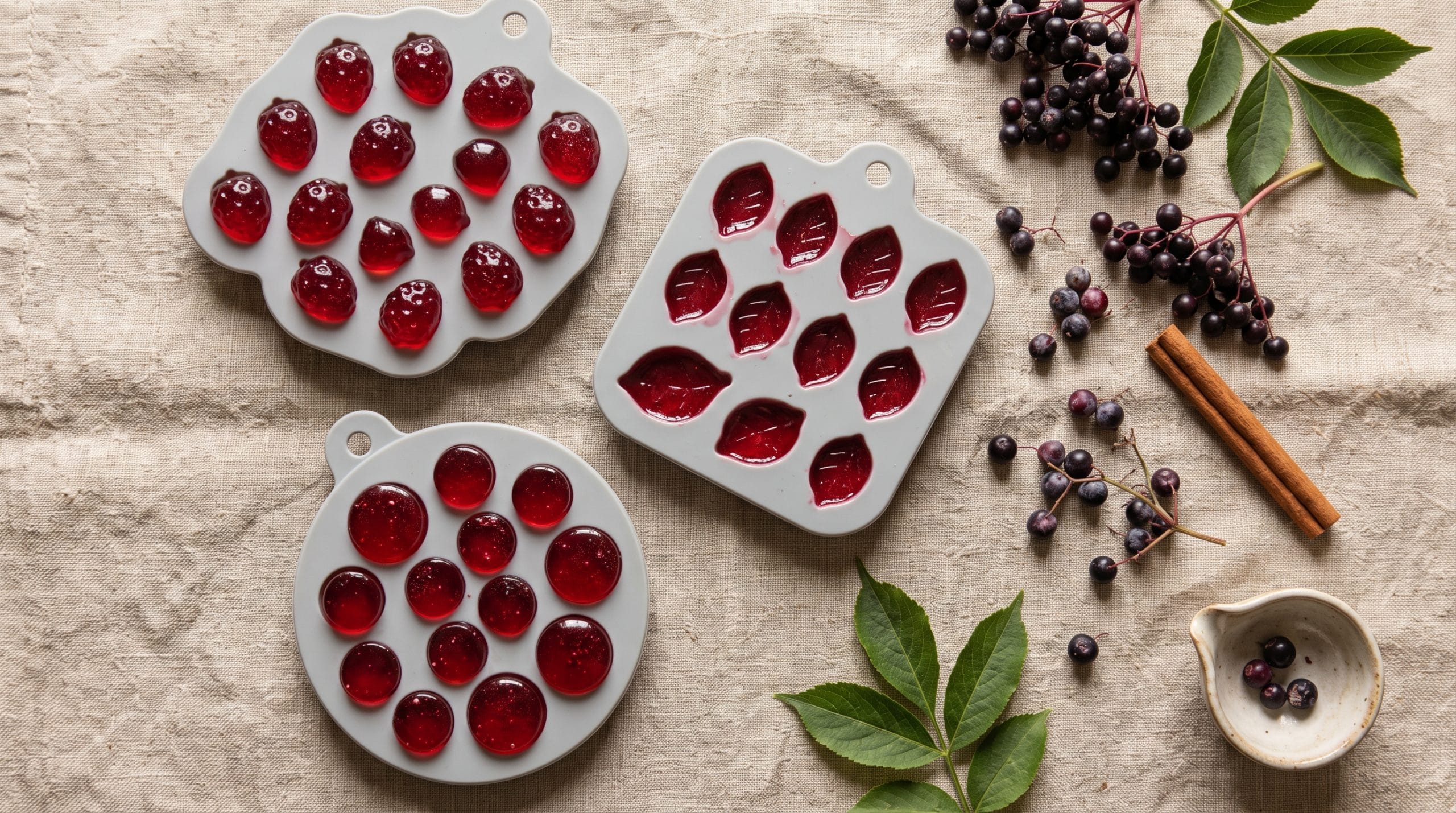
Wellness gummies took over my kitchen counter before they took over my supplement shelf, which is the opposite of how I expected this to go. My old shelf was a small, slightly embarrassing graveyard of half-used bottles — vitamin C, elderberry capsules, a tub of collagen powder I bought once and barely touched. Somewhere along the way I started making my own gummies instead, and it’s the first wellness habit that’s actually stuck, mostly because it doesn’t feel like a chore. It feels like making candy that happens to be good for you.
Turns out I’m not the only one who’s made that switch. Gummy formats have quietly taken over the supplement world, and the DIY version of it — actual homemade wellness gummies, not just gummy vitamins bought in a bottle — is showing up everywhere from wellness blogs to Pinterest’s own trend forecasting. Much like batching our 5-day ginger turmeric wellness shots, making your own gummies gives you total control over what goes into your body.
Jump to: Why gummies now · Rebranded tradition · Science of why gummies set · Base recipe · 5 wellness gummies · Tips for setting · FAQ
Why Gummies, and Why Now
Pinterest’s trend team flagged texture-driven food — gummy and jelly formats specifically — as one of the standout directions shaping the year, and the supplement side backs that up. Immune-support gummies built around elderberry and vitamin C, collagen gummies for skin and joints, and digestive gummies with ginger and probiotics are among the fastest-growing categories in the wellness aisle right now. Elderberry alone has grown into a market worth tens of millions of dollars, with gummy formats making up a huge share of how people are choosing to take it — most people would rather chew something that tastes good than swallow another capsule.
The appeal isn’t just the format, though. It’s what’s not in it. Store-bought gummy vitamins are often loaded with added sugar, corn syrup, and artificial dyes to get that bright, bouncy texture and long shelf life. Making your own means you control exactly what’s going into something you’re eating daily — real fruit, real gelatin or pectin, honey instead of corn syrup, and a color that comes from actual berries instead of a dye list you can’t pronounce.
This Isn’t Actually New — It’s Just Rebranded
Long before “wellness gummies” was a category on a store shelf, this was just what people did with a surplus of elderberries or a sore throat and a pot on the stove. Elderberry syrup has been a folk remedy across Europe for generations, usually made in big batches every fall and kept on hand through cold season. Ginger candies and chews have a similarly long history in home remedies for upset stomachs, long before “digestive gummy” was a marketing term. What’s changed is really just the format and the packaging — the actual ingredients and the reasoning behind them are old news dressed up in a silicone mold.
That’s part of why this fits so naturally into a slow-living kitchen. It’s the same instinct as making your own beginner sourdough starter or your own pantry staples instead of buying the processed version — taking something that used to be a household skill and bringing it back, just with better lighting and a nicer jar.
The Simple Science of Why Gummies Set
Gummies get their bounce from either gelatin or pectin, and the two work in genuinely different ways. Gelatin is a protein extracted from collagen, and when it’s dissolved in warm liquid and then cooled, its long protein strands tangle into a flexible mesh that traps liquid inside — that’s what gives gummies their stretchy, slightly chewy bounce. Pectin, which comes from fruit, sets through a different mechanism entirely: it needs sugar and acid to form a gel network, which is why pectin-based gummies usually taste a little brighter and firmer rather than bouncy.
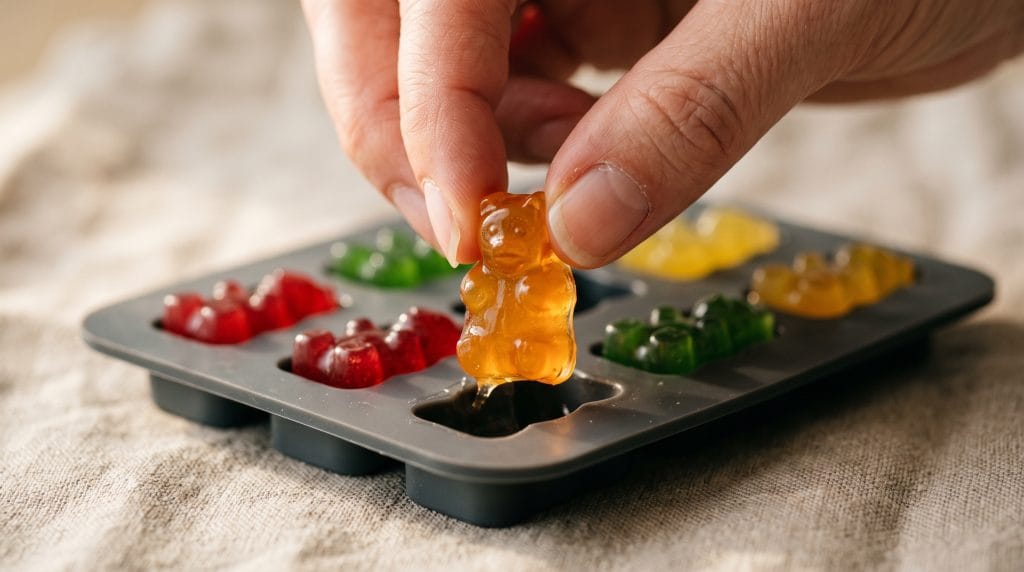
This is also why gelatin gummies double as a collagen source on their own — you’re not just using gelatin as a setting agent, you’re eating the collagen protein itself, which is part of why collagen gummies specifically have become such a popular category, complementing rituals like our DIY ice cube recipes for clear skin. If you’re vegan or just prefer plant-based ingredients, agar-agar is the closest substitute, though it sets firmer and less bouncy than gelatin does.
Base Recipe (Works for Any Flavor)
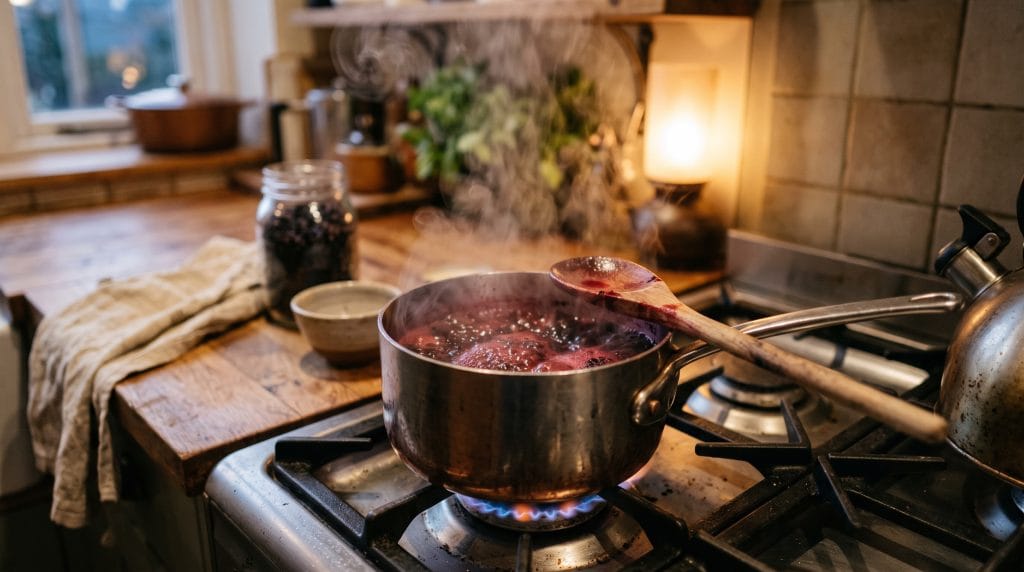
Simmer one cup of your base liquid — fruit juice, herbal tea, or a fruit-and-water mixture — for 15 to 20 minutes to concentrate the flavor. Strain out any solids. While it’s still warm, whisk in 3 to 4 tablespoons of unflavored gelatin until fully dissolved, then sweeten with a tablespoon or two of honey to taste. Pour into silicone molds and refrigerate for at least 2 hours, or until firm.
That’s the whole method. Everything else is just what you put into the base liquid, which is what makes this so easy to turn into a weekly ritual instead of a one-time project — once you’ve made it once, every flavor after that is just swapping ingredients into the same five steps.
5 Wellness Gummies to Try
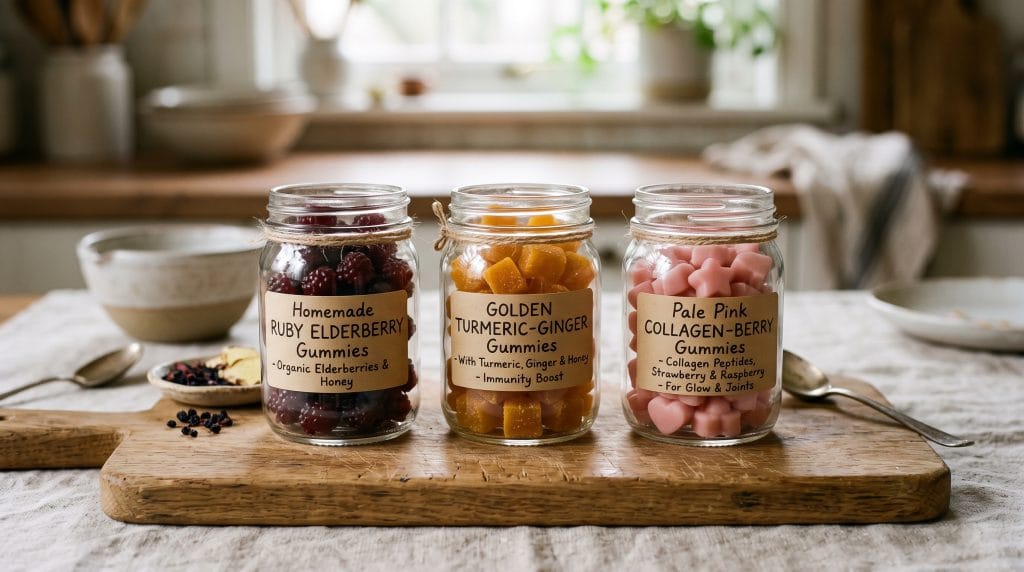
Elderberry immune gummies — simmer a half cup of dried elderberries with a cinnamon stick and a few slices of fresh ginger in your base liquid before straining. Deep ruby color, warm spiced flavor, and elderberry’s traditional role as an immune-support ingredient makes this the one people reach for first when they feel a cold coming on. According to research on elderberry polyphenols, elderberries provide natural antioxidant support during seasonal changes.
Collagen beauty gummies — swap in a scoop of unflavored collagen peptides alongside your gelatin, using a berry juice base. The extra collagen is the whole point here, tied to skin and joint support, and the peptides dissolve into the warm liquid without changing the texture much.
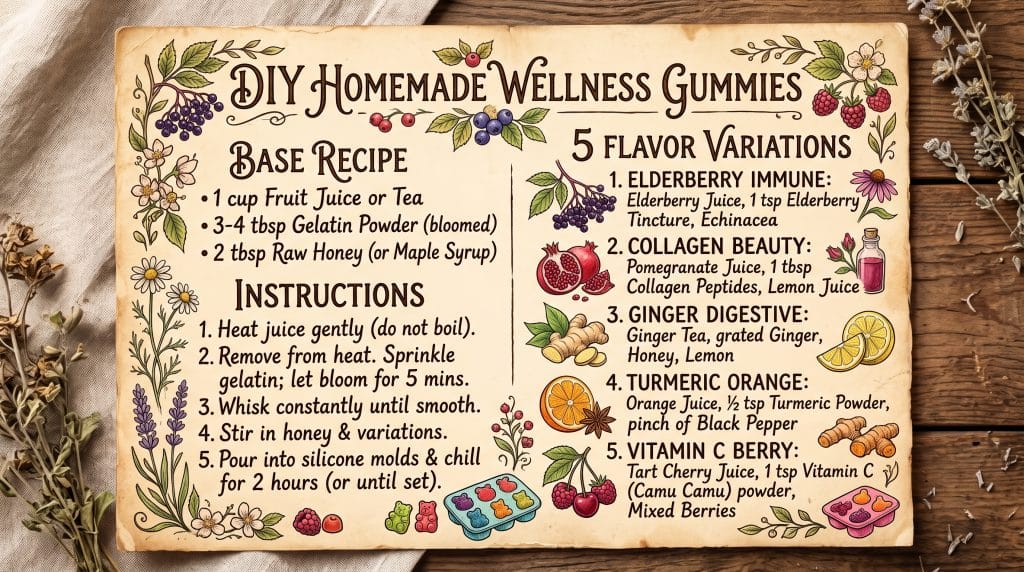
Ginger digestive gummies — use strong fresh honey lemon ginger tea as your base, simmered longer and stronger than usual, sweetened with honey. Good after a heavy meal, and genuinely tastes like a spicier, less sugary version of ginger candy.
Turmeric-orange gummies — fresh orange juice as the base with a half teaspoon of turmeric and a pinch of black pepper, which helps your body actually absorb the turmeric’s active compound. Bright, citrusy, and the color is nearly neon gold.
Vitamin C berry gummies — a blend of strained strawberry and orange juice as the base, no added spices needed. This is the mildest-tasting one of the five, and usually the one that wins over anyone who’s skeptical of “wellness food” in general.
Tips for Gummies That Actually Set
A few small things make the difference between gummies that hold their shape and ones that stay soupy in the mold. Keep your liquid warm but not boiling when you add the gelatin — boiling liquid can weaken gelatin’s setting power. Whisk continuously as you add it so it dissolves fully instead of clumping. And resist the urge to rush the fridge time; two hours is usually the minimum, but a full four hours gets you a firmer, more reliably bouncy texture, especially in a warmer kitchen.
Frequently Asked Questions
Can I make these vegan?
Yes — swap the gelatin for agar-agar, though you’ll need slightly less of it and the texture comes out firmer and less bouncy than gelatin-based gummies. Agar also sets at room temperature, so you won’t need the fridge time.
How long do homemade gummies last?
About two to three weeks in the fridge in an airtight container. They’re more perishable than store-bought versions since there are no preservatives, so it’s worth making smaller batches more often rather than one giant batch.
Why didn’t mine set properly?
Usually either not enough gelatin was used, or it was added to liquid that was too hot or too cold. Gelatin dissolves best in warm liquid, not boiling, and needs the right ratio to firm up — roughly 1 tablespoon of gelatin per quarter cup of liquid is a safe starting point.
Do homemade gummies actually work like the supplement versions?
They deliver real amounts of whatever whole ingredients you use — elderberries, ginger, collagen peptides — but they aren’t dosed or tested the way commercial supplements are. If you’re managing a specific health condition, it’s worth talking to your doctor about what amounts make sense for you.
Can I use fresh fruit instead of juice?
Definitely — blend and strain fresh fruit into a juice first, or simmer chopped fruit directly into your base liquid the same way you would with elderberries.
What molds should I use?
Silicone candy or ice cube molds work best since the gummies pop out cleanly without tearing. Small silicone bear or heart molds make them feel more like a treat, but any small silicone mold will set and unmold the same way — the shape is purely aesthetic.
These also make a genuinely nice homemade gift — a small jar of elderberry gummies with a handwritten label reads a lot more thoughtful than it takes effort to make, which is probably my favorite thing about this whole category.
Make a batch and see which flavor becomes your new shelf staple — more rituals like this live over on @Nourish_Rituals.
