
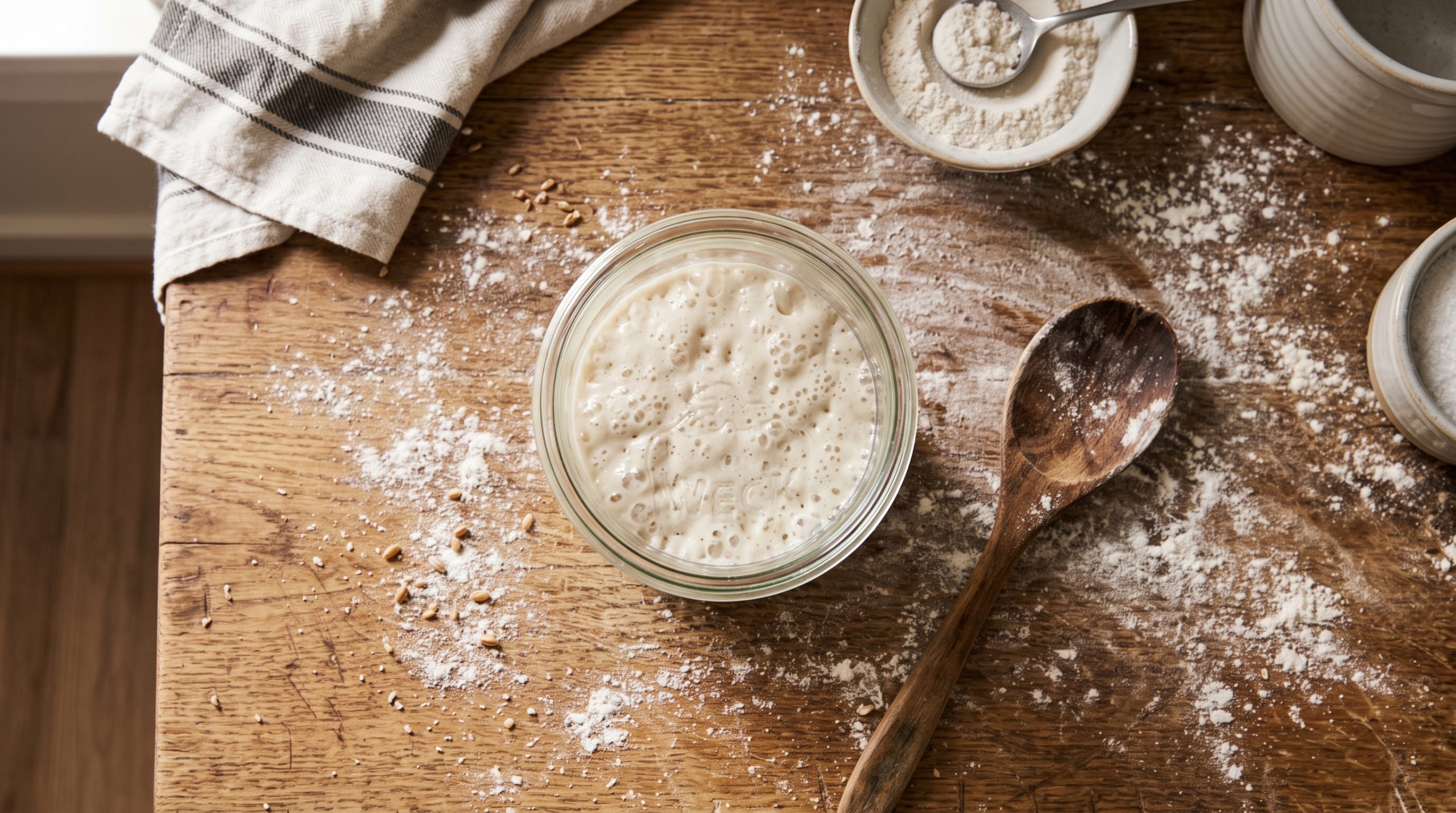
I killed two starters before my third one actually took. Both times I gave up around day four, convinced nothing was happening, when really I just hadn’t given it enough time to do what it needed to do. The third one is still alive on my counter, well over a year old now, and feeding it every morning has become one of those small rituals I didn’t expect to actually look forward to.
Sourdough is having a real resurgence right now, not as a pandemic-era hobby but as part of a broader return to old-school kitchen skills people are picking back up on purpose. It’s slow in a way most modern cooking isn’t, and that’s exactly the appeal. No shortcuts, no rushing it, just flour, water, and time.
Jump to: What’s happening inside · The 7-day ritual · The morning habit · FAQ
What’s Actually Happening in the Jar
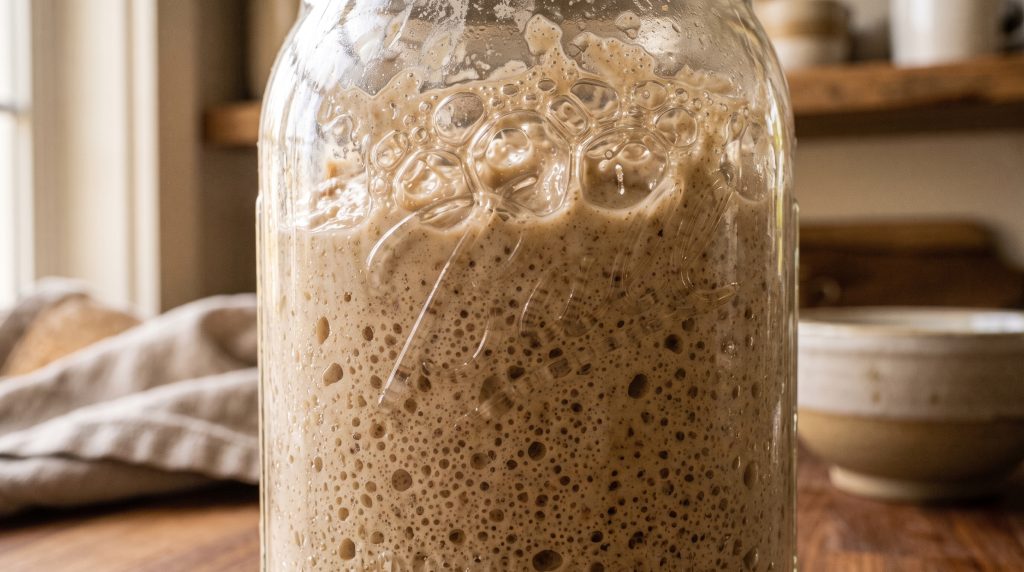
A sourdough starter is a living culture of wild yeast and lactic acid bacteria, and neither of them comes from a packet. They’re already present in flour and in the air around your kitchen, waiting for the right conditions to wake up. When you mix flour and water together and let it sit, you’re essentially building them a home — the yeast starts feeding on the natural sugars in the flour and producing carbon dioxide, which is what creates the bubbles and rise you’re watching for. The bacteria feed alongside it, producing lactic and acetic acid, which is where sourdough’s characteristic tang actually comes from.
It’s a fascinating natural process, much like our slow-living aesthetic fermented sauerkraut jar ritual, where beneficial bacteria preserve and transform simple ingredients over time.
Regular feeding matters because both organisms eventually consume all the available food and produce waste products that make the environment less hospitable to them. Feeding the starter — discarding some and adding fresh flour and water — resets that environment and gives them something new to feed on, which is why a starter left unfed for too long goes quiet or develops a strong, unpleasant smell instead of a pleasant tang.
The Seven-Day Ritual
This is the part that trips people up the most, mostly because nothing dramatic happens for the first few days and it’s tempting to assume you did something wrong. You almost certainly didn’t.
Day 1
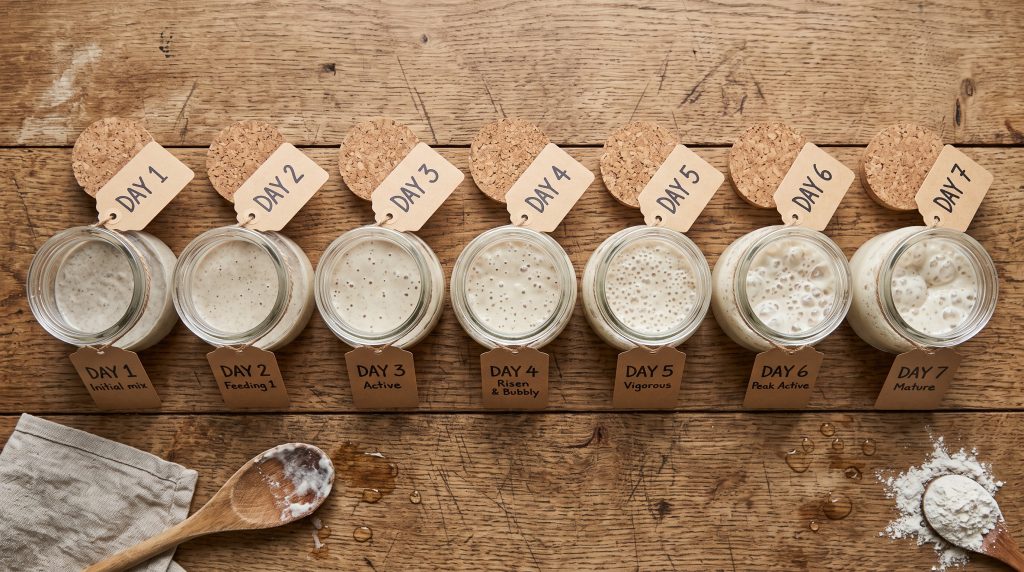
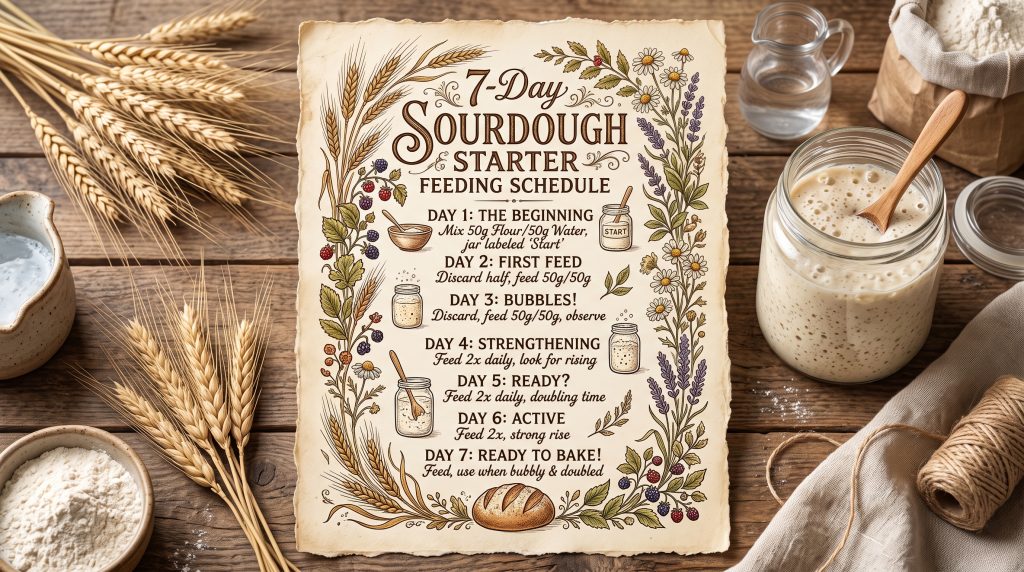
Combine 50g whole wheat flour, 50g all-purpose flour, and 100g room-temperature water in a clean glass jar. Stir until no dry flour remains, cover loosely, and leave at room temperature.
Days 2-3
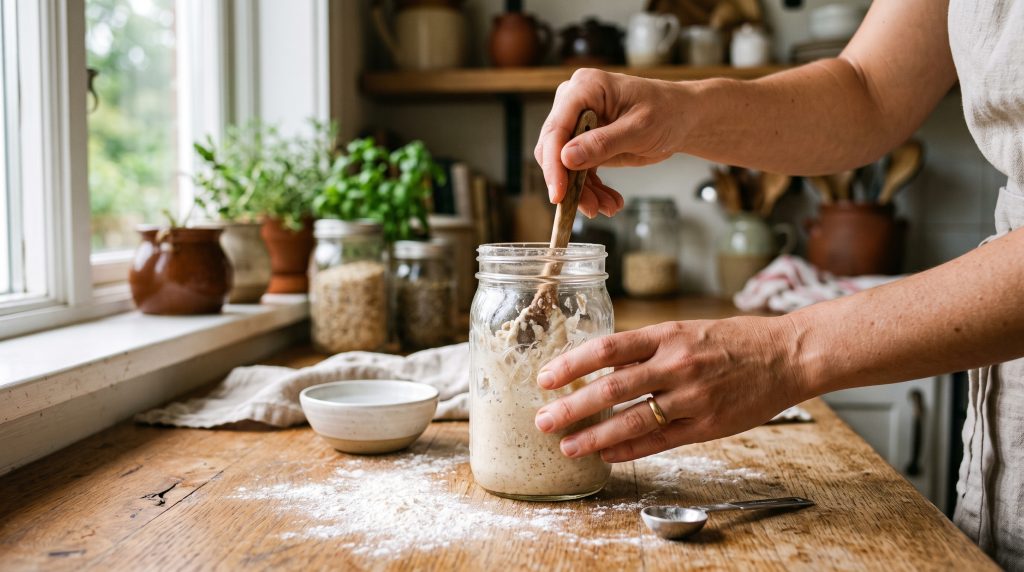
You may see a few small bubbles or nothing at all — both are normal at this stage. Discard about half the starter, then feed with 50g flour (any mix of whole wheat and all-purpose) and 50g water, stirring well.
Days 4-5
This is usually when things start to visibly happen — more bubbles, a slight rise after feeding, and a tangier smell. Keep discarding half and feeding once daily with the same 50g flour, 50g water ratio.
Days 6-7
A healthy starter at this point should roughly double in size within 4-8 hours of feeding, and smell pleasantly sour rather than harsh. If it’s reliably doing that, it’s ready to bake with. If not, keep feeding daily — some starters genuinely need closer to two weeks, and that’s not a failure, just a slower culture.
Making It an Actual Morning Ritual
Once your starter is established, feeding it becomes a small daily habit rather than a project. I keep mine on the counter, feed it first thing while the kettle’s heating, and store the discard in a small jar in the fridge for pancakes or crackers later in the week. It’s a nice companion to a slower kitchen routine — the same instinct behind organizing a pantry into glass jars, just applied to something that’s actually alive and needs you every day.
Frequently Asked Questions
My starter isn’t rising at all after a week. What’s wrong?
Temperature is the most common culprit — wild yeast activity slows significantly below about 70°F (21°C). Try moving the jar somewhere warmer, like on top of the refrigerator or inside a turned-off oven with the light on. If it’s been over two weeks with zero activity, it’s worth starting fresh with a clean jar and clean utensils, which is why practicing mindful minimalist kitchen cleaning habits is so essential for successful wild fermentation.
There’s a layer of grey or brown liquid on top. Do I need to throw it out?
No, that’s called hooch, and it’s just alcohol produced by the yeast when the starter is hungry. Stir it back in or pour it off, then feed as usual — it’s a sign your starter needs to be fed more frequently, not a sign anything’s gone wrong.
Do I have to discard starter every time I feed it?
Yes, at least while you’re first establishing it. Without discarding, the ratio of starter to fresh flour gets more and more lopsided, which makes it harder for the culture to stay balanced and active. Once established, you can scale up the discard amount if you’re baking often enough to use it.
Can I use all-purpose flour instead of whole wheat?
You can maintain a starter on all-purpose flour alone, but whole wheat tends to kickstart activity faster in the early days because it carries more of the wild yeast and bacteria naturally present on the grain. Many people start with whole wheat and transition to all-purpose once the starter is established.
How do I know my starter is actually ready to bake bread with?
The float test is the simplest check — drop a small spoonful of freshly fed starter into a glass of water. If it floats, it’s active enough to leaven bread. If it sinks, give it a few more hours or another feeding cycle before trying again.
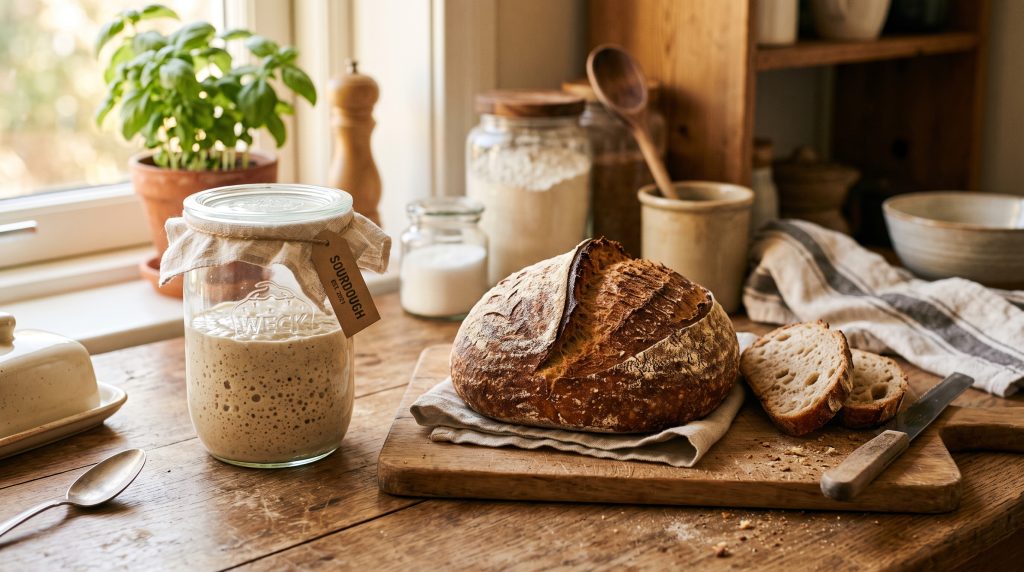
Somewhere around week two, mine finally started smelling like something instead of nothing, and that’s when it actually started feeling less like an experiment and more like a small, strange pet that lives on my counter and asks for flour once a day.
Find more slow living rituals and aesthetic recipes like this one on our Pinterest: @Nourish_Rituals
