
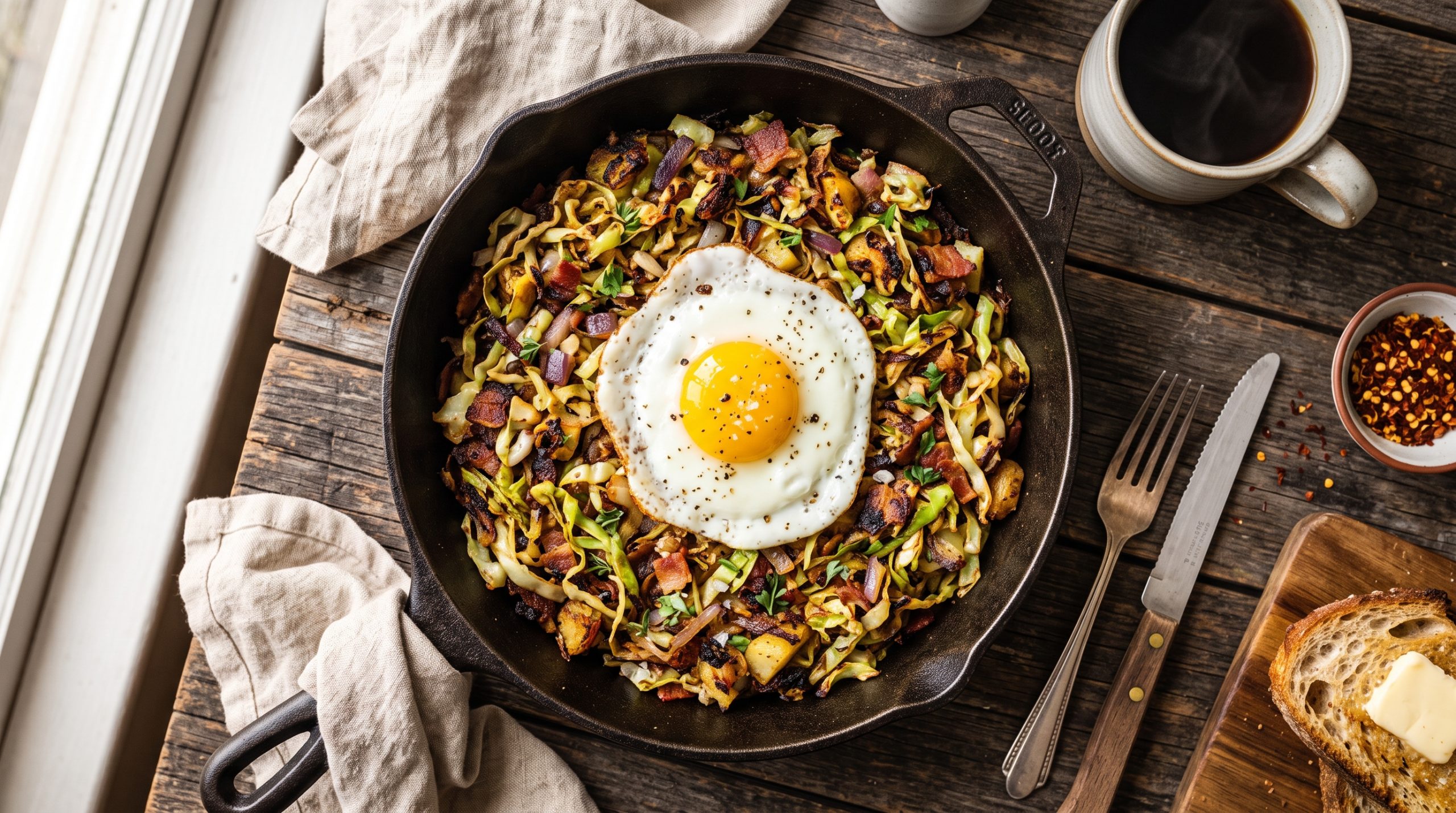
Cabbage was never on my breakfast radar until I blistered a wedge of it in a hot pan out of pure leftover-produce desperation, and it came out tasting almost sweet, with crisp caramelized edges that had no business being that good. Turns out I wasn’t early to anything. Cabbage is officially the biggest food trend Pinterest is tracking for 2026, edging out even cauliflower’s long reign, and the interest is showing up everywhere from kimchi breakfast skillets to blistered cabbage steaks.
What makes this one worth paying attention to instead of skipping is the staying power behind it. It’s not a flash-in-the-pan flavor fad. Cabbage is cheap, genuinely high in fiber, and part of the wider shift toward “fibermaxxing” that’s replaced the protein obsession as the health focus of the moment. It fits seamlessly into a slow-living morning, offering a grounding, gut-friendly alternative to heavily processed breakfast options.
Jump to: The science of blistered cabbage · The fibermaxxing movement · Prepping for maximum crisp · Base recipe & variations · FAQ
Why Blistered Cabbage Tastes Better Than Raw
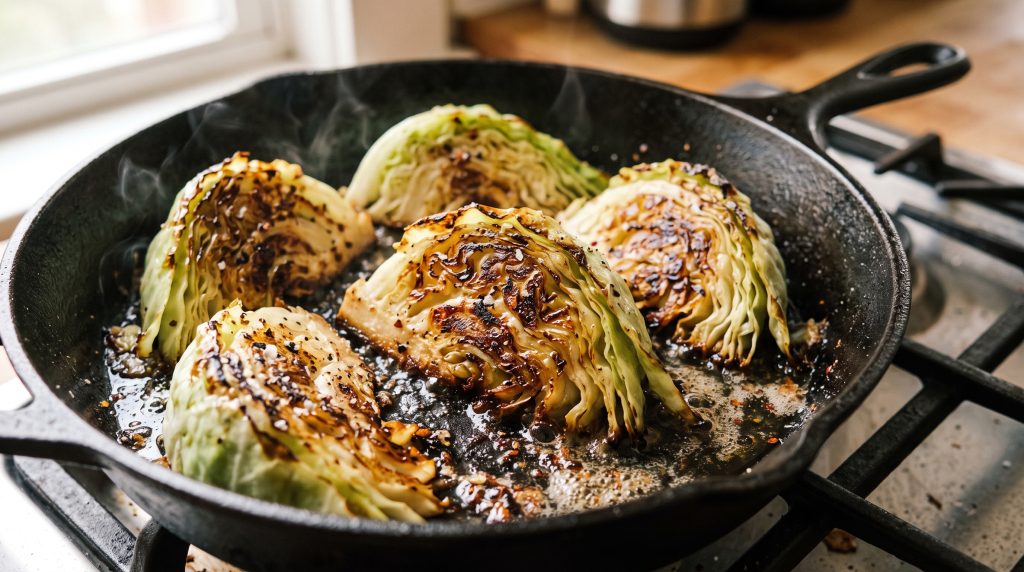
Raw cabbage carries sulfur compounds (specifically glucosinolates) that give it that slightly sharp, sometimes bitter edge people associate with boiled cabbage gone wrong. High, dry heat changes that chemistry completely. As the cut edges hit a hot pan, the natural sugars in the cabbage caramelize through the Maillard-adjacent browning reaction, while the sulfur compounds that cause bitterness largely cook off. The result is something closer to sweet and nutty than anything raw cabbage hints at.
Cabbage also holds up unusually well to that kind of intense heat because of its dense leaf structure and internal moisture. Unlike delicate greens that wilt into nothingness, cabbage wedges crisp aggressively at the outer edges while staying tender and juicy inside. This texture contrast is exactly what a good morning skillet needs to wake up your senses.
Cabbage and the Fibermaxxing Movement of 2026
For years, breakfast content has been dominated by one obsession: protein targets. But the wellness conversation has shifted dramatically. Today, the focus is on cellular health, gut microbiome diversity, and “fibermaxxing” — the practice of intentionally packing your morning meals with diverse, prebiotic-rich plant fibers.
Cabbage is a prebiotic powerhouse. It is loaded with insoluble fiber that keeps digestion smooth, and soluble fibers that feed the beneficial bacteria in your gut. If you are already practicing our slow-living aesthetic fermented sauerkraut jar ritual, you know how transformative cabbage can be for gut health. This breakfast hash is simply the warm, comforting counterpart to that raw, fermented ritual — a perfect dish to rotate into your gut-healing breakfast recipes for a slow-living morning.
Selecting and Prepping Your Cabbage Like a Designer
Caramelization requires a dry surface, which means your prep technique is just as important as your pan temperature. Water is the absolute enemy of the Maillard reaction. If your cabbage is wet when it hits the skillet, it will steam instead of sear, leaving you with soggy, limp leaves instead of crispy, blistered edges.
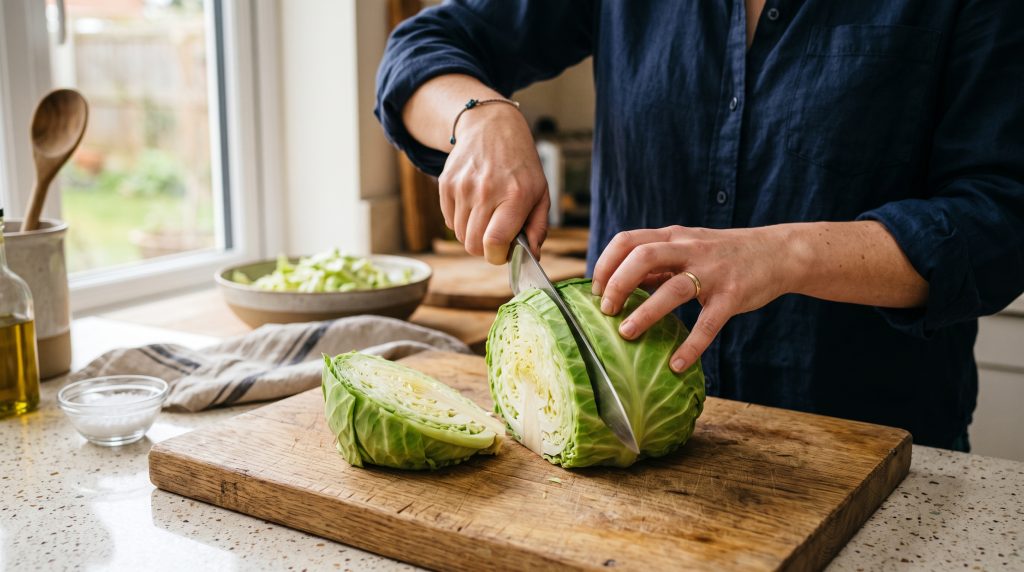
When selecting your cabbage, look for tight, heavy heads with bright outer leaves. To prepare, cut the head into thick, substantial wedges, making sure to leave a portion of the core intact in each wedge. The core is what holds the leaves together, allowing you to flip the wedges as whole pieces. Brush off any visible dirt with a clean, dry towel instead of rinsing under running water. If you must wash it, do so well in advance and let the wedges dry completely on a linen cloth before cooking.
The Base Recipe & Three Morning Variations
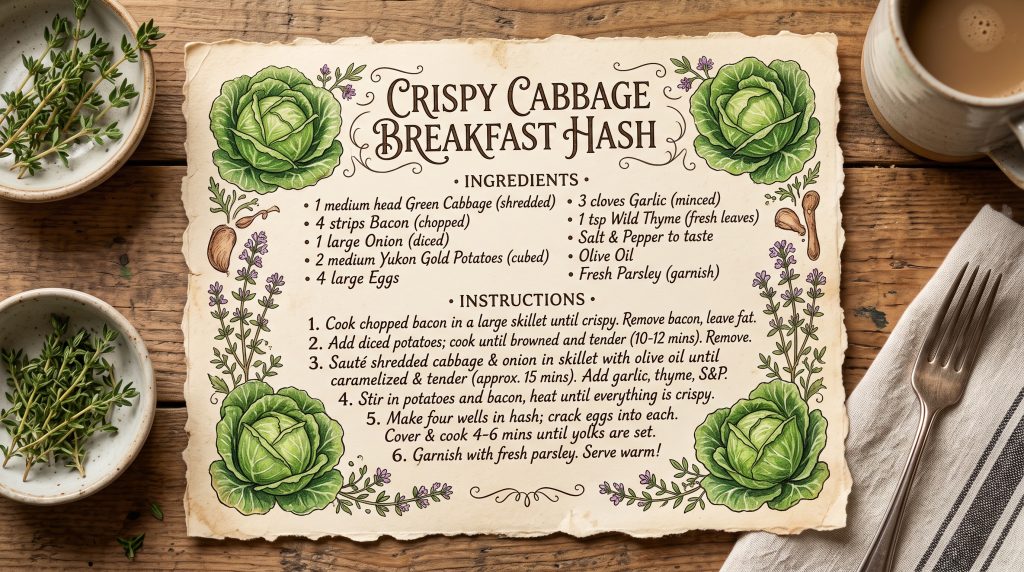
This hash is remarkably forgiving and quick, requiring only 15 minutes in a single pan. For a truly mindful breakfast experience, we recommend using a seasoned cast-iron skillet — the heat retention is unmatched, and it develops a beautiful, rustic char that stainless steel struggles to replicate.
The Base Recipe
Slice half a head of cabbage into thick wedges. Heat a tablespoon of olive oil or butter in a cast-iron pan over medium-high heat until it is hot but not smoking. Lay the wedges in without crowding them. Let them sit undisturbed for 4-5 minutes per side until deeply golden and blistered before flipping — resisting the urge to stir is what actually gets you the caramelization. Season with flaky sea salt, black pepper, and a squeeze of fresh lemon juice at the end.
The Three Variations
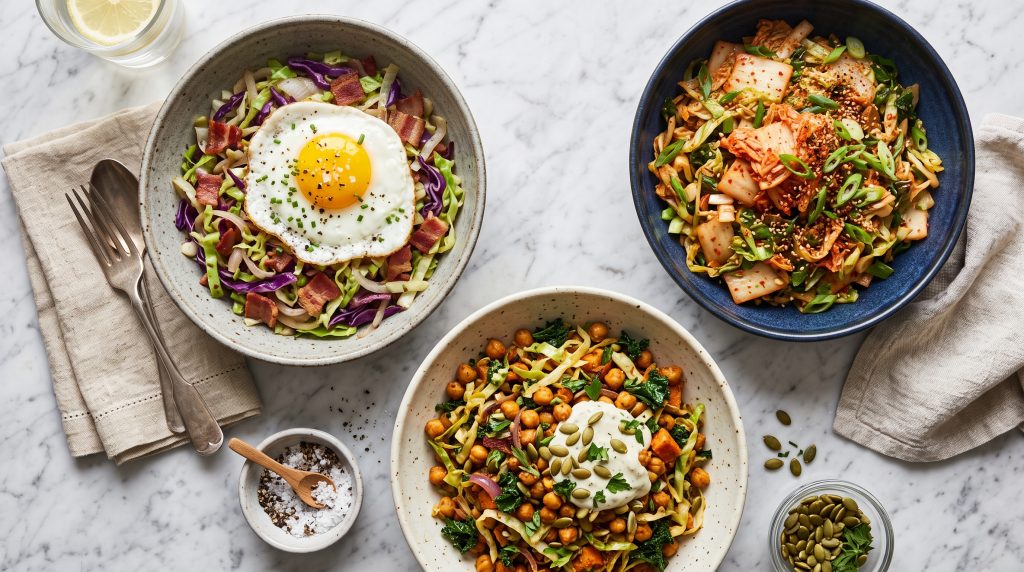
1. Classic with Fried Egg
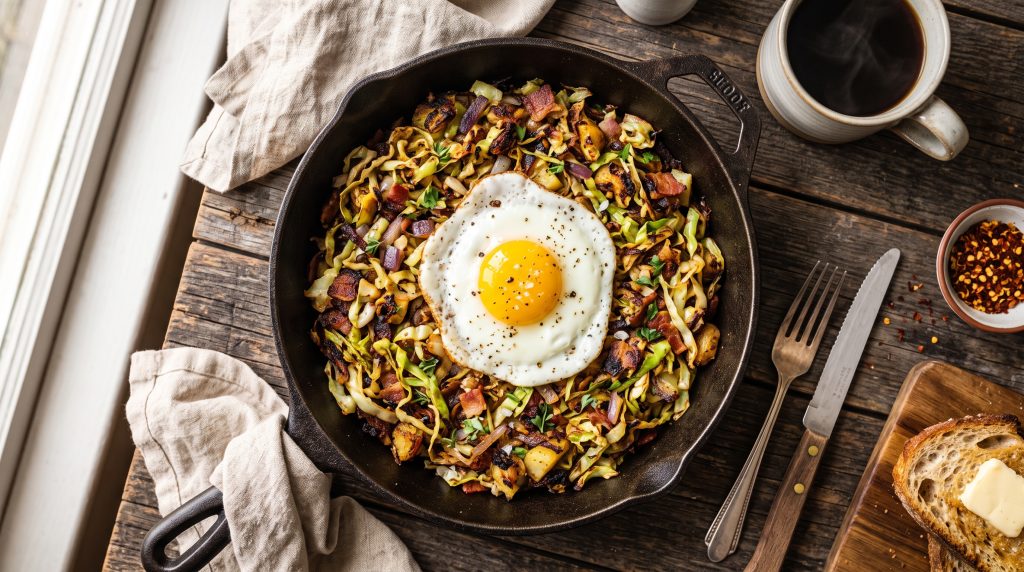
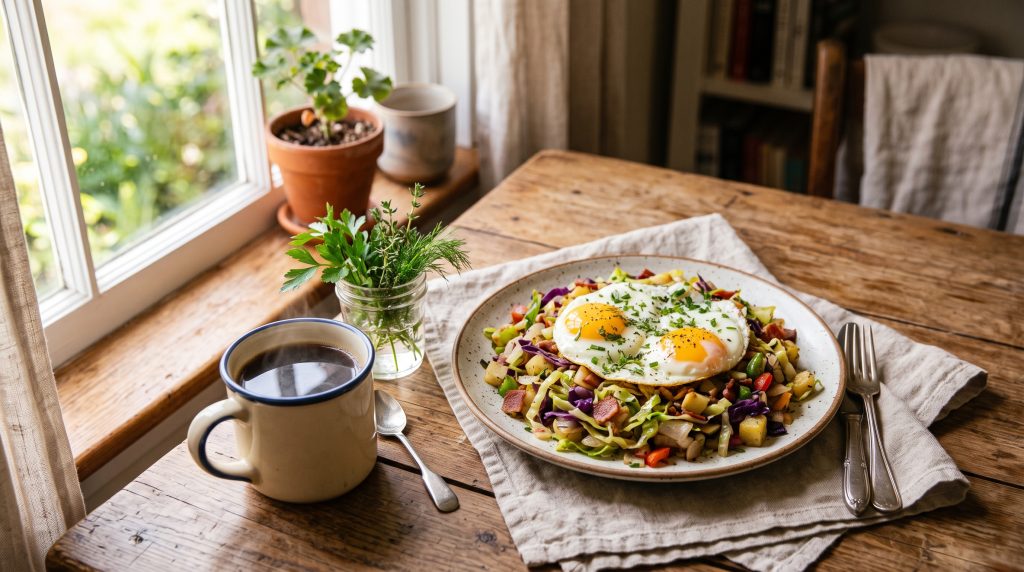
Top the finished hash with a fresh, pasture-raised fried egg, letting the warm yolk run into the crispy, charred cabbage edges. This is a wonderfully balanced, mindful breakfast option that won’t break your calm, combining healthy fats, protein, and dense fiber in one bowl.
2. Kimchi-Spiced Skillet
Add a spoonful of chopped, mature kimchi and a splash of its fermented brine to the pan in the last minute of cooking, finishing with a drizzle of toasted sesame oil. This version leans directly into gut health, combining warm charred greens with cold, active ferments.
3. Chickpea & Herb (Vegetarian)
Toss rinsed, dry chickpeas into the pan with the cabbage wedges during the last few minutes, letting them brown slightly. Finish with a handful of fresh dill, parsley, and a generous spoon of creamy tahini. It’s a heartier, plant-protein version of our high-fiber trend, similar in nutritional density to our fibermaxxing breakfast bowl.
Frequently Asked Questions
Why did my cabbage steam instead of crisp?
Almost always a pan that wasn’t hot enough or too crowded, both trap steam instead of letting the surface dry out and brown. Give the cabbage room and don’t move it for the first few minutes.
Can I make this ahead for the week?
It reheats reasonably in a hot pan, but a fresh sear gets you back most of the crisp texture, while a microwave will leave it soft. Best made fresh or reheated stovetop rather than microwaved.
Is green or red cabbage better here?
Green is the classic choice and caramelizes a bit more predictably, but red cabbage works too and adds color, with a slightly earthier flavor once cooked.
Cheap, genuinely good, and apparently exactly where 2026 is headed. Worth getting ahead of this one.
Find more slow living recipes and rituals like this one on our Pinterest: @Nourish_Rituals
