
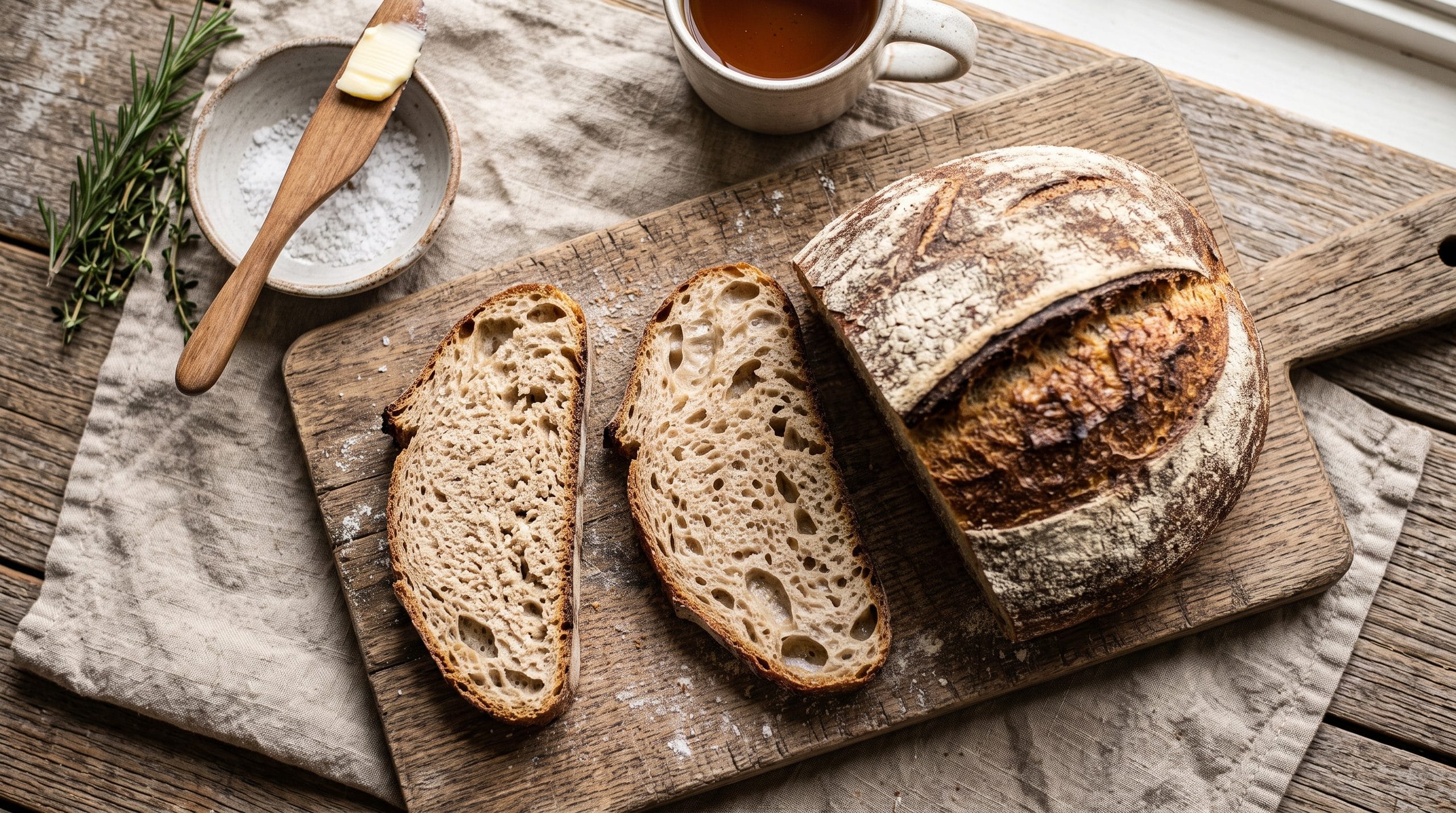
Most people assume stale bread is just dried-out bread, so they store it airtight, seal it tighter, wrap it twice — and it goes stale anyway, sometimes even faster. That’s because staling and drying out are two almost completely separate processes, and only one of them is about moisture. Once you understand the actual mechanism, you can slow it down on purpose, and you can reverse it almost completely with something you already have: your oven.
Jump to: Staling is a starch reaction · Why the fridge makes it worse · How to revive stale bread · How to slow staling down · What to do with old bread · Does bread type matter? · FAQ
Staling Isn’t Drying Out — It’s a Starch Reaction
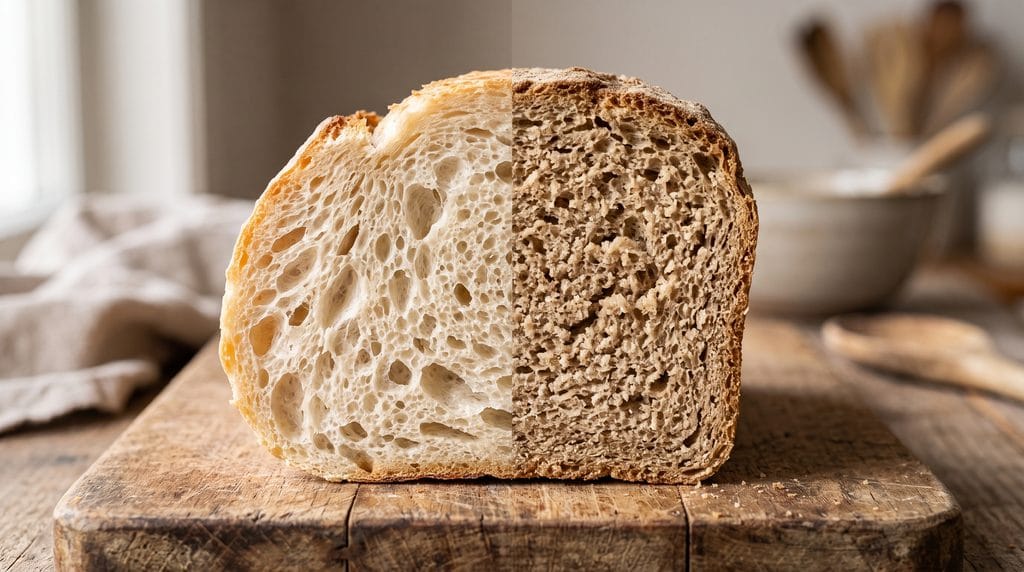
Bread is mostly starch, and starch is made of two molecules: amylose and amylopectin, arranged in tightly packed granules. When you bake bread, the heat and water cause those granules to swell and burst open in a process called gelatinization — this is what gives fresh bread its soft, springy crumb.
The problem starts the moment the bread cools. As it sits, the starch molecules slowly realign themselves back into a more ordered, crystalline structure, in a process called retrogradation. According to food science research on starch retrogradation and bread staling, amylopectin chains recrystallize over time, locking water out of the starch matrix rather than evaporating it.
In fact, you can measure the water content of a stale loaf and find it’s often barely changed from when it was fresh. The water hasn’t left. It’s just been locked out of the starch structure and redistributed into other parts of the crumb, which is part of why stale bread can feel dry in the mouth while still being nearly as moist by weight as it was on day one.
Why the Fridge Makes It Worse, Not Better
This is the single most common bread-storage mistake, and it happens because refrigeration seems intuitively like it should slow spoilage. For starch retrogradation specifically, the opposite is true: the recrystallization process happens fastest at refrigerator temperatures, somewhere around 32–40°F (0–4°C) — much faster than at room temperature or even in the freezer. A loaf that would stay soft for two or three days on the counter can turn noticeably stale within just a few hours in the fridge. If you need bread to last longer than a few days, the freezer is the only cold storage that actually works, because temperatures below about 0°F (-18°C) essentially halt the retrogradation process rather than accelerating it.
How to Actually Revive Stale Bread
Because staling is a physical, reversible starch reaction and not permanent water loss, you can partially undo it with heat and a little moisture — this is the part most people never learn.
The Oven Method (Works on Almost Any Loaf)
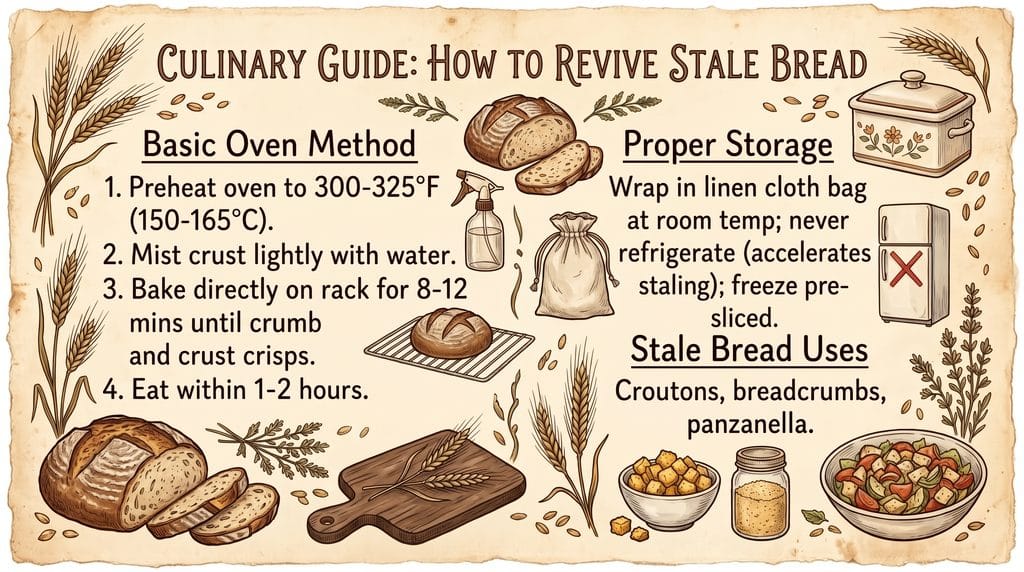
- Preheat your oven to 300–325°F (150–165°C).
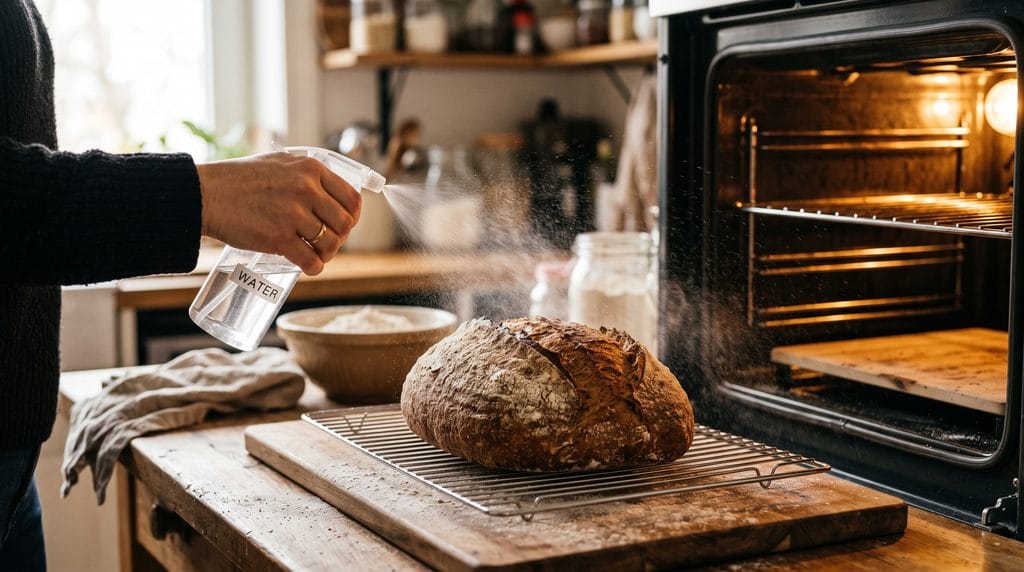
- Run the loaf briefly under running water, or mist it generously with a spray bottle — just enough to dampen the crust, not soak it through.
- Place it directly on the oven rack or a baking sheet and bake for 8–12 minutes, depending on loaf size.
- The added moisture re-gelatinizes some of the surface starch, and the oven heat temporarily melts the recrystallized structure inside, softening the crumb again.
- Eat it within an hour or two of reviving — the effect is genuinely temporary, since retrogradation starts up again as soon as the bread cools back down.
Why the Toaster Doesn’t Fix This
A toaster dries and crisps the outside surface but doesn’t add the moisture needed to re-gelatinize the starch, and it heats too fast and too locally to soften the interior crumb the way a slower oven bake does. It’s great for making stale bread into good toast — a completely different, still delicious outcome — but it won’t bring back a soft, fresh-bread texture the way rehydrating in the oven does.
How to Slow Staling Down in the First Place
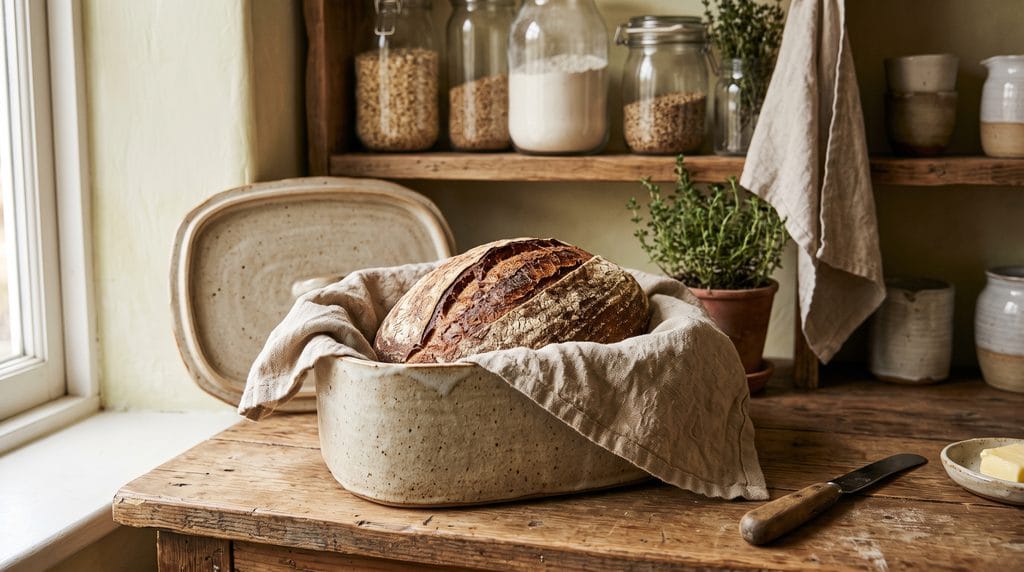
Store it at room temperature, cut-side down or wrapped in cloth, not plastic. Plastic traps surface moisture against the crust, which softens the crust in a way that actually accelerates internal staling by changing how moisture migrates through the loaf. A paper bag or linen bread bag lets the crust stay slightly firmer while the crumb underneath stales more slowly.
Freeze what you won’t eat within two to three days. Slice it first, so you can pull out only what you need. A few minutes in the toaster from frozen brings a slice back almost fully, since the structure was essentially paused rather than degraded.
Buy or bake bread with a higher fat or sugar content if shelf life matters to you. Fat and sugar both interfere with the starch realignment that drives retrogradation, which is part of why enriched breads like brioche or milk bread stay soft noticeably longer than a lean baguette, which can go stale within hours of baking.
Keep whole loaves intact rather than pre-slicing them. More exposed surface area means more places for moisture to redistribute and evaporate, so a loaf sliced only as you eat it tends to outlast one sliced all at once.
What to Do With Bread That’s Past Reviving
Once a loaf has gone stale enough times that reviving it stops working well, it’s still far from waste. Cube it and dry it out fully in a low oven for croutons or stuffing, blitz it into breadcrumbs and freeze them for later, or turn it into panzanella or bread pudding — both dishes were essentially invented as a use for bread exactly at this stage. Staling isn’t a failure state; day-old bread is a specific texture that a lot of classic recipes are built around on purpose.
There’s also a practical, waste-reduction reason to keep a “stale bread” routine going rather than treating every past-its-prime loaf as trash. Bread is one of the most commonly wasted pantry staples in most households, largely because people throw it out the moment it stops feeling fresh instead of recognizing that firm, dried-out crumb as a different ingredient rather than a failed one. A jar of homemade breadcrumbs or a bag of frozen bread cubes costs nothing but a few minutes, fitting naturally into our favorite eco-friendly kitchen swaps and mindful glass jar pantry organization.
Does Bread Type Change Any of This?
The retrogradation mechanism itself is the same across bread types, but starting moisture content and crumb density change how fast you notice it. A dense, high-hydration loaf baked using our beginner sourdough starter has more water locked into its structure to begin with, so it tends to stay soft noticeably longer than a lean white sandwich loaf baked at lower hydration.
Rye bread stales slower still, partly because rye flour contains pentosans — a type of fiber that holds onto water more tightly than wheat starch does, physically interfering with the same recrystallization process described above. This is also part of why traditional rye loaves in parts of Northern and Eastern Europe were historically baked just once or twice a week and still held up: the flour itself was doing some of the preservation work, long before anyone understood the starch chemistry behind it.
FAQ
Does stale bread mean it’s unsafe to eat?
No — staleness is a texture change, not spoilage. Bread is only unsafe once you see mold or it smells sour or off, which is a separate, microbial process from starch retrogradation.
Why does bread from the bakery go stale faster than store-bought sandwich bread?
Bakery bread is usually lean, meaning low in fat, sugar, and added preservatives, so retrogradation happens faster. Packaged sandwich bread often contains dough conditioners and emulsifiers specifically formulated to slow starch recrystallization.
Can I revive bread in the microwave instead of the oven?
You can soften it briefly, but microwaves add heat without addressing the moisture loss at the surface, and the bread will turn tough or rubbery within minutes of cooling — the oven method holds its texture far longer.
Does freezing bread affect the flavor?
Properly wrapped and frozen for a reasonable time (a month or two), flavor loss is minimal. The bigger risk is freezer burn from poor wrapping, not staling, since freezing halts retrogradation almost completely.
Why does homemade bread go stale faster than what I buy at the store?
Homemade bread typically lacks the preservatives and dough conditioners used in most commercial bread, so it stales on the natural timeline of plain flour, water, yeast, and salt — usually within two to three days.
If kitchen science like this is your thing, I’m sharing more slow-living pantry breakdowns daily on Pinterest — come save this one for later.
