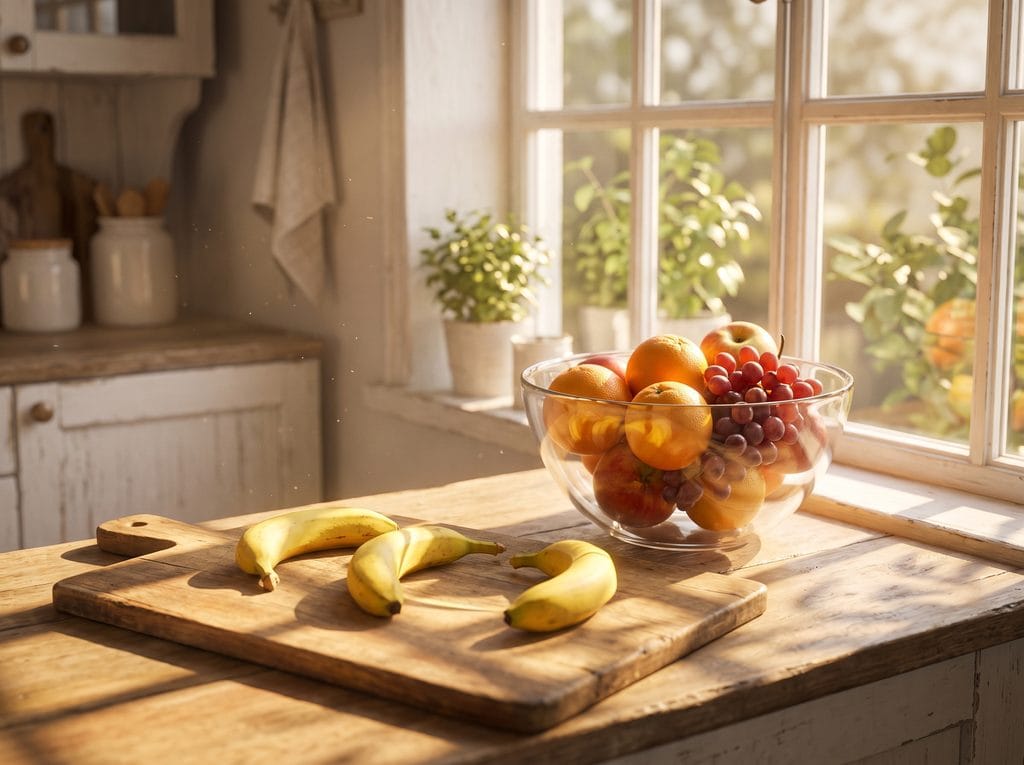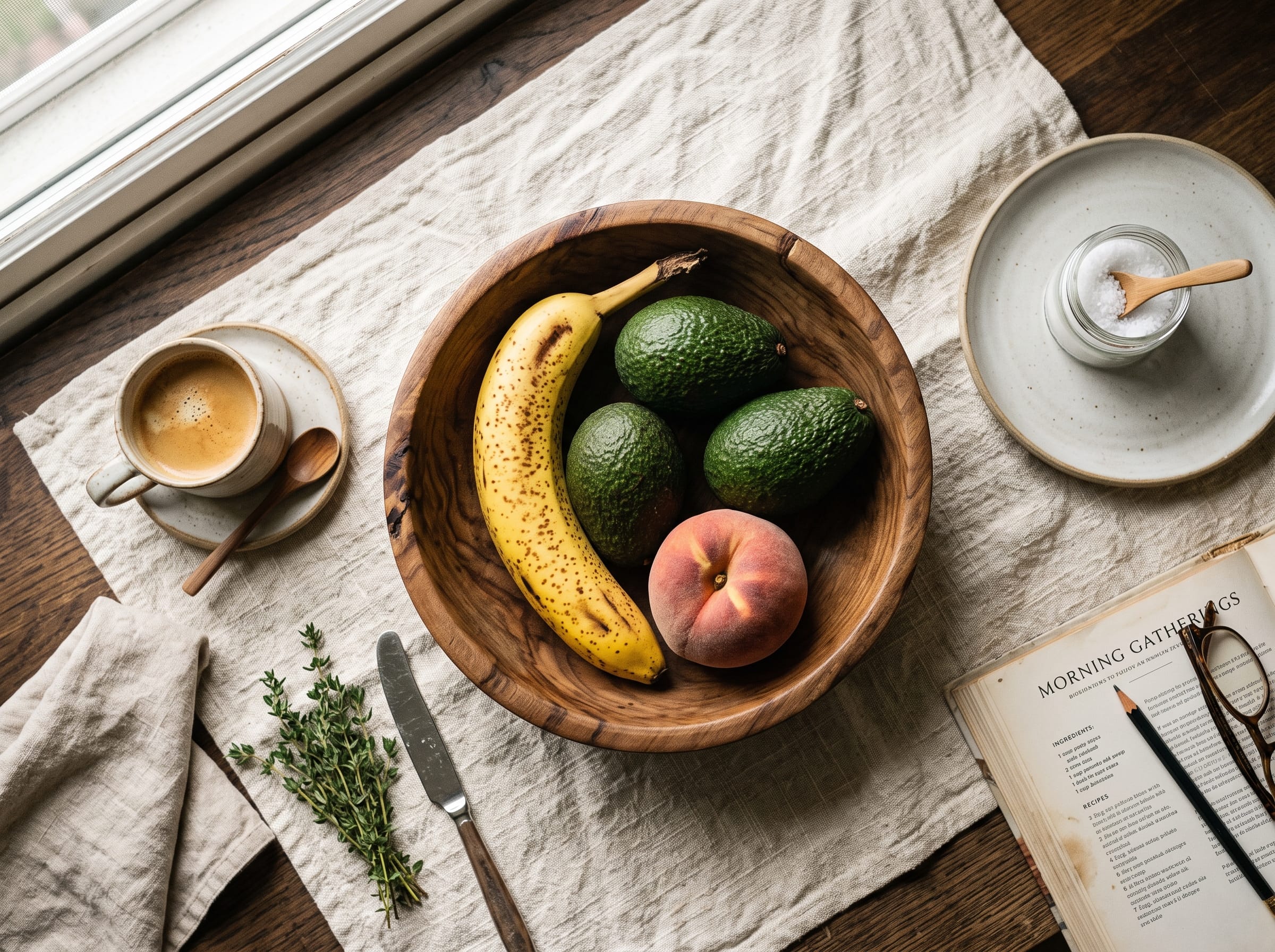
Learning how to ripen fruit with bananas isn’t just kitchen luck — if you’ve ever left a single overripe banana in a bowl with rock-hard avocados and come back two days later to find the avocados suddenly perfect, you’ve witnessed plant communication. Fruit actually communicates with itself through a gas, and once you understand how it works, you can speed up or slow down ripening in your kitchen almost on command — no gadgets required.
Jump to: The gas behind it: ethylene · How to ripen fruit with bananas on purpose · Which produce to keep apart · How this was discovered · Troubleshooting · Kitchen quick reference · FAQ
The Gas Behind It: Ethylene
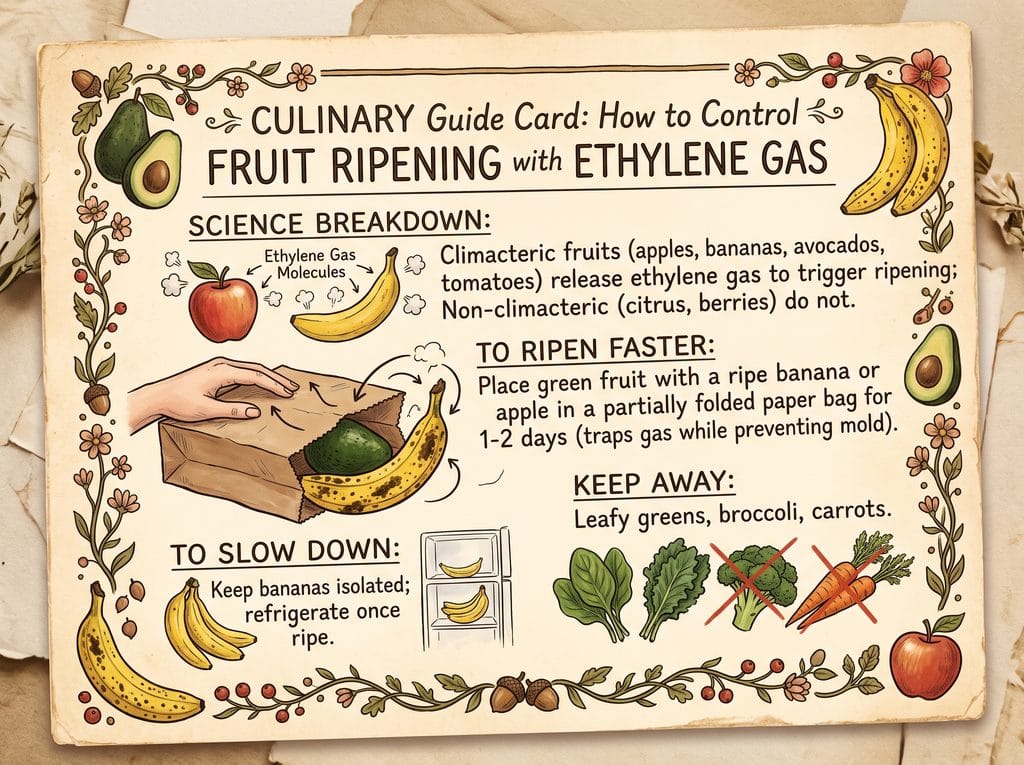
Certain fruits produce a plant hormone called ethylene as they ripen, and it’s released into the surrounding air as an actual gas, not just a chemical change happening inside the fruit itself. According to plant physiology research on ethylene regulation and fruit ripening, ethylene triggers a cascade of enzymatic reactions inside plant cells — breaking down chlorophyll (which is why green fades), converting starches into sugars (why unripe fruit tastes starchy and ripe fruit tastes sweet), and softening cell walls (why firm fruit turns tender).
The fruit essentially releases a chemical signal that says “ripen” — and nearby fruit, if it’s sensitive to ethylene, picks up that signal from the surrounding air and starts the same process, even without touching the source fruit at all.
Climacteric vs. Non-Climacteric: The Distinction That Actually Matters
Not all fruit behaves the same way, and this single distinction explains almost every fruit-storage question people have.
Climacteric fruits continue ripening after being picked, producing their own ethylene as they go and responding strongly to ethylene from other fruit nearby. Bananas, avocados, apples, pears, tomatoes, peaches, and mangoes all fall into this category — which is exactly why they’re the fruits people use to speed up ripening, perfect for preparing creamy fruit for our aesthetic avocado toast with a jammy egg.
Non-climacteric fruits stop ripening the moment they’re picked and don’t respond meaningfully to ethylene exposure. Citrus, grapes, strawberries, cherries, and pineapple are in this group — a hard, sour orange will stay exactly that firm and sour no matter how long you leave it next to a banana, because it simply isn’t wired to respond to the signal.
How to Ripen Fruit with Bananas on Purpose
To Ripen Fruit Faster
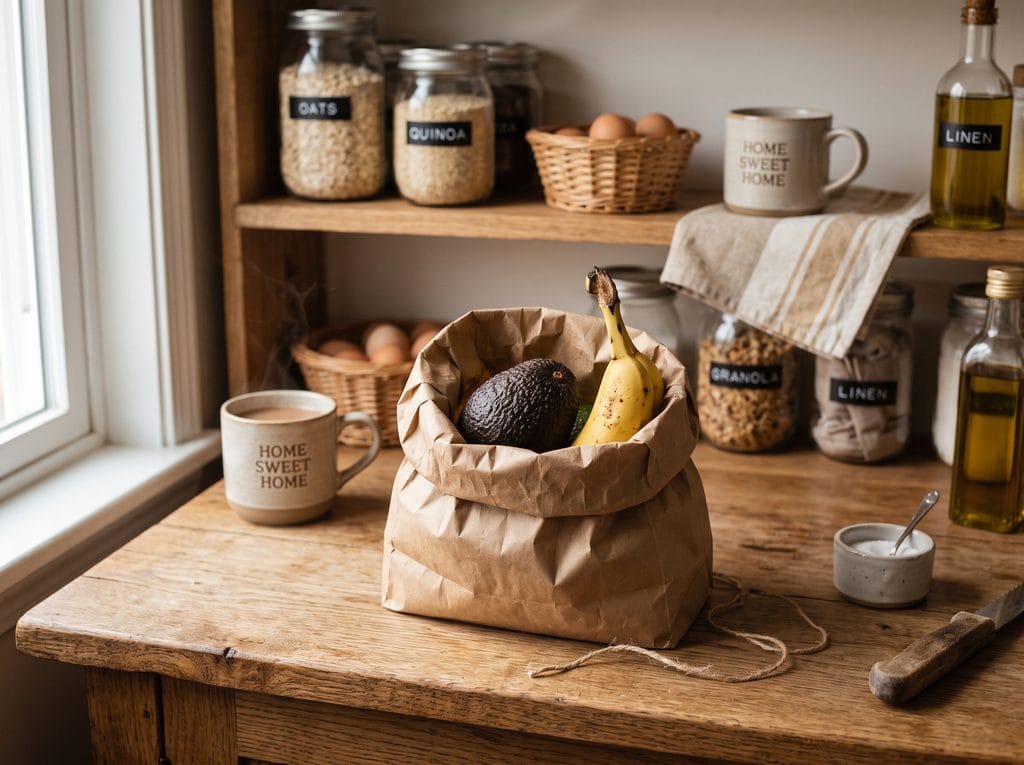
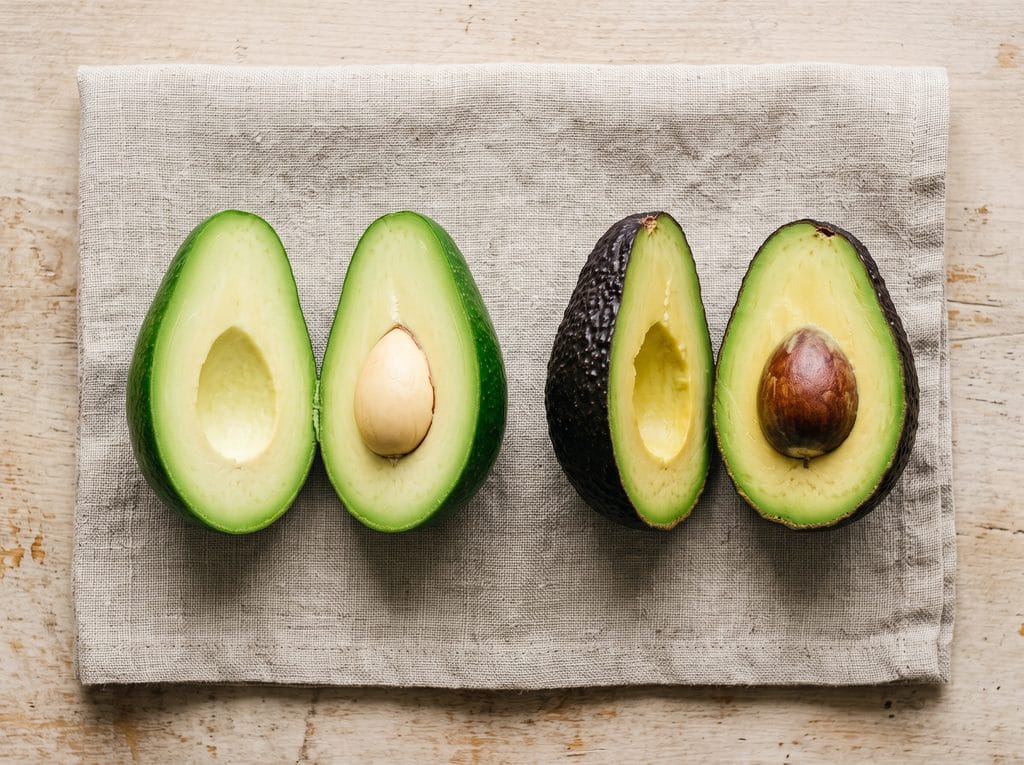
Put the ethylene-producing fruit and the fruit you want to ripen together in a partially closed paper bag, not plastic. Paper allows a small amount of airflow while still trapping enough ethylene gas around the fruit to concentrate its effect, whereas a fully sealed container can trap too much moisture and encourage mold instead of ripening. A banana, or better yet an apple (which produces ethylene at a notably high rate), works well as the “trigger” fruit. An avocado left this way often goes from rock-hard to ready in one to two days instead of four or five sitting out on the counter.
To Slow Ripening Down
Do the opposite: keep ethylene-sensitive produce away from ethylene-heavy fruit entirely, and store ripening fruit separately in the fridge once it reaches the stage you want, since cold temperatures slow the enzymatic reactions that ethylene triggers. This is also why a banana left touching other produce in a fruit bowl tends to speed up the whole bowl’s spoilage — it’s quietly gassing everything around it the entire time it sits there.
Which Produce to Keep Apart
Some ethylene-sensitive vegetables are worth knowing about too, since the effect isn’t limited to fruit bowls. Leafy greens, broccoli, and carrots can turn bitter or yellow faster when stored near ethylene-heavy produce like apples or bananas, because the gas accelerates their natural senescence — the aging process a plant goes through after harvest — even though they’re not “ripening” in the sweetness sense. If greens do become limp from accidental exposure, you can easily revive them with our guide to reviving wilted vegetables with an ice bath.
Potatoes stored near onions is a separate, unrelated issue (moisture transfer, not ethylene), but it’s a common mix-up worth mentioning: the fix there is about humidity, not gas, following the proper separation rules in our guide to glass jar pantry organization.
How This Was Actually Discovered
The ethylene effect isn’t a modern food-science footnote — it was first noticed over a century ago, when farmers using kerosene lamps to light citrus storage sheds kept finding their fruit ripening unusually fast, along with unexplained leaf drop on nearby trees. It took years of investigation before scientists traced the cause to a gas byproduct of the incomplete combustion happening in those lamps, which turned out to be the same compound plants themselves produce naturally.
That discovery reframed ripening from something that just “happens with time” into a specific, controllable chemical signal — which is the entire basis for how commercial produce is handled today. Bananas sold in grocery stores, for example, are almost always picked while still fully green and shipped that way specifically because unripe fruit survives transport far better; they’re then deliberately exposed to controlled ethylene gas in ripening rooms shortly before hitting shelves, which is why store bananas often arrive at a strangely uniform, perfect yellow all at once.
Troubleshooting Common Ripening Problems
My avocado ripened unevenly, soft in one spot and hard everywhere else. This usually means it had a bruise or small wound, which produces a localized burst of ethylene at that spot before the rest of the fruit catches up. Once you notice it, moving the avocado to the fridge can slow the uneven progression, though the bruised section won’t fully correct itself.
I forgot fruit in a sealed bag and it’s slimy instead of ripe. A fully airtight bag traps both ethylene and the moisture the fruit releases as it softens, creating a humid environment that favors mold and rot over clean ripening. This is the main reason paper, not plastic, is the standard advice — it lets just enough air exchange happen to avoid that outcome, fitting right into our favorite eco-friendly kitchen swaps.
My tomatoes won’t ripen even sitting on the counter for a week. Tomatoes need warmth as much as ethylene exposure — their ripening enzymes slow down significantly below about 55°F (13°C), so a tomato sitting on a cold windowsill in early spring or fall may simply be too cold to respond to the ethylene it’s producing, not lacking exposure to it.
A Quick Reference for Your Kitchen
High ethylene producers (use these to ripen other fruit, or keep them isolated if you want other produce to last): apples, bananas, avocados, ripe tomatoes.
Ethylene-sensitive (keep away from the group above if you want them to last): leafy greens, broccoli, carrots, unripe avocados and bananas themselves, cucumbers.
Mostly unaffected (store however is convenient, ethylene exposure won’t change them): citrus, grapes, strawberries, pineapple, cherries.
FAQ
Does refrigerating bananas stop ethylene production entirely?
It slows it significantly but doesn’t stop it completely. The peel often turns brown or black in the fridge from cold exposure, even while the fruit inside stays usable — which is why refrigerated bananas look worse than they actually are.
Can I use this trick to ripen a whole bag of avocados at once?
Yes — the more ethylene-sensitive fruit you put in the same enclosed space as a trigger fruit, the more evenly the gas distributes, as long as there’s still some airflow so moisture doesn’t build up and cause mold.
Why does my banana ripen other fruit but not another banana next to it?
It does — bananas are both high producers and highly sensitive to ethylene, which is why a bunch left together ripens in a fairly synchronized wave, and why one overripe banana in a bunch tends to bring the rest along with it quickly.
Is there a way to remove ethylene gas from my fridge to keep produce fresh longer?
Some produce storage bags and fridge inserts use activated charcoal or specific mineral compounds designed to absorb ethylene gas from the air, which can meaningfully extend freshness for ethylene-sensitive vegetables stored nearby.
Does this affect flowers too, not just food?
Yes — florists manage ethylene exposure carefully for exactly this reason, since it accelerates wilting in cut flowers the same way it accelerates ripening in fruit. Keeping a fruit bowl away from a vase of flowers is a genuinely useful tip if you want both to last.
If little kitchen-science breakdowns like this are your thing, I’m sharing more daily on Pinterest — come save this one for later.