
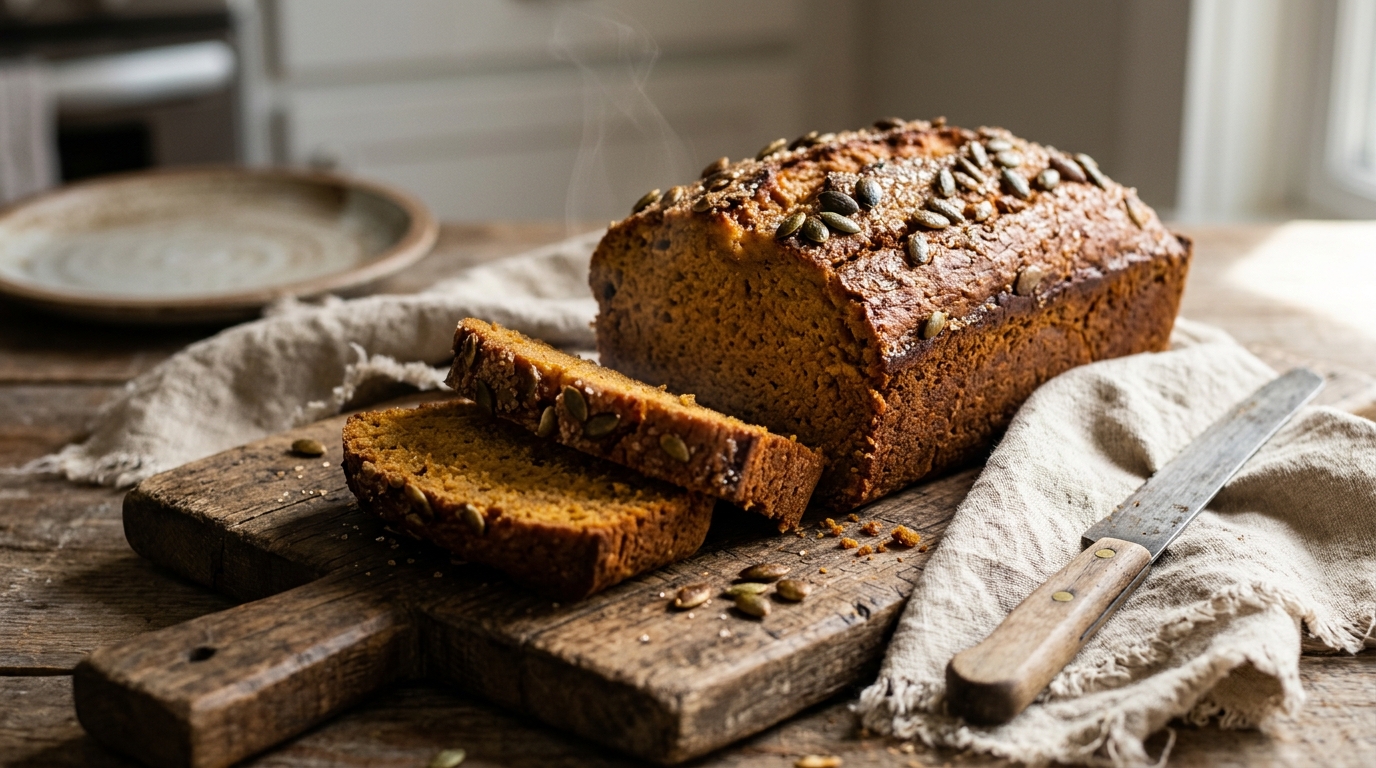
Baking a tender brown butter pumpkin loaf that stays deeply moist rather than dense or gummy is one of the most rewarding autumn baking projects. My first pumpkin loaf looked great and tasted like a sweet, spiced sponge that had been left in the rain.
The outside was golden. The inside had a dense, damp stripe along the bottom. I’d followed the recipe. So what went wrong?
A few loaves later, I figured out that pumpkin bread has its own rules. Pumpkin is mostly water, and water is the thing that makes a loaf gummy. Once you learn how to manage it, you get a loaf that’s moist, tender, and deeply spiced, and it stays soft for days. This one also has nutty browned butter and a little cardamom, which is the combo that takes it from “nice” to “wait, what’s in this?” It belongs right next to our brown butter banana bread recipe in your weekend baking repertoire.
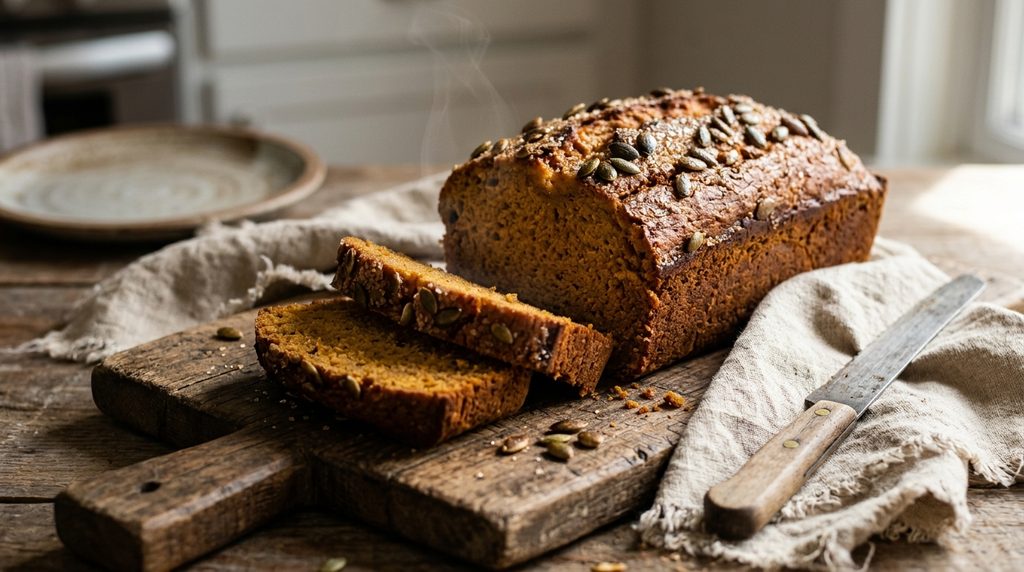
Jump to: How I got it right · Why pumpkin loaf turns gummy · The brown butter secret · Butter vs oil · Why cardamom · Ingredients · Step-by-step recipe · 5 variations · Serving ideas · Storage · Troubleshooting · FAQ
How I Finally Got It Right (After Three Loaves)
Here’s the honest timeline, because I think it helps.
Loaf one: I pulled it out at 40 minutes because the top looked perfect. Then I cut it while it was still hot, since the whole kitchen was smelling like fall and everyone was hovering around the counter. The knife came out gummy and the slices squashed flat. Embarrassing, but edible with a lot of butter.
Loaf two: I baked it longer and waited. Better, but the edges were dry and the middle was still a little damp. That’s when I put a cheap thermometer in my oven and found out it was running noticeably hotter than the dial said. The outside was finishing way before the inside.
Loaf three: I lowered the temperature, blotted the puree, folded the batter gently, and checked the center with an instant-read thermometer. I waited a full hour before slicing, which was the hardest part. It was the first loaf where the slice held together and the crumb was soft all the way through.
That’s why you’ll see a thermometer and a long cooling time in this recipe. They’re not fussy extras. They fixed my loaf.
Why Brown Butter Pumpkin Loaf Turns Gummy (and How to Fix It)
Here’s the quick science, because it explains every tip in this recipe.
Pumpkin puree is roughly 90 percent water, plus fiber and pectin. That’s great for moisture, but it comes with two problems.
Too much liquid. The batter has a limited amount of dry ingredients to absorb all that water. Add too much puree, or use a watery brand, and the starch can’t set properly in the middle. As demonstrated in food science research on starch gelatinization and moisture distribution in baked goods, excess free water hinders starch network stabilization, leaving a dense, gummy streak along the base of quick breads. You get a damp, heavy streak, usually at the bottom.
Overmixed batter. When you stir flour with liquid, gluten starts to form. A little gives the loaf structure. Too much makes it tough and rubbery, and a rubbery crumb feels gummy even when it’s fully baked.
So the rules are simple. Measure the puree, blot it if it’s watery, mix until just combined, and bake until the center is properly done. I’ll show you exactly how below.
Why Brown Butter Makes It Taste Better
Regular melted butter works, but brown butter is the upgrade I’d never skip. It’s the same technique that makes our brown butter chocolate chip cookies taste so rich and complex.
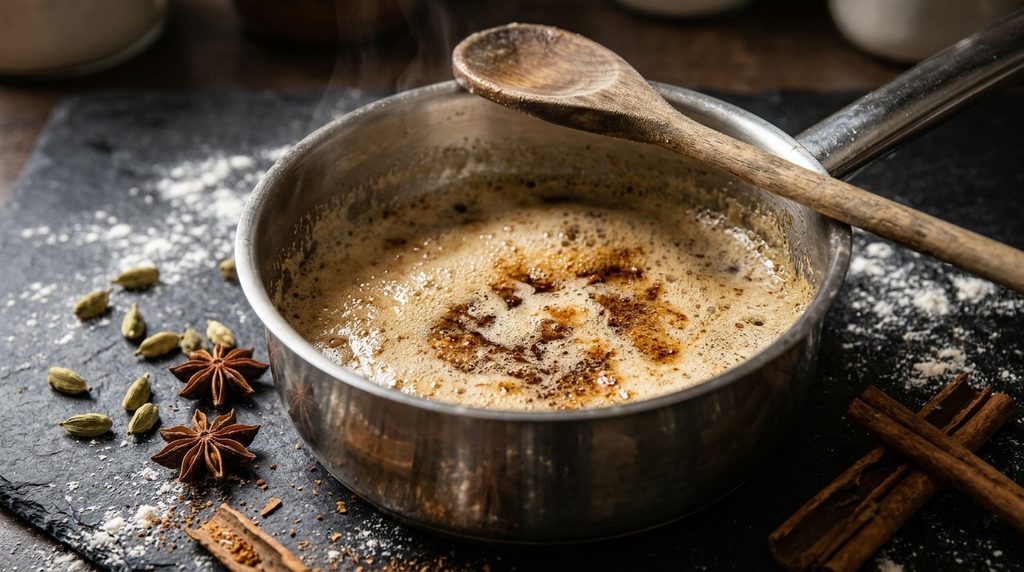
Butter is about 80 percent fat, and the rest is water and milk solids. When you heat it, the water cooks off first. Then the milk solids brown through the Maillard reaction, the same process that browns bread crust and seared steak. That makes toasty, nutty, almost caramel-like flavor compounds that don’t exist in regular butter.
There’s a bonus. Brown butter has less water than plain butter, which helps the pumpkin problem we just talked about.
Pour the warm brown butter right into your mixing bowl, brown bits and all. Those specks are pure flavor.
Why I Use Butter and Oil
I use both on purpose.
Butter gives flavor. Oil gives softness. Butter is solid at room temperature, so a loaf made with only butter can feel firmer and drier by day two. Oil stays liquid, so the crumb stays tender and moist. Mix them and you get the best of both: the flavor of butter and a loaf that’s still soft three days later.
Why Cardamom (And Why Warm Spices Taste Better in Fat)
Cardamom is my favorite fall spice and I think it’s underused in pumpkin recipes. It’s floral, a little citrusy, and it makes the cinnamon and ginger taste brighter.
Spice flavors come from aromatic compounds that dissolve in fat. That’s why I whisk the sugars and wet ingredients into the warm butter first, and the flavor spreads through the whole batter. It’s also why a loaf with fresh spices tastes so much stronger than one with a jar that’s been in the cupboard for three years. Check the date on yours when doing a cozy fall pantry reset.
What You’ll Need
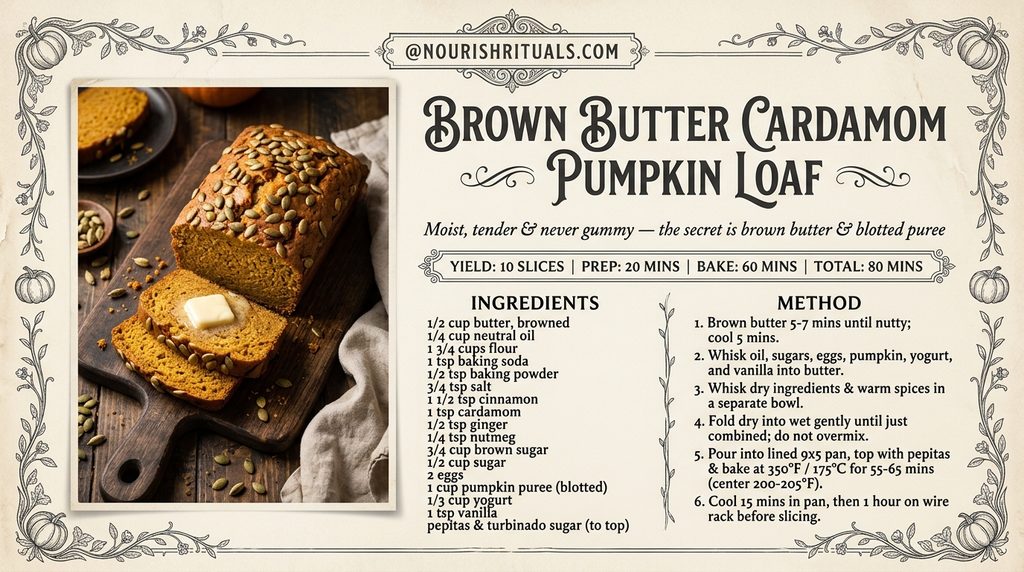
- ½ cup (113 g) unsalted butter
- ¼ cup (60 ml) neutral oil
- 1¾ cups (220 g) all-purpose flour
- 1 tsp baking soda
- ½ tsp baking powder
- ¾ tsp fine salt
- 1½ tsp cinnamon
- 1 tsp ground cardamom
- ½ tsp ground ginger
- ¼ tsp nutmeg
- ¾ cup (150 g) packed light brown sugar
- ½ cup (100 g) granulated sugar
- 2 large eggs, room temperature
- 1 cup (245 g) pure pumpkin puree
- ⅓ cup (80 g) plain yogurt or sour cream
- 1 tsp vanilla
- Pepitas and turbinado sugar, for the top
Important: buy pure pumpkin puree, not “pumpkin pie filling.” The filling already has sugar and spices, and it will throw off the recipe.
How to Make the Brown Butter Pumpkin Loaf
Step 1: Brown the Butter
Heat your oven to 350°F (175°C). Grease a 9×5-inch loaf pan and line it with parchment, leaving a little overhang so you can lift the loaf out.
Melt the butter in a light-colored pan over medium heat. Swirl it often. It will foam, crackle, then go quiet. When it smells like toasted nuts and you see golden-brown specks, it’s done. This takes 5 to 7 minutes. Pour it into your mixing bowl right away, since butter keeps cooking in a hot pan, and let it cool for about 5 minutes.
Step 2: Mix the Wet Ingredients
Whisk the oil and both sugars into the brown butter. Add the eggs one at a time. Then whisk in the pumpkin, yogurt, and vanilla until smooth.
If your puree looks wet or runny when you open the can, spread it on a paper towel for a minute and blot. Some brands are much thinner than others.
Step 3: Mix the Dry Ingredients
In another bowl, whisk the flour, baking soda, baking powder, salt, and all the spices. Whisking spreads the baking soda evenly, so you don’t get a bitter pocket.
Baking soda reacts with acid to make bubbles. Brown sugar, pumpkin, and yogurt are all slightly acidic, so the soda does its job. It also raises the pH a bit, which helps the crust brown.
Step 4: Combine (Gently)
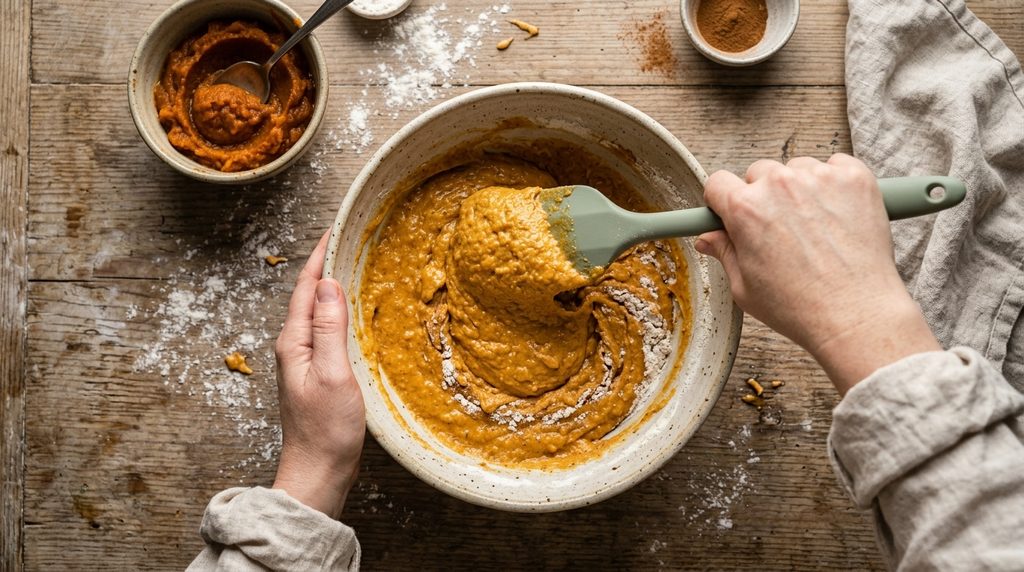
Pour the dry mix into the wet. Fold with a spatula, scraping the bottom, until you can’t see dry flour. A few streaks are fine. Stop here. This is the moment most loaves get ruined, and it’s tempting to keep stirring until it looks perfect.
Step 5: Bake
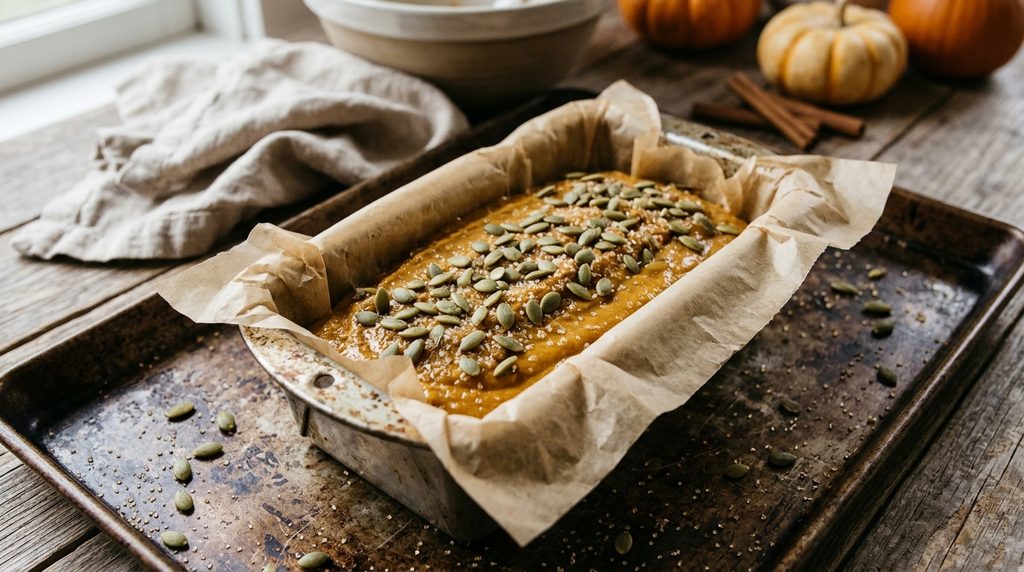
Scrape the batter into the pan and smooth the top. Sprinkle with pepitas and turbinado sugar.
Bake for 55 to 65 minutes. A skewer should come out clean, or with a few moist crumbs. For a foolproof check, use an instant-read thermometer: the center should read 200 to 205°F (93 to 96°C). If the top browns too quickly, lay a piece of foil over it after about 35 minutes.
Step 6: Cool Before Slicing
I know. It smells amazing. (This is exactly where my first loaf went wrong.) But let it cool in the pan for 15 minutes, then lift it onto a rack for at least an hour. Inside the hot loaf, the starch is still setting. Cut too early, and the crumb is gummy and sticks to the knife. Wait, and you get clean, tender slices.
5 Variations to Try
- Chocolate chip. Fold in ¾ cup of chocolate chips. Toss them in a spoon of flour first so they don’t sink.
- Cream cheese swirl. Beat 4 oz cream cheese with 2 tbsp sugar and an egg yolk. Dollop on top and drag a knife through.
- Maple glaze. Whisk ½ cup powdered sugar with 2 tbsp maple syrup and a splash of milk. Drizzle on the cooled loaf.
- Pecan streusel. Mix ¼ cup flour, 3 tbsp brown sugar, 2 tbsp cold butter, and chopped pecans. Crumble over the top before baking.
- Mini loaves or muffins. Divide into 3 mini loaf pans (bake 35 to 40 minutes) or 12 muffin cups (bake 20 to 25 minutes).
Serving Ideas
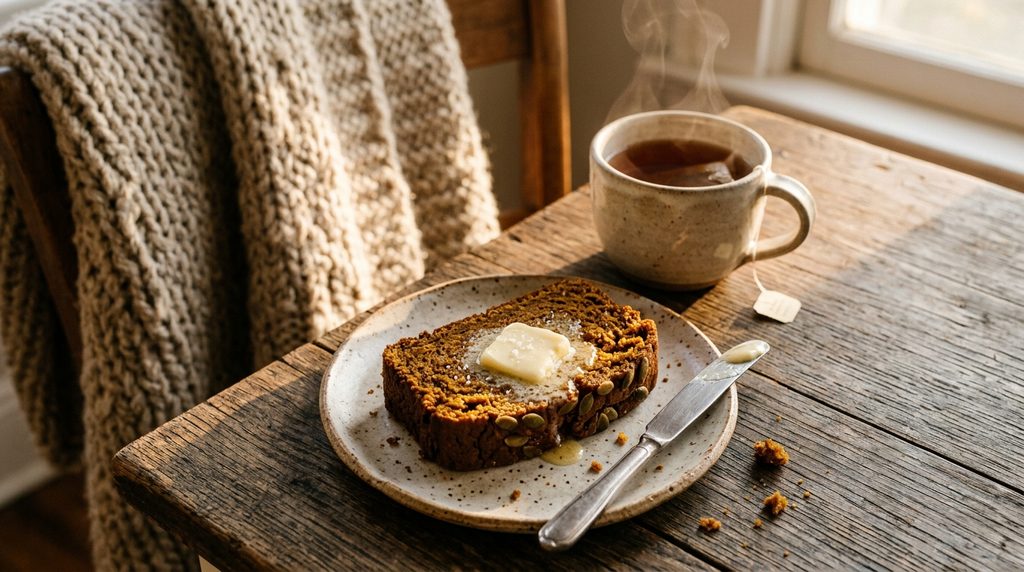
Slice it thick, toast it in a pan with a little butter, and eat it with a warm drink. My favorite pairing is a calming hojicha latte. The roasty, mellow tea goes beautifully with the cardamom.
How to Store It
- Room temperature: 3 days, wrapped well or in an airtight container.
- Fridge: up to 5 days. Bring a slice to room temperature or warm it for 10 seconds.
- Freezer: up to 3 months. Slice first, wrap each slice, and pull out what you need.
Troubleshooting
The middle is gummy or doughy.
It’s either underbaked, cut too soon, or the puree was too wet. Check the center temperature (200 to 205°F), blot watery puree, and cool fully before slicing.
The loaf sank in the middle.
Usually the oven door was opened too early, or the loaf was underbaked. Wait until at least 45 minutes before checking, and make sure your oven is really at 350°F. An oven thermometer helps a lot.
It’s dry.
Probably overbaked or too much flour. Spoon the flour into the cup and level it, or better, weigh it.
The spices taste weak.
Your spices might be old. Ground spices lose punch after about a year. Also, make sure you included the salt, because it makes the spice flavors pop.
The top is dark but the inside is raw.
Your oven runs hot. Tent with foil after 35 minutes and check the temperature with a thermometer.
It stuck to the pan.
Use parchment with an overhang. It’s the simplest fix.
FAQ
Can I use fresh pumpkin instead of canned?
Yes. Roast pieces until very tender, puree them, then drain the puree in a fine strainer for 20 to 30 minutes. Fresh pumpkin holds more water than canned, so draining is important.
Can I use pumpkin pie spice instead of the individual spices?
You can. Use about 2 tablespoons of pumpkin pie spice in place of the cinnamon, ginger and nutmeg, and keep the cardamom for the special touch.
Can I make it without brown butter?
Yes. Use plain melted butter, cooled slightly. It’ll still be moist and tasty, just less nutty and deep.
Can I make this dairy-free?
Swap the butter for the same amount of neutral oil or melted vegan butter, and use a plant-based yogurt. The flavor will be milder, but the texture works.
Why is my pumpkin bread better on day two?
The moisture spreads evenly through the crumb overnight and the spices settle in. Wrap it well and it tastes even more balanced the next day.
Pumpkin loaf is one of those recipes that makes the house smell like fall within 20 minutes. It’s easy, it’s forgiving once you know the water trick, and it’s a good one to make on a slow weekend morning.
If you bake it, let me know how it went. I read every message.
Want more cozy recipes and slow-living ideas? Follow me on Pinterest for fresh ideas every day.

Leave a Reply