
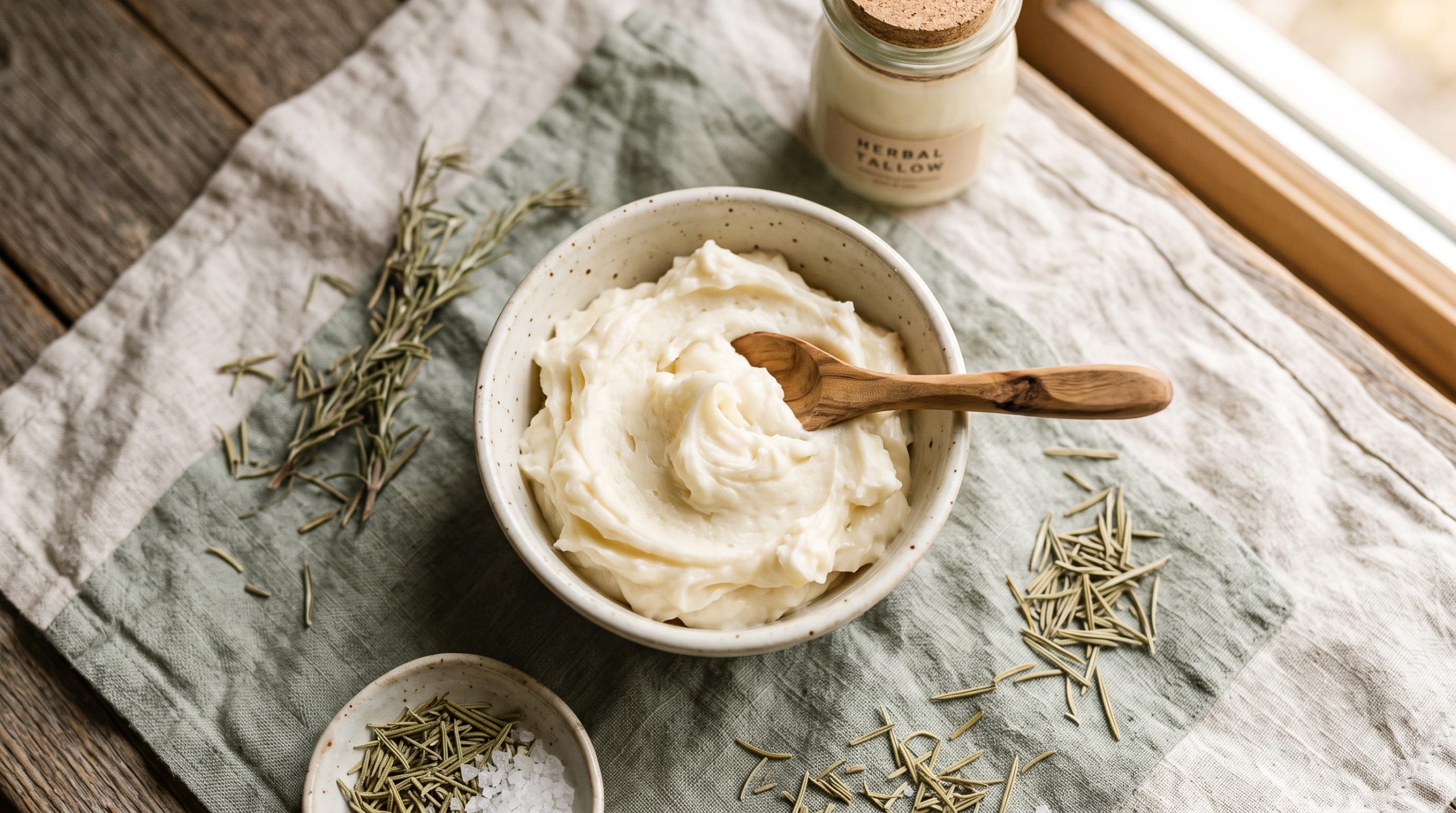
I almost scrolled past it the first time. A little swirl of something pale and glossy, piped onto a slab of sourdough like it was frosting, and the caption just said “whipped tallow.” My first thought was: isn’t that just… fat? My second thought, about four videos later, was that I needed to make some immediately.
Tallow has been having a moment for a while now in the frying-and-roasting world, but the whipped version is a different thing entirely. It’s soft, spreadable, holds its shape when piped, and takes on flavor the way butter does — except it’s not butter, and that’s exactly the point for a lot of people right now.
Jump to: What whipped tallow is · Why it’s trending · 5-minute recipe · 5 flavor ideas · What to put it on · FAQ
What Whipped Tallow Actually Is
Tallow is rendered beef fat — suet that’s been slowly melted down and strained until you’re left with a clean, shelf-stable fat with almost no beefy smell once it’s rendered properly. On its own, cold tallow is hard and a little waxy, closer to a candle than a spread. Whipping changes that completely.
When you whip cold-but-softened tallow, you’re doing the same thing a stand mixer does to softened butter: mechanically forcing air bubbles into the fat and breaking up the crystal structure that makes it rigid. Fat molecules are naturally arranged in a semi-solid lattice at room temperature. Whipping disrupts that lattice and traps tiny air pockets inside it, which is why whipped tallow goes from dense and waxy to light, fluffy, and pipeable in about five minutes with nothing added but a splash of cold water or oil to help emulsify.
The other reason it’s different from butter: tallow’s smoke point sits around 420°F, well above butter’s 350°F. That doesn’t matter much for a spread on toast, but it’s part of why the same jar works for basting a steak, roasting potatoes, or melting into a pan — one fat, several jobs, which is a big part of the appeal for people trying to simplify their kitchen.
Why This Is Suddenly Everywhere
Search interest around beef tallow has climbed sharply this year, and it’s not just a niche keto thing anymore. A chunk of that growth is coming directly from people moving away from seed oils — a recent industry survey found close to a quarter of U.S. diners now say they prefer cooking with traditional animal fats like tallow or butter over vegetable and seed oils when eating out.
The whipped, piped, styled version is the aesthetic layer on top of that shift. It photographs beautifully, it feels a little indulgent in a way that plain rendered fat in a mason jar doesn’t, and it slots neatly into the same “make your own pantry staple instead of buying the processed version” mindset that drives interest in our slow-living aesthetic fermented sauerkraut jar ritual and custom glass jar pantry organization.
How to Make It (5 Minutes, One Bowl)
You want tallow that’s cool to the touch but not fridge-hard — think softened butter, not melted. If yours is rock solid, let it sit out for 20 to 30 minutes first.
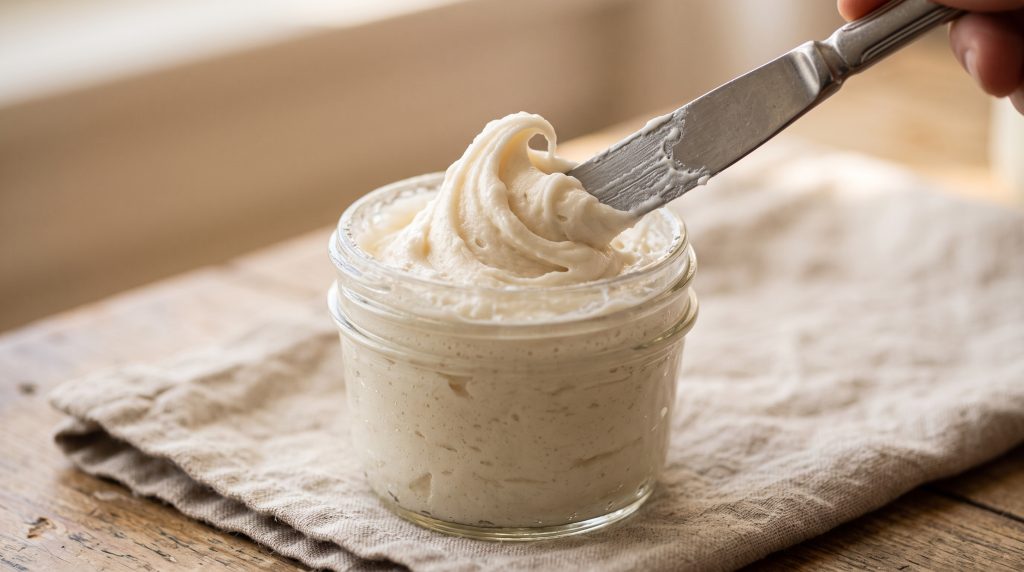
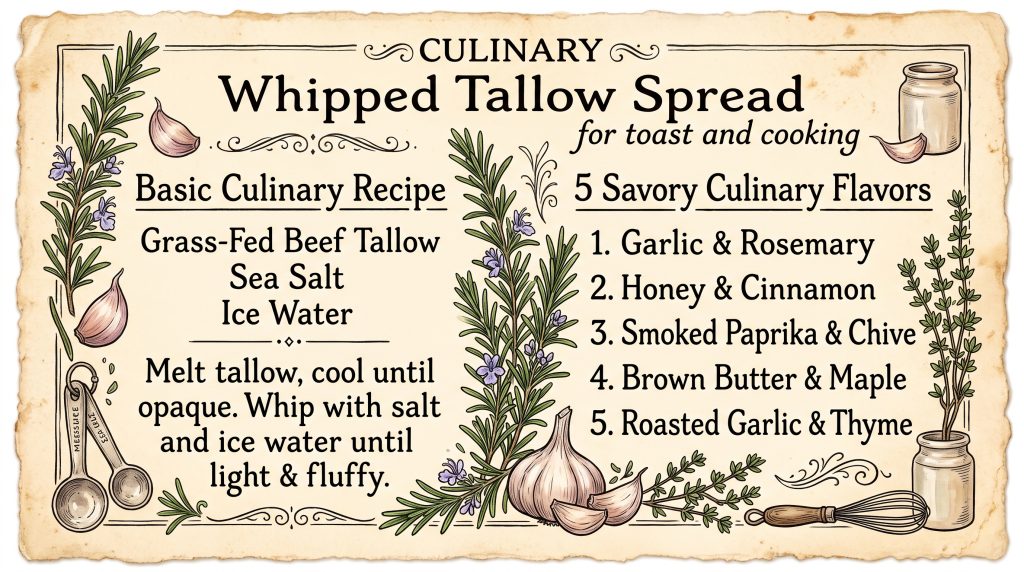
Drop about a cup of softened tallow into a mixing bowl and whip it with a hand mixer or in a stand mixer on medium-high for 3 to 5 minutes. It’ll look grainy and separated at first — keep going. Once it turns pale, glossy, and roughly doubles in volume, add a tablespoon of very cold water or a neutral oil, a teaspoon at a time, and keep whipping. This is where it goes from “whipped fat” to something with real spreadable, mousse-like texture. Taste and add a pinch of fine salt.
Store it in a small jar in the fridge for up to three weeks, or on the counter for about a week if your kitchen stays cool. It’ll firm back up when chilled — just let it sit out 10 minutes before serving, or give it another quick whip.
5 Flavor Variations Worth Trying
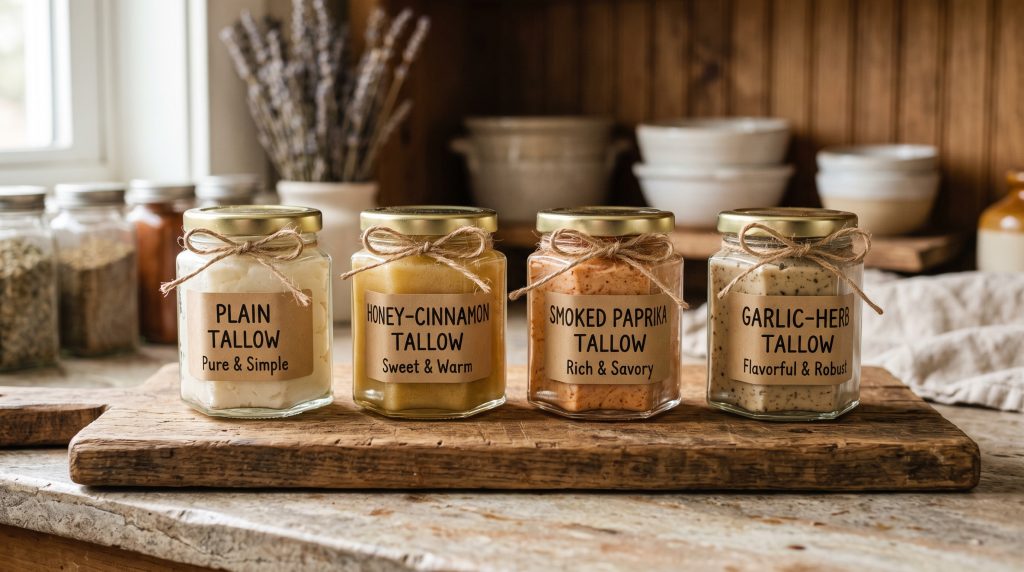
1. Roasted garlic and thyme — fold in two mashed roasted garlic cloves and a teaspoon of fresh thyme. This is the one that disappears fastest on a bread board.
2. Honey and cinnamon — a tablespoon of raw organic honey and a quarter teaspoon of cinnamon whipped in at the end. Sweet enough for toast, not sweet enough to feel like dessert.
3. Smoked paprika and chive — a half teaspoon of smoked paprika and a tablespoon of chopped chives. Good with roasted potatoes, corn, or scrambled eggs.
4. Rosemary and flaky salt — finely chopped fresh rosemary and a generous pinch of flaky sea salt folded in right before serving so the salt stays crunchy.
5. Brown butter and maple — brown a tablespoon of butter first, let it cool slightly, then whip it in with a teaspoon of pure maple syrup. Deep, nutty, a little unexpected.
What to Put It On
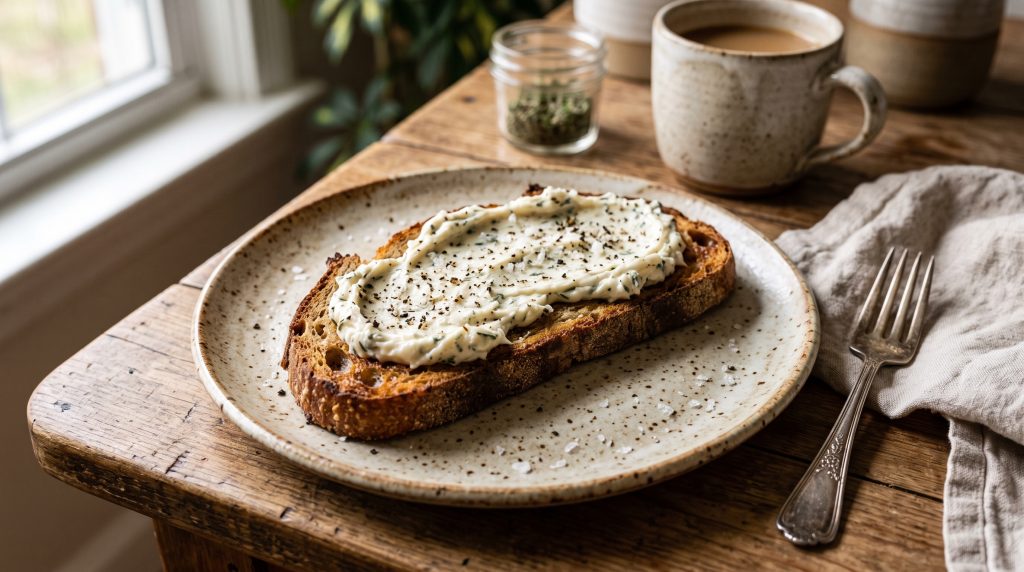
Thick-cut sourdough toast is the obvious choice, and if you’ve never made your own starter from scratch, our beginner’s sourdough guide walks through the whole 7-day process from day one. Beyond toast, it’s genuinely good on roasted winter vegetables straight out of the oven, stirred into warm mashed potatoes instead of butter, melted over grilled corn, or spread inside a warm biscuit.
Frequently Asked Questions
Does whipped tallow taste beefy?
Properly rendered tallow has almost no meaty flavor — most of the smell and taste comes from bits of connective tissue that weren’t strained out. If yours tastes strongly beefy, it likely needs a finer strain next time or a better-quality source.
Where do I even buy tallow?
Grass-fed tallow is now stocked at most natural grocery chains and widely available online. You can also render your own from beef suet, which your butcher will often give away or sell for a few dollars a pound.
Is this actually healthier than butter or seed oil?
Tallow is a saturated fat, similar in structure to butter, and its resurgence is largely tied to people preferring traditional fats over highly processed seed oils rather than a specific health claim. If you’re managing cholesterol or have other dietary concerns, it’s worth a conversation with your doctor about how much saturated fat fits your diet.
Can I whip it without a mixer?
You can with a whisk and some patience, but a hand mixer gets you there in a fraction of the time and with a much lighter texture.
Why did mine separate instead of getting fluffy?
Usually the tallow was too warm or too cold when you started. Aim for cool-but-pliable, and add your liquid slowly — dumping it in all at once is the most common reason it breaks.
Find more slow living recipes and rituals like this one on our Pinterest: @Nourish_Rituals
